

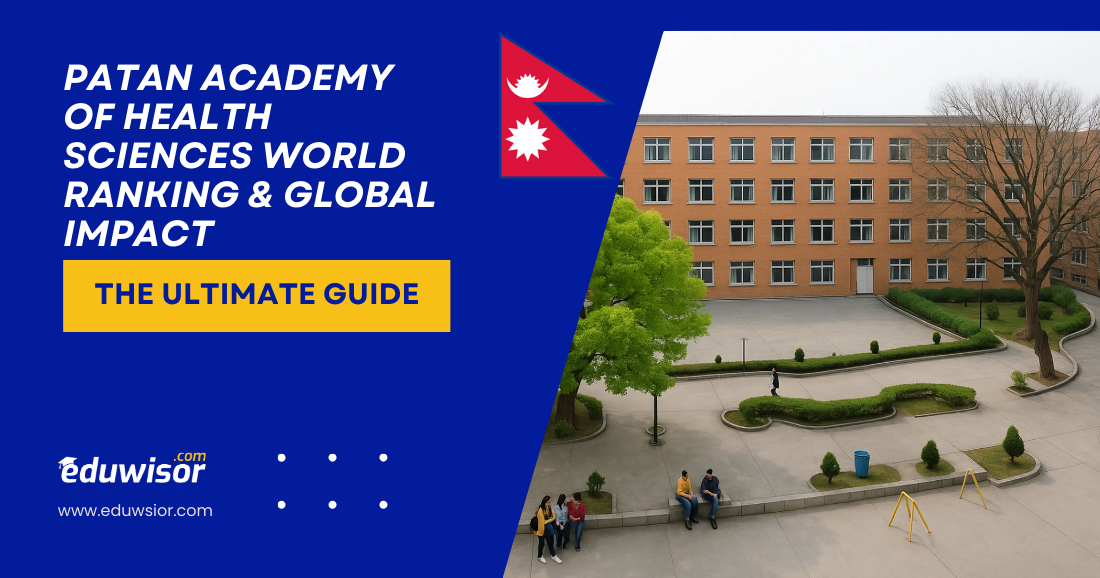
The quest for quality medical education in Nepal has found a distinct and powerful answer in the Patan Academy of Health Sciences (PAHS). Established not merely as another medical college but as a visionary project with a profound social mission, PAHS has carved a unique niche in the landscape of health education. A common question from prospective students, academics, and global health observers is: What is the Patan Academy of Health Sciences world ranking? While a simple numerical rank can provide a snapshot, the true measure of PAHS lies in a deeper understanding of its mission-driven model, its growing global recognition, and its tangible impact on healthcare systems. This 6000-word deep dive moves beyond a single metric to explore the multifaceted dimensions of PAHS’s standing, its academic rigor, and the reasons it is increasingly becoming a point of reference in discussions about equitable and innovative medical education globally.
Understanding the Institution: Patan Academy of Health Sciences Mission Over Metrics
Before dissecting rankings, one must comprehend the DNA of PAHS. Founded in 2008 with a clear mandate from the Government of Nepal, its core mission is radically different from many institutions that chase conventional ranking parameters. PAHS was born out of a need to address the critical shortage of skilled healthcare workers in rural and underserved areas of Nepal. Its founding principle is social accountability—the idea that a medical school’s primary duty is to serve the health needs of the society, particularly the most marginalized.
This mission shapes every aspect of Patan Academy of Health Sciences:
- Curriculum: It employs a problem-based, community-integrated learning (CBL) model from day one. Students are exposed to rural communities early in their training, understanding socio-economic determinants of health firsthand.
- Selection: The admission process heavily weighs a candidate’s commitment to serving in rural areas, not just academic scores.
- Focus: There is a strong emphasis on producing “change agents” and leaders in public health and health systems, not just clinicians.
This context is crucial. Traditional world ranking systems like the QS World University Rankings or Times Higher Education (THE) often favor metrics such as research output (volume, citations), international faculty/student ratios, and academic reputation surveys. Large, research-intensive, well-endowed universities in the Global North dominate these metrics.
The Patan Academy of Health Sciences World Ranking: Interpreting the Data
As of the latest available data, PAHS is typically listed among the top medical universities in Nepal. It is crucial to note that it often features in the band 1001+ or unranked category in major global ranking systems like QS. This, however, is not an indicator of poor quality but rather a reflection of the system’s bias and PAHS’s specific operational scale and focus.
- Research Output vs. Social Impact: Global rankings prize high-volume publication in indexed journals. PAHS prioritizes applied, operational, and community-health research that directly informs policy and practice in Nepal. This research is immensely valuable nationally but may have lower citation counts in the global “citation clubs.” Its work in areas like tropical medicine, disaster response, and rural healthcare delivery is of world-class relevance but is niche in publication terms.
- Internationalization Metrics: Rankings favor a high proportion of international students and faculty. PAHS’s primary mandate is to educate Nepali students, especially those from underserved backgrounds, to serve Nepali communities. Its “internationalization” is more about collaborative partnerships for capacity building rather than recruiting for diversity numbers.
- Academic Reputation Surveys: These surveys circulate among academics globally, who are more likely to be familiar with large, ancient, or research-heavy institutions. PAHS’s innovative model has earned high respect within specific global health and medical education circles. For example, The Network: Towards Unity for Health awarded it a prestigious prize. This reputation, however, remains specialized.
Therefore, the more relevant question shifts from “What is the Patan Academy of Health Sciences world ranking?” to “How is PAHS recognized and positioned in global forums dedicated to its mission?” Here, its standing is exceptionally high:
- WHO Recognition: PAHS is fully listed in the World Directory of Medical Schools (WDOMS), meaning its graduates are eligible to sit for international licensing exams like the USMLE.
- The Global Health Network earns recognition as a celebrated member of global consortia like The Network: TUFH, and organizations like the Training for Health Equity Network (THEnet) frequently cite it as a model for socially accountable medical education.
- National Ranking: Within Nepal, PAHS consistently ranks among the very top institutions for medical studies. Its unique curriculum, high faculty-to-student ratio, and selective admissions often place it in competition for the top position.
Deconstructing Excellence: The Pillars of Patan Academy of Health Sciences Global Reputation
The growing renown of PAHS rests on several tangible pillars that, while not always translating to a high numeric world ranking, constitute a formidable reputation.
1. The Innovative and Rigorous Curriculum:
PAHS’s MBBS program is a departure from the traditional memorization-heavy model. Its integrated, system-based, community-oriented curriculum is on par with the best medical education reforms worldwide. Early clinical exposure, longitudinal community placements, and a focus on leadership and professionalism produce graduates who are not just knowledgeable but adaptable, empathetic, and systems-aware. This pedagogical innovation attracts attention from medical educators globally who visit PAHS to study its model.
2. Strategic and Impactful Research:
While not aiming for sheer volume, PAHS research is strategic. Its Research Department and collaborating centers focus on:
- Health Systems and Policy Research: Informing the Government of Nepal on effective service delivery.
- Non-Communicable Diseases (NCDs) and Infectious Diseases: Conducting locally relevant studies on disease burden and management.
- Medical Education Research: Pioneering studies on the effectiveness of its own community-based learning model.
These research outputs are published in reputable regional and international journals and, more importantly, directly influence national health programs.
3. Profound Community Integration and Social Accountability:
This is PAHS’s signature. Its “mandatory service” ethos is embedded in its structure. The Academy works closely with Patan Hospital, a central tertiary care center, and a network of rural community sites. Students spend months in these rural hubs, understanding the realities of healthcare scarcity. This model ensures that its graduate outcomes are measured not by how many pursue lucrative overseas careers, but by how many serve in needed specialties and locations within Nepal. This commitment to equity is its most powerful brand in the global health community.
4. Robust Collaborative International Partnerships:
PAHS has forged meaningful, non-extractive partnerships with prestigious institutions worldwide, including:
- University of Washington (USA) through the PAHS-UW Collaborative.
- University of Oslo (Norway).
- Harvard University (USA) for specific research and training initiatives.
- Several Japanese and European universities.
These partnerships are not for show; they involve faculty and student exchanges, joint research projects, curriculum development support, and capacity building. They bring global expertise to Nepal while also allowing PAHS to share its unique model with the world.
5. Quality of Faculty and Infrastructure:
PAHS attracts and retains a blend of highly qualified Nepali academics and clinicians, as well as visiting international faculty. The faculty is not only expert in their fields but also trained in innovative teaching methodologies. Infrastructure at its main campus in Lalitpur and its affiliated Patan Hospital is modern and continuously upgraded, with simulation labs, a well-stocked library, and digital resources supporting a contemporary learning environment.
The Road Ahead: Enhancing Global Visibility and Impact
PAHS leadership is aware of the dynamics of global rankings. The strategic path forward is not to abandon its mission to chase ranking points, but to strategically enhance its global visibility while deepening its impact. Key areas include:
- Increasing Publication in High-Impact Journals: Encouraging faculty to publish their innovative work in broader-scope international journals without diverting from applied research priorities.
- Hosting International Conferences: Positioning itself as a hub for global discussions on socially accountable medical education and tropical health.
- Expanding Graduate Programs: Developing more postgraduate (MD/MS, PhD) and short courses that can attract a diverse, international student body for specialized training in global health, health policy, and specific clinical areas relevant to low-resource settings.
- Strengthening Alumni Networks: Creating a robust global alumni network that can act as ambassadors and contribute to the academy’s growth and reputation.
Conclusion: Redefining “World-Class” in Medical Education
So, what is the final word on the Patan Academy of Health Sciences world ranking? It is this: PAHS represents a powerful alternative definition of a “world-class” institution. In a global ecosystem often obsessed with metrics of wealth, research volume, and exclusivity, PAHS stands as a beacon of purpose, equity, and contextual excellence.
Its ranking appears not on a top-100 list, but in the health outcomes of the rural communities it serves. It earns its global standing not from a survey score, but from the respect it commands in the circles that matter most for the future of equitable healthcare. For a student seeking a medical education that combines clinical excellence with a deep sense of social purpose, PAHS is not just a top choice in Nepal; it is a leading model globally. For the global health community, it is a vital case study in how to align education with urgent societal need.
The journey of PAHS is a testament to the idea that true ranking is about impact. As it continues to produce leaders, generate relevant knowledge, and transform Nepal’s health landscape, its story—of a mission-driven academy making a tangible difference—becomes its most compelling and unassailable ranking of all. It challenges the very paradigms of measurement, urging the world to look beyond conventional lists to the places where education is changing lives in the most meaningful ways. In the final analysis, the Patan Academy of Health Sciences is ranked first where it matters most: in its unwavering commitment to health for all.
Eduwisor always guides students toward the right path with an unbiased approach. You can follow us on Youtube, Facebook, Instagram, Twitter, and Linkedin. Stay tuned for regular updates.
Interested in applying? Contact authorized Eduwisor consultant for a smooth admission process!
Act NOW—limited seats for 2026 intake! Call/WhatsApp: 9326395883/ 9076036383