

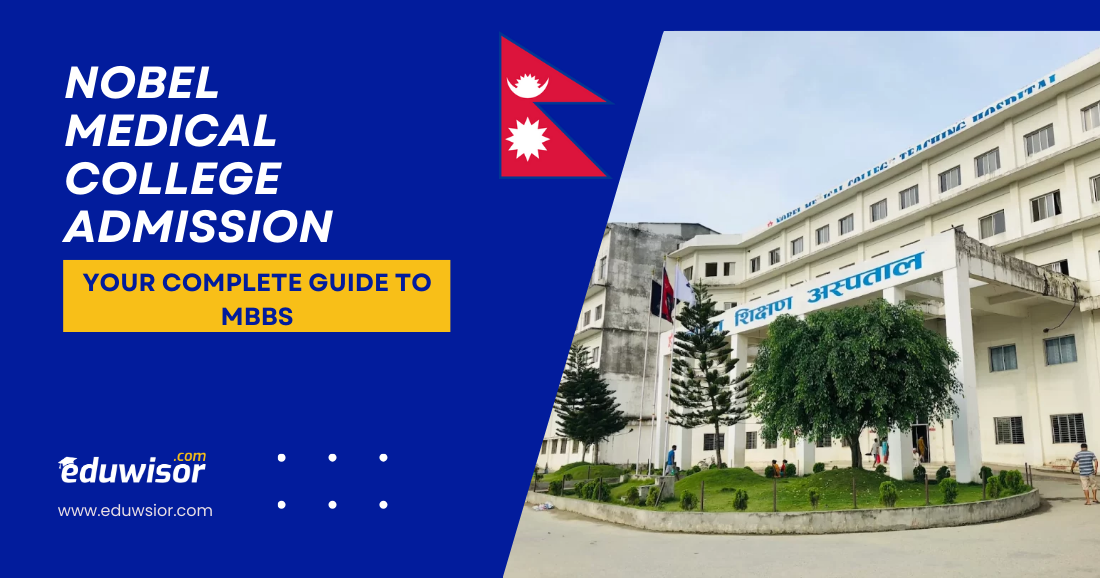
The dream of becoming a doctor is a powerful one. It’s a calling that combines intellectual rigor, profound compassion, and the promise of a lifelong career making a tangible difference. For countless aspiring medical students in Nepal, India, and across the globe, Nobel Medical College (NMC) stands as a beacon of excellence in medical education. Gaining Nobel Medical College admission is the critical first step on this transformative journey.
This comprehensive, 6000-word guide is your ultimate resource. We will dissect every facet of the Nobel Medical College admission process for the 2026 academic session. From understanding the fundamental eligibility criteria and navigating the application maze to decoding the fee structure, exploring scholarship opportunities, and picturing life on campus, we leave no stone unturned. Whether you’re a diligent high school graduate, a concerned parent, or an international student seeking quality education, this guide is crafted to be your roadmap.
Chapter 1: Why Choose Nobel Medical College? Understanding Its Legacy and Accreditation
Before delving into the “how” of admission, it’s crucial to understand the “why.” Nobel Medical College, established with a vision to create globally competent healthcare professionals, is more than just an institution; it’s an ecosystem for medical excellence.
Affiliation and Recognition: The Bedrock of Credibility
Nobel Medical College’s affiliation with the prestigious Tribhuvan University (TU), Nepal’s oldest and most renowned university, is not a mere formality. This partnership ensures that the college awards an MBBS degree with global recognition. Crucially, the World Directory of Medical Schools (WDOMS) lists the college, and major medical councils recognize the degree.
- The Nepal Medical Council (NMC) – Essential for practicing in Nepal.
- The National Medical Commission (NMC) of India – Indian students must ensure this for practice in India. Graduates are eligible to sit for the Foreign Medical Graduates Examination (FMGE).
- The General Medical Council (GMC) of the UK and other international bodies, subject to fulfilling their respective registration requirements.
This wide recognition opens doors for postgraduate studies and medical practice across continents, making Nobel Medical College admission a strategically valuable pursuit.
Infrastructure and Clinical Exposure: Learning in a Real-World Environment
The college boasts a sprawling, modern campus equipped with state-of-the-art infrastructure. Key facilities include:
- Advanced Laboratories: Well-equipped labs for Anatomy, Biochemistry, Physiology, Pathology, Microbiology, and Pharmacology provide hands-on experience from the first year.
- Digital Library: A vast repository of medical texts, international journals, and online databases ensures students have access to the latest research.
- Teaching Hospital: The attached Nobel Medical College Teaching Hospital is the crown jewel. With a high bed capacity and a wide range of specialties, it serves as the primary ground for clinical training. This direct, extensive, and diverse clinical exposure from the early years is a significant advantage over colleges with limited patient inflow.
Faculty and Pedagogy: Guided by Experts
The college prides itself on a faculty comprising experienced professors, clinicians, and researchers. The teaching methodology blends traditional lectures with problem-based learning (PBL), case discussions, and bedside clinics, fostering critical thinking and practical skills.
Choosing Nobel Medical College is choosing a path of accredited, practical, and holistic medical education. The Nobel Medical College admission process is your gateway to this ecosystem.
Chapter 2: The Complete Eligibility Criteria for Nobel Medical College Admission 2026
Eligibility is the first gate you must pass. The criteria are strict and non-negotiable, designed to select candidates with a strong academic foundation in science.
Academic Qualifications: The Non-Negotiables
- 10+2 or Equivalent Examination: Candidates must have passed the 10+2 (or equivalent) examination from a recognized board.
- Compulsory Subjects: The qualifying examination must include Physics, Chemistry, and Biology as core subjects.
- Minimum Aggregate Score: A minimum aggregate of 50% in Physics, Chemistry, and Biology combined is typically required. For candidates from reserved categories (as per Nepal Government rules), there may be a relaxation of 5-10%. Important Note: For Indian students, the National Medical Commission (NMC) mandates a minimum of 50% in PCB for General category and 40% for SC/ST/OBC in their 10+2. Nobel Medical College aligns with these standards.
Entrance Examination: The Standardized Hurdle
This is the most critical component for most candidates.
- NEET UG (For Indian Students): Nobel Medical College admission for Indian students is strictly based on a valid NEET UG score. There is no separate entrance exam conducted by the college for Indian nationals. You must have appeared and qualified in the NEET-UG 2026 (or the preceding year’s score if applicable as per rules). The college will announce a NEET cut-off percentile or score for counseling. A higher NEET score significantly improves your admission chances.
- Other National/International Exams: For Nepali students and other international applicants, the college may accept scores from national-level medical entrance exams (like the IOM/MOE entrance in Nepal) or conduct its own entrance test. Always check the official admission brochure for the year.
Age Limit:
Candidates must have completed 17 years of age on or before December 31st of the year of admission. There is usually an upper age limit, which is subject to change as per university guidelines.
Medical Fitness:
Selected candidates must submit a medical fitness certificate from a registered medical practitioner, declaring them physically and mentally fit to undertake the rigorous medical course.
Documentation:
Be prepared with attested copies of:
- 10th and 10+2 mark sheets and certificates.
- Character certificate from the last institution attended.
- NEET UG Admit Card, Scorecard, and Rank Card (for Indians).
- Valid passport (for international students).
- Recent passport-sized photographs.
- Migration certificate (if applicable).
Failing to meet any of these Nobel Medical College eligibility criteria will result in disqualification. Ensure you have every box ticked before proceeding.
Chapter 3: A Step-by-Step Walkthrough of the Nobel Medical College Application Process
The Nobel Medical College application process is systematic. Missing a deadline or a document can cost you a seat. Follow this step-by-step guide meticulously.
Step 1: Stay Informed and Obtain the Application Form
- Official Sources: Regularly monitor the official website of Nobel Medical College and the notice board of Tribhuvan University, Institute of Medicine (IOM). All official notifications are released here.
- Advertisement: The college releases a detailed admission advertisement in major national newspapers (in Nepal and sometimes in India) and on its website around August-September for the intake starting typically in November-December.
- Form Availability: The application form can usually be downloaded from the website or obtained physically from the college administration office upon payment of a non-refundable application fee.
Step 2: Fill the Form with Utmost Care
Fill the form legibly and accurately. Any discrepancy between your form and original documents can lead to rejection. Double-check personal details, academic scores, and NEET details.
Step 3: Document Compilation and Submission
Prepare a complete dossier as per the checklist provided in the brochure. Submit the filled form along with all required self-attested documents and the application fee receipt before the Nobel Medical College admission deadline. Submission can be online (via a portal) or in-person at the designated address.
Step 4: The Selection and Counseling Process
- Merit List Publication: Based on NEET scores (for Indians) or entrance exam scores, the college will publish a merit list on its website and notice board.
- Counseling Call: Shortlisted candidates will be called for counseling on a specified date. Attendance is mandatory. If you cannot attend, an authorized representative with a power of attorney may attend on your behalf.
- Choice Filling and Seat Allotment: During counseling, based on your rank, you will be given the option to choose from available seats. You must pay a substantial part of the Nobel Medical College fee structure (often the first year’s tuition fee) immediately upon seat allotment to confirm your admission. This seat confirmation fee is usually non-refundable.
Step 5: Final Enrollment and University Registration
After fee payment, you will complete the final enrollment formalities, which include submission of original documents for verification. The college will then register you with Tribhuvan University, marking the official start of your MBBS journey.
Pro Tip: Mark all Nobel Medical College admission 2026 deadlines on your calendar. Set reminders. The process is competitive, and punctuality is a non-negotiable virtue.
Chapter 4: Decoding the Nobel Medical College Fee Structure and Scholarship Opportunities
Understanding the financial commitment is vital. The Nobel Medical College fee structure is transparent but requires careful planning.
Detailed Breakdown of Fees (Approximate Figures in NPR/USD)
Fees are indicative and subject to change. Always confirm from the official brochure.
- Tuition Fee: This is the major component, payable annually or semester-wise. It covers academic instruction, basic library, and lab usage.
- Development Fee / Institution Fee: A one-time or annual charge for infrastructure development and maintenance.
- Security Deposit: A refundable amount paid at the time of admission, returned after course completion minus any deductions for damages.
- Hostel Fee: Includes accommodation and often basic meals (mess charges). It can vary based on room type (single, double, triple sharing).
- Other Charges: These may include fees for the library, laboratory, student welfare, examination fees payable to the university, and medical insurance.
A rough estimated total for the 5.5-year MBBS program (including internship) for international students like Indians can range between NPR 40-60 lakhs (approximately USD 30,000 – 45,000), with variations. For Nepali nationals, the fee is significantly lower as per government regulations.
Payment Schedule:
Fees are typically paid in installments—at admission, and subsequently at the start of each academic year. Clear all dues on time to avoid penalties or cancellation of admission.
Scholarships and Financial Aid: Easing the Burden
Nobel Medical College offers Nobel Medical College scholarship opportunities to meritorious and financially disadvantaged students.
- Merit-Based Scholarships: Awarded to top rankers in the entrance exam/NEET or toppers in university examinations. These can cover a percentage of the tuition fee.
- Need-Based Scholarships: For students from economically weaker sections, subject to submission of income certificates and other proofs.
- Government Scholarships: Available for Nepali students as per the rules of the Government of Nepal.
- Educational Loans: Most nationalized and private banks in Nepal and India offer educational loans for studying MBBS at recognized colleges like Nobel. Start your loan application process early.
Do not let finances be the sole barrier. Explore every Nobel Medical College scholarship option and loan possibility diligently.
Chapter 5: Life After Admission: The MBBS Curriculum and Campus Life at Nobel
Congratulations on securing Nobel Medical College admission! Now, what does the journey look like?
The MBBS Curriculum: A Blend of Theory and Practice
The MBBS program at NMC, under Tribhuvan University, spans 5.5 years, divided into:
- Pre-Clinical Phase (1.5 years): Subjects: Anatomy, Physiology, Biochemistry. Focus on building the foundational knowledge of the human body.
- Para-Clinical Phase (1 year): Subjects: Pathology, Microbiology, Pharmacology, Forensic Medicine. Introduction to disease, drugs, and legal aspects.
- Clinical Phase (2 years): Subjects: Community Medicine, Ophthalmology, Otorhinolaryngology (ENT), General Medicine, Surgery, Obstetrics & Gynecology, Orthopedics, Pediatrics, etc. This is the core clinical training period with extensive hospital rotations.
- Compulsory Rotating Internship (1 year): The final year is a hands-on, paid internship in the Teaching Hospital, where you work under supervision in various departments, applying your knowledge and gaining confidence as a practitioner.
The curriculum includes regular internal assessments, practical exams, and the final university examinations at the end of each phase.
Campus Life: Beyond the Classroom
- Hostel and Accommodation: The college provides separate, secure hostel facilities for boys and girls with amenities like Wi-Fi, common rooms, and reading rooms.
- Extracurricular Activities: Student committees organize cultural fests, sports tournaments, medical conferences, and community health camps. Participating enriches your personality and builds leadership skills.
- Student Support: There are mechanisms for academic counseling, peer support, and addressing grievances to ensure student well-being.
- Location: Situated in a conducive environment, the campus provides a focused atmosphere for study while being connected to essential urban facilities.
Securing Nobel Medical College admission is the beginning of a challenging, rewarding, and transformative chapter that shapes you into a competent and compassionate doctor.
Conclusion: Your Pathway to a Medical Career Starts Here
The journey to a white coat begins with a single, well-informed step. Nobel Medical College admission is a competitive but structured process that rewards preparation, diligence, and passion. By thoroughly understanding the eligibility, perfecting your NEET score, meticulously following the application steps, and planning your finances, you can turn your aspiration into reality.
Nobel Medical College offers more than a degree; it offers a foundation for a lifetime of service in medicine. Start your preparation today. Keep your goals clear, your documents ready, and your focus sharp. The future of healthcare awaits your contribution.
Disclaimer: This guide is for informational purposes only. All details regarding Nobel Medical College admission 2026, including fees, dates, and eligibility, are subject to change as per the official notifications from Nobel Medical College and Tribhuvan University. Always refer to the official college website and admission brochure for the most accurate and current information.
Eduwisor always guides students toward the right path with an unbiased approach. You can follow us on Youtube, Facebook, Instagram, Twitter, and Linkedin. Stay tuned for regular updates.
Interested in applying? Contact authorized Eduwisor consultant for a smooth admission process!
Act NOW—limited seats for 2026 intake! Call/WhatsApp: 9326395883/ 9076036383
