

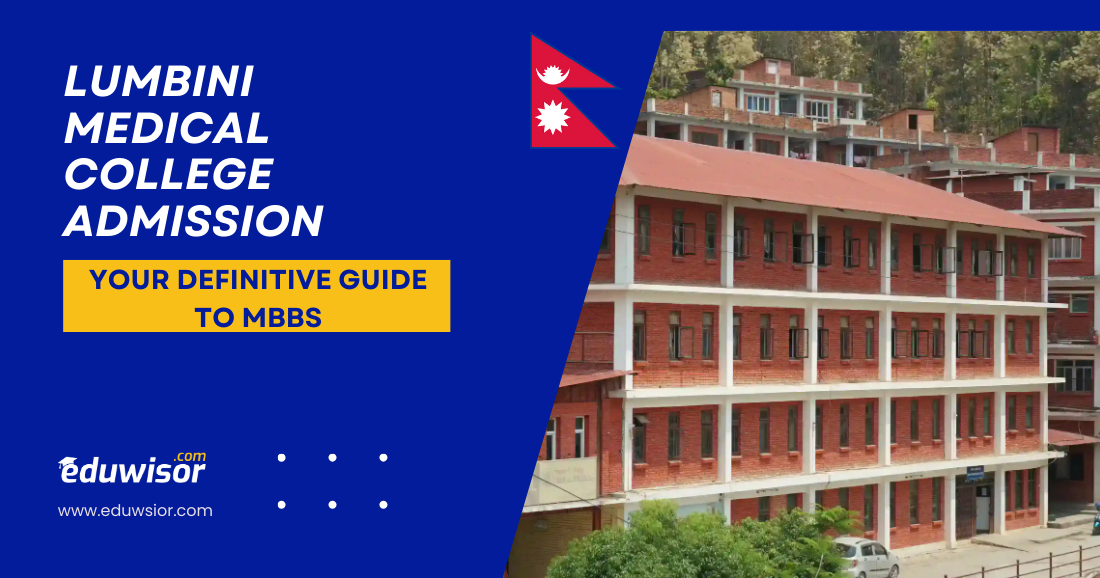
Nestled in the serene plains of the Terai region, within the culturally rich city of Bharatpur, Lumbini Medical College and Teaching Hospital (LMCTH) stands as a beacon of medical education and healthcare excellence in Nepal. Established with a vision to produce globally competent, empathetic, and skilled medical professionals, LMCTH has rapidly carved a niche for itself among the premier medical institutions in South Asia. For countless aspiring doctors from Nepal, India, and beyond, securing a seat at LMCTH represents a pivotal step toward a fulfilling career in medicine. This comprehensive, 4500-word guide is meticulously crafted to be your single-point reference for everything related to Lumbini Medical College and Teaching Hospital admission. We will navigate through the intricate details of eligibility, the admission process, fee structure, scholarships, campus life, and the unparalleled clinical training offered at its affiliated teaching hospital.
Chapter 1: Lumbini Medical College and Teaching Hospital – An Institutional Overview
Before delving into the admission specifics, understanding the institution’s ethos and infrastructure is crucial. Lumbini Medical College is more than just a college; it’s an integrated health sciences hub.
1.1 The Legacy and Vision:
Affiliated with the prestigious Kathmandu University (KU), Lumbini Medical College operates under the guiding principle of “Service to Humanity.” Its curriculum meets international standards and prepares graduates for global medical challenges and licensing exams like the USMLE, PLAB, and NEXT.
1.2 The Campus and Academic Infrastructure:
Spread over a sprawling area, the campus is a blend of modern architecture and functional design.
- Academic Blocks: State-of-the-art lecture halls equipped with digital audio-visual aids, advanced simulation labs, and a well-stocked central library with access to international medical journals and online databases.
- Skill and Simulation Labs: High-fidelity mannequins, virtual dissection tables, and dedicated labs for physiology, biochemistry, pathology, and microbiology provide a safe environment for hands-on learning before real patient interaction.
- Central Research Facility: Encouraging a spirit of inquiry, the college supports student and faculty research projects.
1.3 The Crown Jewel: Lumbini Teaching Hospital
The 750-bed multi-specialty Lumbini Teaching Hospital is the practical heart of LMCTH. This is where theoretical knowledge transforms into clinical expertise. It serves a vast population from the central Terai region, ensuring unparalleled patient exposure for students. Departments range from General Medicine and Surgery to super-specialties like Cardiology, Neurology, Nephrology, and Oncology. The high patient inflow guarantees that students participate in a wide variety of cases, from routine to complex.
Chapter 2: Decoding the MBBS Program at LMCTH
The Bachelor of Medicine and Bachelor of Surgery (MBBS) program at LMCTH is a rigorous five-and-a-half-year course, inclusive of a one-year mandatory rotating internship.
2.1 Curriculum Structure (As per Kathmandu University):
- Phase I (1st & 2nd Year): Pre-clinical Sciences – Anatomy, Physiology, Biochemistry. Integrated teaching with early clinical exposure.
- Phase II (3rd Year): Para-clinical Sciences – Pathology, Pharmacology, Microbiology, Forensic Medicine, Community Medicine.
- Phase III (4th & 5th Year): Clinical Rotations – Medicine, Surgery, Obstetrics & Gynecology, Pediatrics, Psychiatry, Orthopedics, and other specialties.
- Phase IV (6th Year): Compulsory Rotating Internship.
2.2 Academic Excellence and Faculty:
The college boasts a diverse faculty comprising experienced professors, clinicians, and visiting experts. The low student-to-teacher ratio fosters personalized mentorship, which is a cornerstone of the LMCTH educational experience.
Chapter 3: Lumbini Medical College Admission – The Gateway
This is the core of our guide. The admission process for the MBBS program is multi-faceted and highly competitive.
3.1 Eligibility Criteria: The Prerequisites
Prospective students must meticulously ensure they meet the following eligibility criteria:
For Nepali Students:
- Completion of 10+2 or equivalent with Physics, Chemistry, and Biology as main subjects.
- Minimum aggregate GPA as prescribed by the Institute of Medicine (IOM) or Kathmandu University (typically, a minimum of 50% aggregate in PCB).
- A valid score in the Medical Entrance Examination conducted by the Medical Education Commission (MEC) of Nepal.
For International Students (Including Indian Students):
- Completion of 10+2 or equivalent with Physics, Chemistry, and Biology, with a minimum of 50% marks (varies slightly, but this is standard).
- A qualified score in the NEET UG exam is mandatory for Indian citizens. For other nationalities, equivalence is assessed.
- Proficiency in English (medium of instruction).
- Eligibility certificate from the concerned medical council in the home country may be required.
3.2 The Admission Process: A Step-by-Step Walkthrough
- Notification & Application: Admission notices are published on the official LMCTH website and national newspapers (around July-August for January intake). The application is submitted online via the MEC or college portal.
- Entrance Examination: The pivotal hurdle. For Nepali students, it’s the MEC Entrance Exam. For Indians, the NEET UG score is the primary criterion. The exam tests knowledge in Physics, Chemistry, Biology, and Logical Reasoning.
- Merit List & Counseling: Based on entrance ranks, a merit list is published. Shortlisted candidates are called for counseling sessions where they must present original documents for verification.
- Document Verification: Essential documents include:
- Mark sheets and certificates of 10th and 10+2.
- Character certificate.
- Entrance exam admit card and scorecard.
- Passport-sized photographs.
- Citizenship certificate (for Nepali)/Passport (for international students).
- NEET UG scorecard and admit card (for Indians).
- Eligibility certificate (if applicable).
- Seat Allotment & Fee Payment: Upon successful verification and counseling, a seat is allotted. Admission is confirmed only after payment of the first installment of the MBBS fees.
- Registration & Enrollment: Finally, students are formally registered with Kathmandu University and LMCTH, marking the official start of their medical journey.
Chapter 4: Financial Planning – Lumbini Medical College MBBS Fees and Scholarships
Financial transparency is key for planning. The fee structure for MBBS is detailed and should be understood in totality.
4.1 Detailed Fee Structure (Approximate for 2024-25 in NPR & USD):
Note: Fees are subject to change; always confirm with the college administration.
- Tuition Fee (Total Course): Approximately NPR 45-55 Lakhs (USD ~34,000 – 41,000). This is often payable in installments over the first four years.
- Security Deposit: Refundable deposit of NPR 2-3 Lakhs (USD ~1,500 – 2,250).
- Hostel & Mess Charges: Separate fees for accommodation and food, ranging from NPR 70,000 – 1,00,000 per year (USD ~525 – 750).
- Other One-time Charges: Admission fee, university registration fee, lab charges, etc., which may total around NPR 3-4 Lakhs (USD ~2,250 – 3,000).
4.2 Scholarships and Financial Aid:
LMCTH is committed to meritorious and needy students.
- Merit-based Scholarships: Top rankers in the entrance exam and outstanding academic performers during the course are eligible.
- Need-based Scholarships: For students from economically challenged backgrounds, subject to documentation.
- Government Scholarships: For Nepali students, as per government rules.
- Educational Loans: The college has tie-ups with various banks to facilitate educational loans for students.
Chapter 5: Beyond Academics – Campus Life and Student Support
5.1 Hostel and Accommodation:
The college provides separate, secure, and well-furnished hostel facilities for boys and girls within the campus premises. Rooms are mostly on a sharing basis, with amenities like Wi-Fi, common rooms, reading rooms, and 24/7 security and medical care.
5.2 Extracurricular and Student Welfare:
- Student Clubs: Medical Students’ Society, cultural clubs, sports clubs, and humanitarian organizations like SSOEC (Social Service and Environmental Conservation Club).
- Sports Facilities: Basketball, volleyball, and football grounds, indoor games, and a gymnasium.
- Canteen and Cafeteria: Provide hygienic and affordable meal options.
- Transportation: College buses facilitate commuting for day scholars and for hospital postings.
5.3 Guidance and Counseling:
A dedicated student welfare cell addresses academic and personal concerns, ensuring a supportive environment for students far from home.
Chapter 6: The Road After MBBS – Internship, Career, and PG Opportunities
6.1 The Compulsory Rotating Internship:
The final year involves a hands-on internship at Lumbini Teaching Hospital, where students work under supervision in all major departments, gaining invaluable practical experience—a critical phase for building clinical confidence.
6.2 Career Pathways:
- Post-Graduation in Nepal: Appear in the MEC PG Entrance Exam for MD/MS seats in Nepal.
- International PG Exams: Preparation for USMLE (USA), PLAB (UK), FMGE/NEXT (India), or AMC (Australia) is common. The strong foundational training at LMCTH aids in this pursuit.
- Direct Practice: Register with the Nepal Medical Council or respective national councils to begin practice.
6.3 Alumni Network:
A strong and growing alumni network working across the globe provides mentorship and career guidance to current students.
Chapter 7: Navigating the Challenges – Tips for Aspirants
7.1 Entrance Exam Preparation:
- For MEC/NEET, focus on NCERT/standard textbooks for PCB.
- Join a reputable coaching institute if needed, but prioritize self-study.
- Solve previous years’ question papers and take regular mock tests.
7.2 The Adaptation Phase:
- Be prepared for a demanding academic schedule.
- Develop effective time-management skills from day one.
- Engage proactively with faculty and peers.
- Explore Bharatpur and Nepali culture for a balanced life.
Conclusion: Your Medical Dream Awaits at Lumbini Medical College
Choosing where to study medicine is a decision that shapes your future. Lumbini Medical College and Teaching Hospital offers a compelling blend of academic rigor, extensive clinical exposure, a supportive environment, and a pathway to global opportunities. Its transparent admission process, though competitive, selects dedicated future healers. By understanding the details in this guide—from eligibility and fees to campus life and career prospects—you can now confidently step toward your goal.
The journey to a white coat is challenging but immensely rewarding. With dedication, thorough preparation for the entrance exam, and a clear understanding of the process, the doors of LMCTH can open to a world of medical excellence. Begin your application, prepare diligently, and embark on your mission to serve humanity from the heart of Nepal.
Eduwisor always guides students toward the right path with an unbiased approach. You can follow us on Youtube, Facebook, Instagram, Twitter, and Linkedin. Stay tuned for regular updates.
Interested in applying? Contact authorized Eduwisor consultant for a smooth admission process!
Act NOW—limited seats for 2026 intake! Call/WhatsApp: 9326395883/ 9076036383
