

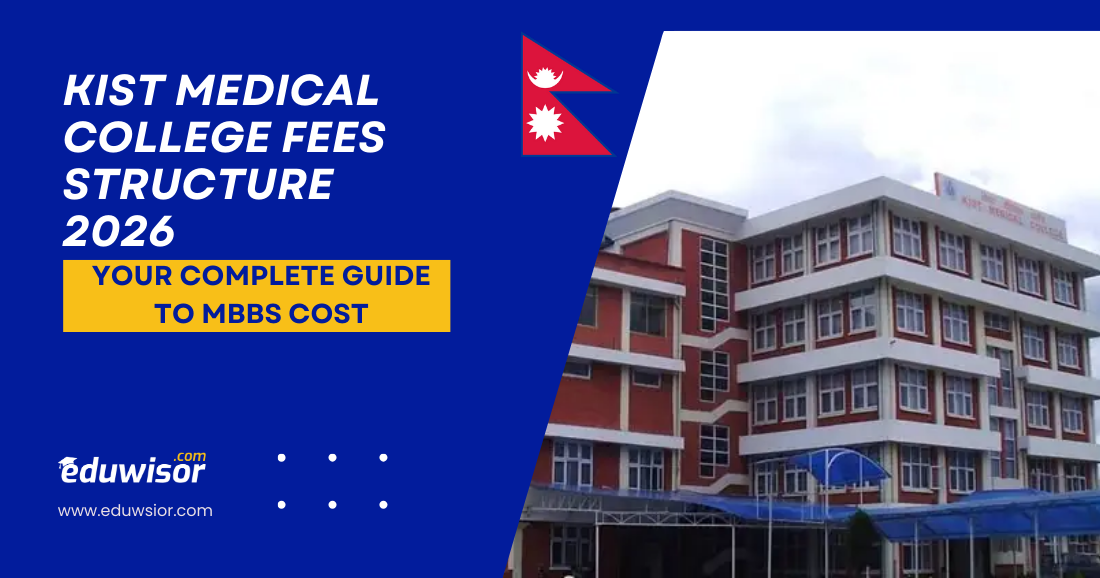
Choosing the right medical college is one of the most pivotal decisions in a student’s life. It’s a blend of ambition, aspiration, and, very pragmatically, financial planning. Among the premier institutions in Nepal, KIST Medical College (KIST MC), affiliated with Tribhuvan University, stands out for its academic rigor, modern facilities, and experienced faculty. However, navigating the financial commitment is a crucial first step for any aspiring doctor and their family.
This comprehensive, 4500-word guide is designed to be your ultimate resource for understanding the KIST Medical College fees structure in complete detail for the 2026 academic session. We will move beyond just listing numbers. We will decode the MBBS fee breakdown, explore hostel and additional costs, delve deep into scholarship opportunities and financial aid, compare affordability, and provide strategic advice for financial planning. Whether you are a student from Nepal, India, or another SAARC country, this guide aims to bring clarity and confidence to your financial planning for a medical career at KIST.
Introduction: The Value Proposition of KIST Medical College
Before diving into spreadsheets, it’s essential to understand what you are investing in. Established in 2006, KIST Medical College, located in Imadol, Lalitpur, is part of the renowned KIST Group of Institutions. Its teaching hospital, KIST Medical College Teaching Hospital (KISTMCTH), is a 600-bed multi-specialty facility, providing students with extensive hands-on clinical exposure from the early years.
The curriculum of Tribhuvan University’s Institute of Medicine (IOM) guides the college’s teaching, and major medical councils globally recognize it, including the Nepal Medical Council (NMC), the Medical Council of India (MCI, now NMC), and others. This recognition is paramount for students intending to practice internationally.
The fee structure at KIST Medical College reflects this standard of education, infrastructure, and clinical training. It is positioned as a mid-to-high-range institution in Nepal, offering value through quality rather than being the lowest-cost option. The investment is in a recognized degree, modern labs (like the state-of-the-art Clinical Skills Lab), a digital library, and a teaching hospital that sees a high patient inflow.
Complete Breakdown of KIST Medical College Fees Structure for MBBS (2026 Projection)
(Disclaimer: The following figures are based on the latest available data, historical trends, and official communications. Fees are subject to change by the college administration. Always confirm the final figures from the official KIST Medical College website or admission office before proceeding.)
The total cost of an MBBS degree at KIST is not a single lump sum but a combination of several components paid over 5.5 years (including the internship year). Here is a detailed, categorized breakdown.
1. Admission and Tuition Fees (The Core Cost)
This is the primary academic cost. For the 2026 intake, the total MBBS program fee is estimated to be in the range of NPR 55 – 60 Lakhs for Nepali students and USD 75,000 – 85,000 for International/Indian students for the entire course.
However, this total is paid in installments, typically per year or per semester. Let’s break it down year-wise for clarity:
- First Year (Total Estimated): This year involves the highest one-time payments.
- Admission Fee (One-time, Non-refundable): NPR 500,000 – 600,000 / USD ~7,000. This is a substantial upfront cost that secures your seat.
- Tuition Fee (First Year): NPR 800,000 – 900,000 / USD ~11,000.
- Other Academic Charges (Registration, University Enrollment, etc.): NPR 200,000 – 300,000 / USD ~3,000.
- First Year Estimated Total: NPR 1.5 – 1.8 Million / USD ~21,000.
- Second to Fifth Year (Per Year):
- The annual tuition fee for subsequent years is relatively lower than the first year.
- Annual Tuition Fee (2nd to 5th Year): NPR 700,000 – 800,000 per year / USD ~9,500 – 10,500 per year.
- This covers teaching, practicals, library access, and basic academic services.
- Internship Year (Fifth and a Half Year):
- During the compulsory rotating internship, students usually receive a small stipend rather than pay tuition. However, some nominal university or registration fees may apply, which are minimal (approx. NPR 50,000 – 100,000).
2. Hostel and Accommodation Fees
KIST Medical College provides separate hostel facilities for male and female students within its secure campus. The hostel fee structure is typically charged annually and includes basic amenities.
- Hostel Admission Fee (One-time): NPR 50,000 – 100,000 / USD ~700.
- Annual Hostel Rent: NPR 150,000 – 200,000 / USD ~2,000. This often includes a shared twin or triple-occupancy room.
- Food (Mess Charges): This is usually separate and paid monthly. Estimated at NPR 12,000 – 15,000 per month (NPR 144,000 – 180,000 annually) for three meals a day.
- Hostel Security Deposit (Refundable): A one-time refundable deposit of NPR 20,000 – 50,000 / USD ~300.
Total Annual Living Cost (Hostel + Food): Approximately NPR 300,000 – 380,000 / USD ~3,800 – 4,700 per year.
3. Additional and Hidden Costs (Crucial for Budgeting)
A prudent financial plan must account for these often-overlooked expenses:
- Examination Fees: Paid to Tribhuvan University for each semester/annual exam. Can range from NPR 10,000 – 20,000 per exam.
- Security Deposit (College): A refundable academic deposit, usually around NPR 100,000.
- Laboratory and Practical Fees: Sometimes charged separately for specific subjects or materials.
- Student Welfare Fund: A nominal annual fee for student activities.
- Medical Insurance: Mandatory for all students, especially international ones. Approx. NPR 10,000 – 15,000 annually.
- Books and Study Materials: While the library is well-stocked, students often buy personal reference books. Budget NPR 30,000 – 50,000 per year.
- Uniforms and Clinical Kits: Lab coats, dissection kits, stethoscopes, etc. Initial cost: NPR 25,000 – 40,000.
- Personal Expenses: Laundry, internet, local transport, and miscellaneous. At least NPR 10,000 – 15,000 per month.
4. Summary: Total Estimated Cost of MBBS at KIST Medical College
Let’s create a consolidated, approximate view for a Nepali student:
| Component | Estimated Cost (NPR) | Notes |
| Total Academic Fees (5.5 yrs) | 55,00,000 – 60,00,000 | Includes admission, tuition, university charges |
| Hostel & Accommodation (5 yrs) | 15,00,000 – 19,00,000 | Based on annual estimates |
| Food / Mess (5 yrs) | 7,20,000 – 9,00,000 | Based on monthly estimates |
| Additional & Personal Costs (5.5 yrs) | 5,00,000 – 7,00,000 | Books, insurance, exams, supplies, personal |
| GRAND TOTAL ESTIMATE | ~ NPR 82 – 95 Lakhs | For the complete MBBS program |
*For International/Indian Students, the total cost would be approximately USD 100,000 – 115,000 all-inclusive.*
Navigating Affordability: Scholarships and Financial Aid at KIST Medical College
Understanding the KIST Medical College scholarship and financial aid options can significantly reduce the financial burden. KIST offers several avenues:
- Merit-Based Scholarships: Awarded to top-performing students in the entrance examination (typically the top 3-5 ranks). This can range from a partial to a full waiver of the tuition fee for the first year or even subsequent years based on academic performance.
- Need-Based Financial Aid: The college has provisions to support economically disadvantaged but meritorious students. Documentation of family income is required, and the aid can cover a percentage of tuition fees.
- Special Category Scholarships: Some scholarships are reserved for students from specific regions, ethnic backgrounds, or those excelling in extracurricular activities.
- Educational Loans: KIST Medical College has tie-ups with major Nepali banks (like Nabil, NIC Asia, etc.) that offer educational loans for medical studies with favorable terms. Indian students can explore loans from Indian banks under the “Studies Abroad” scheme, as the degree is recognized by the NMC.
- Payment Plans: While the first-year fee is substantial, the college sometimes allows parents to negotiate a customized fee payment plan, spreading a portion of the cost over several installments within the academic year. This must be discussed directly with the accounts department.
How to Apply: Scholarship details and application forms are usually included in the admission packet or published on the college website after entrance results are declared. A separate application, often with supporting documents, is required.
Strategic Financial Planning: A Step-by-Step Guide for Parents & Students
Planning for an MBBS degree requires a long-term strategy. Here’s a practical approach:
- Early Research & Official Confirmation: Start 12-18 months before the target admission year. Visit the official KIST website and contact the admission office via email/phone to request the latest fee circular for 2026.
- Create a Detailed Spreadsheet: Use the breakdown in this guide as a template. Add rows for every possible expense. Always budget for the higher end of estimates to create a buffer.
- Explore Funding Sources Early:
- Savings & Investments: Assess existing education funds.
- Education Loans: Initiate preliminary talks with banks. Understand the eligibility, collateral requirements, interest rates, and moratorium period (usually until 6 months after course completion).
- Scholarships: Research all external scholarships from government bodies, trusts, and NGOs, in addition to college-specific ones.
- Plan for Currency Exchange (International Students): If you are paying in USD, monitor exchange rates. Consider tools like forward contracts with your bank to lock in a rate if the Nepali rupee is volatile.
- Budget for Inflation: College fees typically increase by 5-10% annually. Factor this in for future year payments.
- Keep an Emergency Fund: Always have a separate fund covering at least 6 months of expenses for unforeseen circumstances.
Comparative Analysis: How Does KIST Medical College Fees Stack Up?
Is KIST Medical College expensive? The answer is relative. Let’s briefly compare:
- Vs. Other Private Colleges in Nepal: KIST’s fees are competitive with other top-tier private institutions like Manipal College, Kathmandu University School of Medical Sciences (KUSMS), and Nobel Medical College. It is often more affordable than some colleges in Bhairahawa or Chitwan offering similar infrastructure.
- Vs. Government Colleges: Government colleges in Nepal have symbolic fees (less than NPR 1 Lakh for the entire course) but are extremely competitive, with less than 1% admission rates. KIST offers a realistic alternative with a guaranteed seat for those who can afford it.
- Vs. Indian Private Colleges: For Indian students, an MBBS seat in a private Indian college can cost anywhere from INR 1 Crore to over 2 Crores (NPR 1.6 – 3.2 Crore+). KIST, at roughly INR 60-80 Lakhs all-inclusive, presents a cost-effective alternative for Indian students with a recognized degree and no language barrier.
- The Value Differentiator: KIST’s primary teaching hospital is on-site and robust, which is not the case for all Nepali medical colleges. This ensures consistent, quality clinical training, justifying the investment.
Conclusion: An Investment in Your Medical Future
Decoding the KIST Medical College fees structure reveals that pursuing an MBBS here is a significant, but structured and transparent, financial commitment. The estimated total cost of NPR 82 to 95 Lakhs (or USD 105,000) encompasses a world-class medical education, comprehensive clinical exposure, and a globally recognized degree.
The key is proactive and meticulous planning. By understanding every component of the fee breakdown, actively pursuing scholarship and loan options, and creating a robust multi-year financial plan, the dream of becoming a doctor at KIST Medical College becomes an achievable reality.
Your Next Steps:
- Bookmark the official KIST Medical College website.
- Prepare a draft financial plan based on this guide.
- Contact the admission office for the 2026 fee circular as soon as it is released (usually in December 2024/January 2026).
- Simultaneously, begin your academic preparation for the demanding entrance examination.
The path to a white coat is challenging, but with the right financial roadmap, you can focus on what matters most: your journey to becoming a compassionate and skilled healthcare professional.
Eduwisor always guides students toward the right path with an unbiased approach. You can follow us on Youtube, Facebook, Instagram, Twitter, and Linkedin. Stay tuned for regular updates.
Interested in applying? Contact authorized Eduwisor consultant for a smooth admission process!
Act NOW—limited seats for 2026 intake! Call/WhatsApp: 9326395883/ 9076036383
