

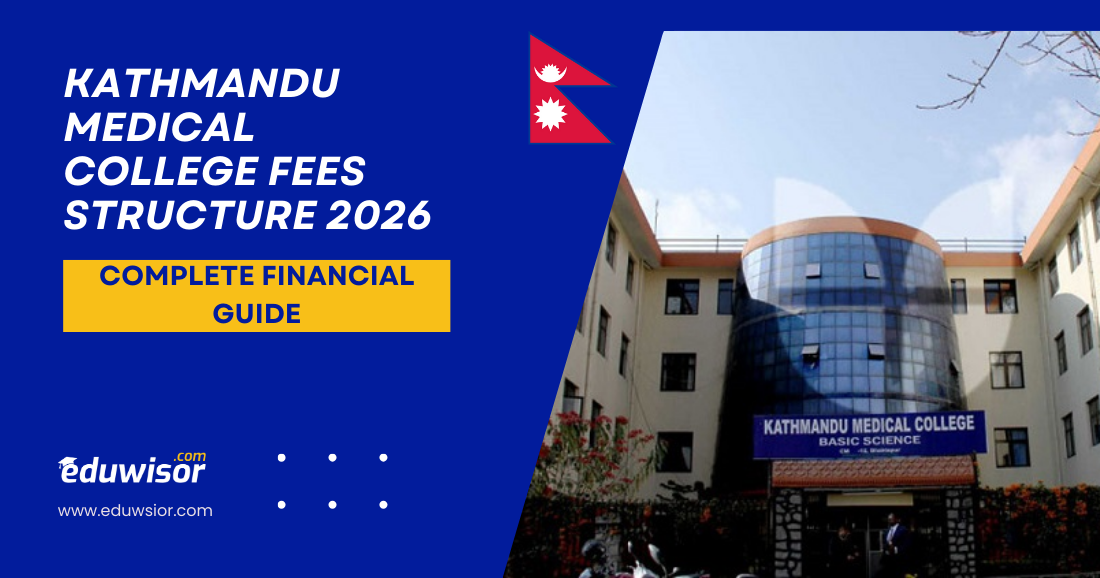
Choosing to pursue a medical degree is one of the most significant decisions of your life, intertwined not just with academic aspirations but also with substantial financial planning. In the heart of Nepal, Kathmandu Medical College (KMC) stands as a premier institution, attracting hundreds of Indian and international students annually. However, navigating the complete Kathmandu Medical College fees structure can be complex, layered with tuition, auxiliary charges, and hidden costs. This comprehensive 5500-word guide is designed to be your definitive financial blueprint. We will dissect the KMC MBBS fees, explore costs for other programs, analyze payment modalities, delve deep into scholarship opportunities, and evaluate the return on investment. Our goal is to provide absolute transparency, enabling you and your family to make an informed, stress-free decision about investing in a medical career at one of Nepal’s top colleges.
Understanding the Institution: Kathmandu Medical College (KMC) at a Glance
Before delving into numbers, it’s crucial to understand what you are investing in. Established in 1997 under the auspices of the Kathmandu Medical and Educational Trust, KMC is affiliated with Kathmandu University and is recognized by major medical councils globally, including the Nepal Medical Council (NMC), the Medical Council of India (now NMC), and others. It operates twin teaching hospitals—KMC Hospital in Sinamangal and KMC Duwakot—providing students with extensive clinical exposure. This reputation for academic rigor and practical training is a fundamental part of the fee value proposition.
The Complete Kathmandu Medical College Fees Structure for MBBS Program (2026-27)
The MBBS program, spanning five and a half years (including a one-year compulsory internship), constitutes the primary draw for most students. The fee structure for MBBS in Nepal, particularly at KMC, is often more structured and predictable than in many private Indian institutions. The total cost is typically presented as a lump sum for the entire course, payable in installments.
Important Note: All figures quoted are for the 2026-25 academic session for general category students (primarily Indian and other international students). Fees are subject to annual revision by the college management and affiliated university. Nepali national students have a different, subsidized fee structure.
1. Total Course Fee for MBBS:
The total KMC MBBS fees for the complete program for international/Indian students is approximately NRs. 55,00,000 to NRs. 60,00,000 (Nepalese Rupees). In Indian currency, this translates roughly to ₹ 34,30,000 to ₹ 37,50,000 (using a rough conversion of 1 NPR = 0.624 INR). This is the core tuition fee.
2. Detailed Year-wise and Component-wise Breakdown:
The total sum is not paid at once. The Kathmandu Medical College tuition fees are divided into installments over the first four years.
- First Year (First Installment): This is the heaviest financial outlay.
- Admission/Tuition Fee: Approximately NRs. 22,00,000 (₹ ~13,72,800)
- Security Deposit: Refundable deposit of NRs. 1,00,000 (₹ ~62,400)
- Other Charges: Registration, university enrollment, lab, library, and student welfare fund may add another NRs. 1,00,000 – 1,50,000.
- First Year Total Outlay: ~NRs. 24,00,000 (₹ ~14,97,600)
- Second Year (Second Installment):
- Tuition Fee: Approximately NRs. 11,00,000 (₹ ~6,86,400)
- Third Year (Third Installment):
- Tuition Fee: Approximately NRs. 11,00,000 (₹ ~6,86,400)
- Fourth Year (Fourth Installment):
- Tuition Fee: Approximately NRs. 11,00,000 (₹ ~6,86,400)
- Fifth Year & Internship: Usually, no major tuition fees are charged during the final theory year and the compulsory rotating internship. However, nominal examination and university registration fees apply.
3. Hostel and Living Expenses (KMC Hostel Charges):
A critical part of the Kathmandu Medical College fees structure is accommodation. KMC provides separate hostel facilities for male and female students.
- Hostel Fee (Annual): Ranges from NRs. 1,20,000 to NRs. 2,00,000 per year (₹ ~75,000 to ₹ 1,25,000), depending on the room type (single, double, triple sharing) and hostel block (newer facilities cost more).
- Hostel Security Deposit: A one-time refundable deposit of NRs. 25,000 – 50,000.
- Mess/Food Charges: Students typically pay separately for food. Monthly mess charges range from NRs. 12,000 to NRs. 18,000 (₹ ~7,500 to ₹ 11,200), depending on dietary preferences.
4. Additional One-Time and Annual Costs:
- Admission Processing Fee: Paid during application.
- Medical Insurance: Mandatory for international students.
- Study Materials & Books: Budget around NRs. 40,000-60,000 per year (₹ 25,000-37,500).
- Examination Fees: Paid to Kathmandu University per semester.
- Personal Expenses: Including local travel, clothing, and miscellaneous, can range from NRs. 8,000-15,000 per month (₹ 5,000-9,400).
Kathmandu Medical College Fee Structure for Other Programs: MD/MS, Nursing, and BDS
While MBBS is the flagship, KMC’s fee structure encompasses postgraduate and paramedical courses.
1. Postgraduate (MD/MS) Fees:
The KMC MD MS fees vary significantly by specialization. The total course fee for three-year programs can range from:
- Clinical Specialties (MD in General Medicine, Pediatrics, etc.): NRs. 70,00,000 to NRs. 1,00,00,000+ (₹ 43.68 Lakhs to ₹ 62.4 Lakhs+).
- Para-Clinical & Basic Sciences (MD in Anatomy, Biochemistry, etc.): NRs. 25,00,000 to NRs. 40,00,000 (₹ 15.6 Lakhs to ₹ 25 Lakhs).
2. Bachelor of Dental Surgery (BDS) Fees:
The total course fee for BDS is generally lower than MBBS, approximately NRs. 40,00,000 to NRs. 45,00,000 (₹ 25 Lakhs to ₹ 28 Lakhs) for the full program.
3. Bachelor of Science in Nursing (BSc Nursing) Fees:
The total fee for the four-year BSc Nursing program is approximately NRs. 20,00,000 to NRs. 25,00,000 (₹ 12.5 Lakhs to ₹ 15.6 Lakhs).
The “Hidden” Costs: What Many Guides Don’t Tell You
A transparent KMC fee breakdown must account for often-overlooked expenses:
- Visa and Immigration Costs: For Indian students, a student visa needs annual renewal with associated fees. Other nationals have different visa costs.
- Travel: Annual round-trip flights between home country and Kathmandu.
- Electronic Devices: A good laptop is essential.
- Winter Expenses: Kathmandu winters are cold; budgeting for heating and appropriate clothing is necessary.
- Extracurricular and Conference Fees: For students aiming to build their profiles.
Kathmandu Medical College Scholarship and Financial Aid: Easing the Burden
KMC offers several avenues under its Kathmandu Medical College scholarship policy to support meritorious and needy students. This directly reduces the effective MBBS cost in Nepal for Indian students.
- Merit-Based Scholarships: Top rankers in the entrance exam and academic toppers in university exams may receive tuition waivers of 10%-25%.
- Need-Based Financial Aid: Documented cases of financial hardship are considered for partial fee concessions.
- Special Quota Scholarships: Some scholarships are reserved for students from specific regions or backgrounds.
- Educational Loans: KMC has tie-ups with major Nepali and Indian banks (like State Bank of India branches in Nepal) that offer educational loans with collateral to cover the Kathmandu Medical College tuition fees. Indian students can also avail loans from Indian banks under the “Studies Abroad” scheme.
Payment Schedule and Modalities: Planning Your Cash Flow
Understanding the KMC payment schedule is key to financial planning.
- Admission Confirmation: The first installment is due immediately upon acceptance of the admission offer, usually within 7-10 days.
- Subsequent Installments: Fees for the 2nd, 3rd, and 4th years are due at the beginning of each academic year.
- Payment Methods: Fees can be paid via SWIFT bank transfer, demand draft, or in some cases, through linked Indian bank accounts. Credit card payments may attract surcharges.
Comparative Analysis: KMC Fees vs. Other Medical Colleges in Nepal and India
- Vs. Other Nepali Private Colleges: KMC’s fees are competitive with other top-tier colleges like Manipal College of Medical Sciences (MCOMS) and are often lower than newer, lesser-known institutions that might have hidden costs.
- Vs. Indian Private Medical Colleges: The total MBBS cost in Nepal for Indian students at KMC (₹ 35-38 Lakhs) is significantly lower than the capitation fees for Indian private colleges, which can range from ₹ 70 Lakhs to over ₹ 1 Crore for the total course. This is the primary economic driver for Indian students.
- Value Proposition: KMC offers recognized degrees, good patient inflow, and a cultural/linguistic environment similar to India, making it a high-value proposition.
Return on Investment (ROI): Is KMC Worth the Fee?
Evaluating the Kathmandu Medical College fees structure is incomplete without assessing ROI.
- Degree Recognition: The degree is recognized in India (after clearing the FMGE/NExT), Nepal, and many other countries, opening global opportunities.
- Clinical Exposure: High patient load in affiliated hospitals ensures robust practical training.
- Post-Graduation Pathways: KMC graduates successfully pursue MD/MS in Nepal, India (via NEET-PG), and other countries.
- Career Earnings Potential: A qualified doctor, after clearing requisite licensing exams, can expect a stable and respected career with strong earning potential over a lifetime, justifying the initial investment.
Financial Planning Tips for Prospective Students
- Start Early: Begin saving and exploring loan options a year in advance.
- Official Sources Only: Always confirm the latest Kathmandu Medical College fees structure directly from the college’s accounts office or official website. Never rely solely on agents.
- Budget for Inflation: Factor in a 5-7% annual increase in living costs and potential fee hikes.
- Maintain Documentation: Keep all fee receipts, bank transaction slips, and scholarship letters meticulously for future reference and visa renewals.
- Explore All Aid: Actively apply for every scholarship and financial aid opportunity you are eligible for.
Navigating the Admission Process: From Inquiry to Enrollment
- Eligibility: 10+2 with Physics, Chemistry, Biology, and English, with minimum marks (usually 50% aggregate, higher for Indian students). Must qualify for the Kathmandu University Medical Entrance Test (KUMET) or relevant entrance exam.
- Application: Obtain forms from the KMC website or admission office.
- Counseling & Seat Allotment: Based on entrance rank and choice filling.
- Fee Payment & Admission: Upon seat allotment, pay the first installment to confirm admission.
Conclusion: An Investment in Your Medical Future
The Kathmandu Medical College fees structure represents a substantial but calculated investment in a world-class medical education. While the figures—KMC MBBS fees totaling around ₹ 35-38 lakhs—require serious financial commitment, they must be viewed in the context of the alternative costs, the quality of education, and the lifelong career it enables. With prudent planning, utilization of available Kathmandu Medical College financial aid, and a clear understanding of the complete KMC fee breakdown provided in this guide, the path to becoming a doctor at KMC becomes not just a dream, but a achievable financial and academic plan. Your journey in medicine begins with informed choices, and we hope this detailed guide illuminates the financial pathway to Kathmandu Medical College.
Eduwisor always guides students toward the right path with an unbiased approach. You can follow us on Youtube, Facebook, Instagram, Twitter, and Linkedin. Stay tuned for regular updates.
Interested in applying? Contact authorized Eduwisor consultant for a smooth admission process!
Act NOW—limited seats for 2026 intake! Call/WhatsApp: 9326395883/ 9076036383
