

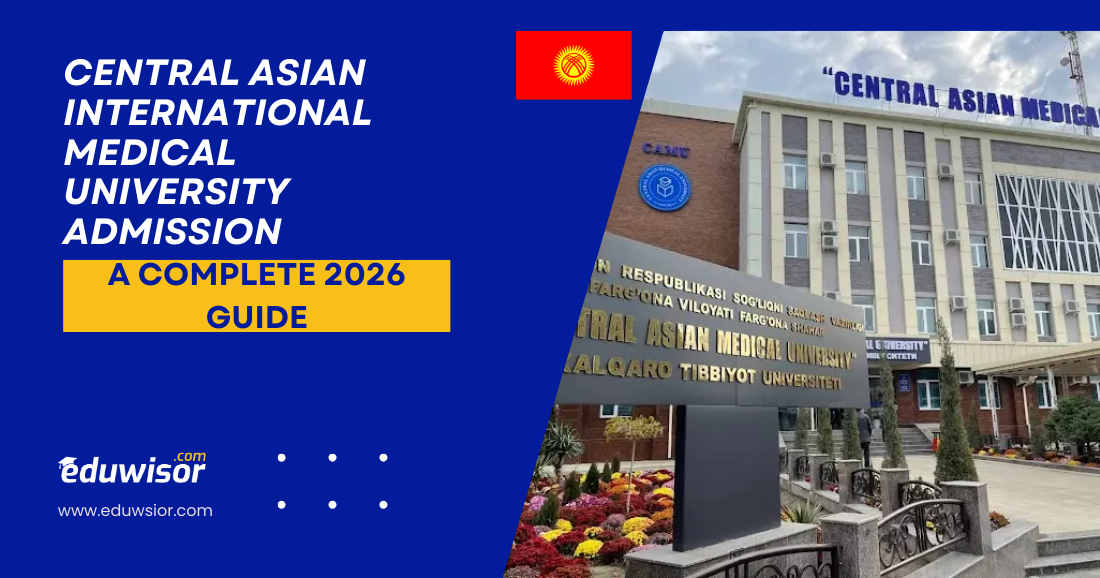
The dream of wearing the white coat and serving humanity through medicine is a powerful calling. Yet, for thousands of aspiring doctors, intense competition, limited seats, and exorbitant costs in their home countries can turn this dream into a distant mirage. This is where the global landscape of medical education opens doors to prestigious, affordable, and high-quality alternatives. Standing out prominently in this realm is the Central Asian International Medical University (CAIMU) in Bishkek, Kyrgyzstan. If you are researching Central Asian International Medical University admission, you are likely on a pivotal journey—one that requires clear, detailed, and trustworthy information. This ultimate 8500-word guide is meticulously crafted to be your single-point resource, demystifying every aspect of the admission process, academic life, and future prospects at CAIMU.
Chapter 1: Understanding the Beacon – Central Asian International Medical University
Before delving into the Central Asian International Medical University admission procedure, it’s crucial to understand the institution itself. Established with a vision to become a nexus of advanced medical education and research in Central Asia, CAIMU has rapidly grown into a preferred destination for international students, particularly from India, Nepal, Pakistan, and the Middle East.
Why has CAIMU gained such traction?
The answer lies in its synthesis of traditional academic rigor and modern pedagogical approaches. The university operates on a foundational principle: to make world-class medical education accessible without compromising on quality. It is recognized by major international medical bodies, including:
- The National Medical Commission (NMC) of India, formerly MCI.
- The World Health Organization (WHO), listing it in the World Directory of Medical Schools.
- The Ministry of Education and Science, Kyrgyz Republic.
This recognition is not merely a formality; it is the golden key that allows graduates to sit for licensing exams like the FMGE/NExT in India, USMLE in the USA, PLAB in the UK, and others, paving their way to global practice.
The campus in Bishkek—a vibrant, safe, and culturally rich capital city—is equipped with state-of-the-art infrastructure. From digitally integrated lecture halls and sophisticated simulation labs to extensive libraries with international journals, the environment is designed to foster learning. The university’s affiliated multi-specialty hospitals provide students with early and consistent clinical exposure, a critical component often missing in the initial years of medical programs elsewhere.
Chapter 2: The Compelling Advantages – Why Choose CAIMU for Your MBBS?
Choosing where to invest six critical years of your life is a monumental decision. Here’s a detailed breakdown of the advantages that make the Central Asian International Medical University admission a strategic choice for a medical career.
1. Unbeatable Cost-Effectiveness:
This is often the primary driver. The entire MBBS program fee at Central Asian International Medical University is a fraction of the cost of private medical colleges in many Asian countries. When you combine affordable tuition with low living expenses in Kyrgyzstan, the total financial investment becomes manageable for middle-class families, eliminating the need for crippling education loans.
2. No Donation or Capitation Fee:
The Central Asian International Medical University admission process is refreshingly transparent. Admissions are based strictly on merit and eligibility criteria. There are no hidden “donations” or massive capitation fees, a significant relief for parents navigating the often-opaque world of medical admissions.
3. High-Quality, English-Medium Education:
The complete MBBS program is taught in English, removing language barriers from day one. However, the curriculum also includes dedicated Russian and Kyrgyz language classes. This is a strategic advantage, enabling students to communicate effectively with local patients during clinical postings, thereby gaining richer practical experience and becoming truly global physicians.
4. Internationally Recognized Degree:
As highlighted, the NMC, WHO, and ECFMG recognitions are the cornerstone of the degree’s global value. A CAIMU graduate is eligible to pursue postgraduate training or employment worldwide, subject to passing the respective country’s licensing examination.
5. Multicultural Environment & Indian Community:
With a diverse student body from over 15 countries, CAIMU is a microcosm of the world. This exposure builds cultural competence—an essential skill for modern doctors. A strong and supportive Indian student community ensures newcomers never feel alienated, celebrating festivals together and providing peer-to-peer guidance.
6. Focus on Practical, Clinical Skills:
From the third year onwards, students are integrated into hospital settings. The curriculum is designed to move beyond rote learning, emphasizing hands-on training in diagnosis, patient interaction, and procedural skills under the supervision of experienced clinicians.
7. Safe and Conducive Environment:
Kyrgyzstan, and Bishkek in particular, is known for its safety and hospitality towards international students. The cost of living is low, and the city offers a blend of natural beauty (with the stunning Tian Shan mountains as a backdrop) and urban amenities.
Chapter 3: The Central Asian International Medical University Admission 2026 – Complete Eligibility & Criteria
The gateway to your MBBS seat is understanding and meeting the Central Asian International Medical University eligibility criteria. The requirements are straightforward and designed to ensure students are prepared for the rigors of the program.
Academic Qualifications:
- For Indian Students: You must have completed your 10+2 or equivalent (HSC) from a recognized board (CBSE, ICSE, State Boards).
- Stream: Must have Physics, Chemistry, and Biology (PCB) as core subjects.
- Minimum Marks: A minimum aggregate of 50% in PCB is mandatory for General Category students. For students from reserved categories (SC/ST/OBC), the requirement is typically 40-45%. It is imperative to confirm the exact percentage for the current admission cycle with authorized representatives.
- Qualifying Exam: A valid score in the NEET-UG examination is compulsory for Indian citizens. This is a non-negotiable requirement mandated by the NMC for all Indian students pursuing MBBS abroad.
Age Requirement:
The student must be at least 17 years of age as of December 31st of the admission year. There is usually an upper age limit, but it is generally flexible for students pursuing higher education.
Essential Documentation:
Having your documents in order is half the battle won for your Central Asian International Medical University admission. Start preparing these:
- Academic Mark Sheets & Certificates: Class 10th and 12th mark sheets and passing certificates.
- Valid Passport: Your passport must have a validity of at least 18 months from the date of application.
- NEET-UG Scorecard & Admit Card: Proof of qualification.
- Birth Certificate: For age verification.
- Medical Fitness Certificate: Including HIV and COVID-19 vaccination/test reports as per current travel norms.
- Passport-Sized Photographs: As per specification (usually white background).
- Letter of Recommendation & Statement of Purpose (Optional but Recommended): These can strengthen your application profile.
- Migration & Transfer Certificates: From your last institution.
- Authorization & Legalization: All educational documents may need to be notarized and apostilled by the Ministry of External Affairs (MEA) in India.
Chapter 4: A Step-by-Step Walkthrough of the Central Asian International Medical University Admission Procedure
The Central Asian International Medical University admission process is systematic. Following these steps diligently will ensure a smooth, hassle-free experience.
Step 1: Research & Initial Inquiry
Begin by gathering all information from the official university website and authorized admission partners. Be wary of unauthorized agents making unrealistic promises.
Step 2: Application Form Submission
Fill out the detailed online application form available on the university’s portal or through a trusted representative. Accuracy is paramount—double-check all personal and academic details.
Step 3: Document Submission & Verification
Submit scanned copies of all the required documents listed above for preliminary scrutiny by the Central Asian International Medical University admission committee.
Step 4: Receiving the Admission Letter
Upon successful verification of your eligibility and documents, the university will issue a formal Admission Letter or Invitation Letter. This is a crucial document for your student visa application.
Step 5: Fee Payment
As per the fee structure provided, pay the first-year tuition fees directly to the university’s official bank account. Always insist on a fee payment receipt.
Step 6: Student Visa Application
With the admission letter, fee receipt, and other required documents (passport, medical tests, etc.), apply for a student visa (Category V) at the Embassy of the Kyrgyz Republic in your home country. The university’s international office often provides guidance and necessary visa support letters.Step 7: Departure & University Enrollment
Once the visa is stamped, book your tickets. Inform the university or your assigned coordinator about your travel itinerary. Upon arrival in Bishkek, university representatives usually assist with airport pickup and initial settlement. You will then complete the final university registration, undergo a medical check-up, and begin your orientation program.
Chapter 5: Financial Planning – Central Asian International Medical University Fee Structure 2026
Transparency in finances is critical. The Central Asian International Medical University fee structure is remarkably consistent and affordable. Below is an approximate breakdown (in USD) for the 2026 intake. Note: Fees are subject to change; always confirm with the latest university prospectus.
- Tuition Fee per Year: $4,200 – $4,500
- Hostel Accommodation Fee per Year: $800 – $1,200 (depending on room type – shared, single, or suite with amenities)
- Medical Insurance per Year: $150 – $200 (mandatory for all international students)
- Other One-Time Charges (Registration, Admission Kit, etc.): $500 – $800 (approximately in the first year)
Total First-Year Approximate Cost: $5,650 – $6,700
Subsequent Years: The cost reduces as you only pay tuition, hostel, and insurance.
Living Expenses in Bishkek:
A student can live comfortably on a budget of $150 – $250 per month, covering food, local transport, utilities, and miscellaneous expenses. This makes the overall cost of education at CAIMU one of the most competitive in the region.
Chapter 6: Life Beyond the Classroom – Hostel, Campus & Student Life
Securing Central Asian International Medical University admission is the start of an exciting life chapter.
Hostel Facilities:
CAIMU offers on-campus and off-campus hostel options. The hostels are secure, with 24/7 surveillance and wardens. Rooms are furnished (bed, study table, wardrobe) and available on a sharing basis (2-3 students). Common kitchens allow students to cook their own meals, a significant cost-saving and comfort factor for Indian students craving home food. Separate hostels for boys and girls are maintained with strict rules.
Campus & Facilities:
The campus is a self-contained ecosystem:
- Modern Lecture Theatres: Equipped with audiovisual aids.
- Laboratories: Spacious, well-ventilated labs for Anatomy, Biochemistry, Physiology, Pathology, Microbiology, etc.
- Central Library: A treasure trove of textbooks, reference books, and online journals.
- Computer Labs & High-Speed Internet.
- Sports Complex & Recreation Areas: For physical fitness and extracurricular activities.
- Indian Food Mess/Cafeteria: Many hostels have dedicated mess facilities serving Indian vegetarian and non-vegetarian food.
Cultural Adaptation & Community:
The initial days involve adapting to a new climate (cold winters) and culture. However, the existing senior Indian students and the university’s international student office provide immense support. Celebrations of Diwali, Holi, and Eid are common on campus, creating a home away from home.
Chapter 7: The Academic Journey – MBBS Syllabus & Teaching Methodology
The MBBS program at CAIMU spans 6 years, following a pattern similar to European standards: 5 years of integrated academic and clinical study + 1 year of mandatory internship.
- Years 1-2: Pre-Clinical Sciences. Focus on building a strong foundation in Basic Medical Sciences: Human Anatomy (including gross dissection), Histology, Physiology, Biochemistry, Biophysics, and Introduction to Patient Care. Language classes (Russian/Kyrgyz) are also intensive during this period.
- Years 3-4: Para-Clinical & Clinical Sciences. Transition to subjects like Pathology, Pharmacology, Microbiology, Forensic Medicine, and the beginnings of clinical subjects: Internal Medicine, General Surgery, Pediatrics, Obstetrics & Gynecology. Bedside teaching and clinical postings in affiliated hospitals begin.
- Year 5: Clinical Rotations. Full immersion in hospital-based training across major departments: Psychiatry, Dermatology, Radiology, Orthopedics, Ophthalmology, Otorhinolaryngology (ENT), etc.
- Year 6: Internship. A compulsory rotating internship in university-affiliated hospitals, where students work under supervision, applying their knowledge to manage real patients.
The teaching methodology blends traditional lectures with Problem-Based Learning (PBL), case discussions, and simulation training. Regular assessments, practical exams, and viva voces ensure continuous learning.
Chapter 8: The Road After CAIMU – Career Pathways & Licensing Exams
A degree from CAIMU is a launchpad, not the final destination. Your career path depends on the licensing exam you clear.
1. For Practicing in India: The FMGE/NExT
All Indian graduates must pass the Foreign Medical Graduate Examination (FMGE, soon to be replaced by the National Exit Test – NExT) to obtain a license to practice in India. The university’s curriculum is aligned with NMC guidelines to prepare students for this challenge. A focused self-study plan in the final years, coupled with coaching if needed, is essential for success.
2. For Postgraduate (PG) Studies in India:
After clearing FMGE/NExT, you can appear for the NEET-PG examination to compete for PG seats in India, just like graduates from Indian colleges.
3. For USA (USMLE):
The United States Medical Licensing Examination is a three-step process. CAIMU’s recognition by ECFMG allows graduates to pursue this path, leading to residency and a medical career in the USA.
4. For UK (PLAB/UKMLA):
Similarly, graduates can take the Professional and Linguistic Assessments Board (PLAB) tests or the upcoming UKMLA to practice in the United Kingdom.
5. For Other Countries: Options include licensing exams in Australia (AMC), Germany, Canada, and other nations, or pursuing PG directly in Kyrgyzstan or neighboring countries like Russia.
6. Higher Studies & Research: Opportunities exist for Masters (MD/MS) or PhD programs in various specializations abroad or in Kyrgyzstan itself.
Chapter 9: Vital FAQs on Central Asian International Medical University Admission
Q1. Is Central Asian International Medical University good for Indian students?
A: Yes, it is an excellent choice due to its NMC recognition, affordable fees, English medium, strong Indian community, and proven track record of graduates passing FMGE.
Q2. Is the MBBS degree from CAIMU valid worldwide?
A: The degree is recognized by WHO and listed in the World Directory of Medical Schools, making it eligible for licensing exams in most countries, including India, the USA, the UK, Canada, Australia, and GCC nations.
Q3. What is the medium of instruction?
A: The entire MBBS program is taught in English. However, Russian/Kyrgyz language classes are part of the curriculum to assist with patient interaction during clinical years.
Q4. Is Kyrgyzstan safe for Indian students?
A: Yes, Kyrgyzstan, and particularly Bishkek, is considered very safe for international students. The locals are friendly, and the university ensures a secure campus and hostel environment.
Q5. What is the total cost for the complete 6-year MBBS at CAIMU?
A: The total approximate cost, including tuition, hostel, and living expenses, ranges between $35,000 to $42,000 (approx. INR 29-35 lakhs) for the entire 6-year program, which is exceptionally affordable.
Q6. Are there any entrance exams for CAIMU admission?
A: There is no separate university entrance exam. Admission is based on your 10+2 marks and a valid NEET-UG score (for Indian students).
Q7. What is the hostel food situation? Can we cook Indian food?
A: While some hostels have Indian mess facilities, most hostels provide common kitchens where students can cook their own meals, which is a popular and economical option.
Chapter 10: Common Pitfalls & How to Ensure a Smooth Admission Journey
- Beware of Fraudulent Agents: Only work with authorized representatives. Verify their credentials and cross-check all promises with the university’s official website.
- Never Pay Cash: Always make fee payments via bank transfer to the university’s official account. Obtain and preserve receipts.
- Don’t Ignore NEET: NEET-UG qualification is mandatory. Do not believe agents who say otherwise.
- Start Early: The admission process, including document attestation and visa, can take time. Begin 6-8 months before the intake (usually September).
- Connect with Alumni: Reach out to current students or alumni via social media groups. Their firsthand experience is invaluable.
Conclusion: Your Medical Dream Awaits at CAIMU
The journey to becoming a doctor is demanding, but the path need not be prohibitively expensive or inaccessible. The Central Asian International Medical University admission process opens a legitimate, structured, and promising avenue for dedicated students worldwide. By offering an NMC-recognized degree at an affordable cost within a supportive international environment, CAIMU stands as a beacon of opportunity.
Thorough research, meticulous document preparation, and following the official procedures are your keys to unlocking this opportunity. If you meet the eligibility criteria and are prepared for the dedicated study required not only at university but also for subsequent licensing exams, CAIMU can be the perfect launchpad for a respected and rewarding global medical career.
Your white coat awaits. Take the first informed step today.
Eduwisor always guides students toward the right path with an unbiased approach. You can follow us on Youtube, Facebook, Instagram, Twitter, and Linkedin. Stay tuned for regular updates.
Interested in applying? Contact authorized Eduwisor consultant for a smooth admission process!
Act NOW—limited seats for 2026 intake! Call/WhatsApp: 9326395883/ 9076036383
