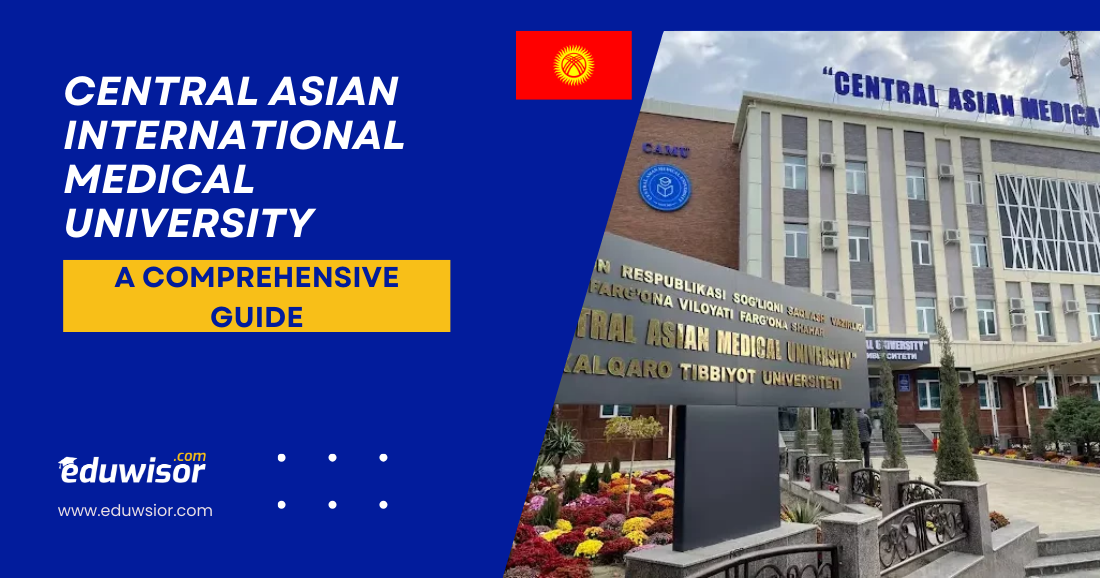

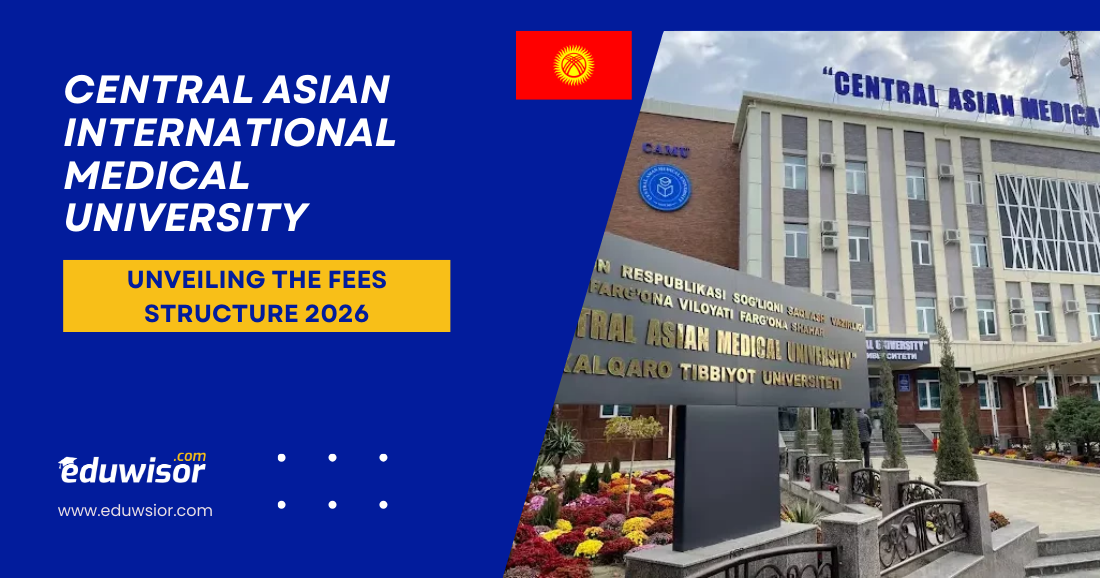
The dream of becoming a doctor is a powerful one, but for thousands of aspiring medical students, especially from countries like India, Nepal, Bangladesh, and across Africa and the Middle East, this dream often collides with a daunting reality: the exorbitant cost of medical education. Astronomical tuition fees at private institutions, intense competition for limited government seats, and the sheer financial burden on families have made the pursuit of an MBBS degree increasingly challenging. In this landscape, international education has emerged as a viable, strategic, and surprisingly affordable pathway. And at the forefront of this movement stands the Central Asian International Medical University (CAIMU) in Bishkek, Kyrgyzstan. CAIMU has carved a niche for itself as a premier destination for affordable, quality medical education without compromising on global standards. Major medical councils worldwide, including the National Medical Commission (NMC) of India, recognize it. Its listing in the World Directory of Medical Schools (WDOMS) and approval by bodies like ECFMG and FAIMER enable its graduates to practice in numerous countries after they clear the respective licensing exams.
However, “affordable” is a relative term. For a decision as significant as investing five to six years of your life and resources, transparency is paramount. This exhaustive 5500-word guide is dedicated to demystifying the complete Central Asian International Medical University fees structure. We will go far beyond just listing tuition numbers. We will dissect every component—from the first admission fee to the final-year hostel charges—explore hidden costs, compare the investment with alternatives, analyze the return on investment (ROI), and provide a robust framework for your financial planning. Consider this your one-stop, definitive financial blueprint for your MBBS journey at CAIMU.
Chapter 1: Why Understanding the Complete Fee Structure is Non-Negotiable
Before diving into the numbers, it’s crucial to understand why a granular understanding of the fee structure is essential.
- Avoids “Sticker Shock”: Many students and parents budget only for tuition. Unexpected costs for insurance, visa renewal, medical check-ups, or even annual hostel deposits can strain finances mid-course.
- Facilitates Accurate Loan Applications: When applying for an education loan, presenting a detailed, official breakdown of all expenses (not just tuition) increases your credibility and helps you secure the correct amount, avoiding a shortfall.
- Enables Comparison: A holistic view allows for a true apples-to-apples comparison with private medical colleges in your home country or other universities abroad.
- Promotes Financial Discipline: Knowing all expenses in advance helps students create a realistic monthly budget for living expenses, fostering responsible financial habits.
- Ensures Transparency and Trust: A clear, detailed fee structure is a hallmark of a reputable institution. It builds trust between the university, the student, and their family.
Chapter 2: The Core Pillar: Breaking Down the Official Central Asian International Medical University Fees Structure (Year-Wise)
The Central Asian International Medical University fees structure is typically outlined in USD, given its international student body. The fees are generally consistent across the 5-year MBBS program, with some variations possible in the first year due to one-time charges. Note: All figures mentioned are approximate and based on prevailing structures. Always confirm with the official university admissions office or authorized representatives for the exact year of your admission.
Total Package Estimate (5-Year MBBS Program): The complete investment for the MBBS degree at CAIMU, encompassing tuition, hostel, and other mandatory university charges, typically ranges between $28,000 to $35,000 for the entire program. When converted, this presents a figure that is a fraction of the cost of private medical education in many Asian countries.
Let’s dissect this year by year.
First Year (1st Year) – The Inception Year:
The first year involves the highest one-time payments.
- Tuition Fee: Approximately $4,000 – $4,500.
- Admission/Registration Fee: A one-time charge of approximately $500 – $1,000.
- Hostel Fee (Annual): Around $800 – $1,200 for a shared room with basic amenities. This usually covers the academic year (10 months).
- Medical Insurance: Mandatory health insurance for international students, roughly $150 – $300 per year.
- Visa Support & Registration: Costs associated with invitation letters, initial visa processing, and resident registration in Kyrgyzstan: $200 – $400.
- Security Deposit (One-time, Refundable): A caution deposit for hostel and university property, usually $100 – $300, refundable upon completion of studies minus any damages.
- Miscellaneous University Charges: This may include library membership, student ID, lab coat, etc., totaling around $100 – $200.
*Estimated First-Year Total: $5,850 – $7,900.*
Second to Fifth Years (2nd to 5th Year) – The Core Academic Years:
These years have a more streamlined cost structure, primarily revolving around tuition and hostel.
- Tuition Fee (Per Year): Consistent, approximately $4,000 – $4,500 per year.
- Hostel Fee (Per Year): Consistent, approximately $800 – $1,200 per year.
- Medical Insurance (Per Year): $150 – $300 per year.
- Visa Extension Fee (Annual): Cost for renewing the student residency permit: $100 – $200 per year.
*Estimated Cost Per Subsequent Year (Years 2-5): $5,050 – $6,200 per year.*
Final (6th Year – Internship):
- Internship/Practical Training Fee: This may have a separate fee, often lower than the tuition fee, or may be included in the 5th-year package. Clarify this with the university. Estimated: $1,000 – $2,000.
Chapter 3: Beyond the University Bill: The Real Cost of Living – Managing Your Monthly Budget in Bishkek
The Central Asian International Medical University fees structure covers your academic and basic accommodation costs. But to live and thrive as a student, you must budget for daily living expenses. Bishkek is renowned for its remarkably low cost of living, which is a significant factor in the overall affordability of studying at CAIMU.
Monthly Living Expenses Breakdown (Approximate):
- Food & Groceries: This is the most variable cost.
- Self-Cooking: If you cook in the hostel’s communal kitchen, your monthly grocery bill can be as low as $80 – $150. Local markets offer fresh produce, meat, and staples at very affordable prices.
- University Mess/Canteen: CAIMU and private mess services near campus offer meal plans. A decent monthly mess plan can range from $100 – $200.
- Eating Out: Occasional meals at local cafes or restaurants are inexpensive. A meal at a mid-range restaurant might cost $5-$10.
- Local Transportation: Bishkek has an extensive network of marshrutkas (shared minibuses), buses, and taxis.
- Public transport fare per ride: $0.15 – $0.30.
- Monthly transport pass: $10 – $15.
- Taxi (using apps like Yandex.Taxi) for short distances: $1 – $3.
- Utilities & Internet:
- Hostel fees usually include basic utilities (electricity, water, heating). For personal mobile data and internet, a good monthly plan costs $5 – $10.
- Personal Expenses: This includes toiletries, stationery, laundry, and leisure activities.
- A reasonable monthly budget: $50 – $100.
*Total Estimated Monthly Living Cost (Excluding Hostel): $150 – $350.* This is strikingly low compared to European or even many Indian metropolitan cities.
Chapter 4: The Upfront Investment: Pre-Departure and Arrival Costs
These are the initial costs incurred before you even pay your first semester fee at CAIMU.
- Flight Tickets: A round-trip ticket from major Asian cities to Bishkek’s Manas International Airport can cost between $300 – $700, depending on the season and how early you book.
- Pre-Departure Medical Check-up: Some countries require a health certificate and specific vaccinations. Budget $50 – $150.
- Documentation & Attestation: Costs for notarization, apostille/attestation of academic documents (like 10th, 12th mark sheets) by the Ministry of External Affairs and the Kyrgyz Embassy. This can be a significant one-time cost, ranging from $200 – $500, depending on your location and service agents.
- Forex & Bank Charges: Currency conversion charges and international bank transfer fees for the first-year payment. Budget $50 – $100.
- Initial Settling-In Cost: Money for immediate needs upon arrival—SIM card, basic groceries, bedding (if not provided), some winter clothing (essential for Kyrgyz winters), etc. A safe buffer is $200 – $400.
Chapter 5: The Strategic Financial Advantages: Central Asian International Medical University vs. The Alternatives
To appreciate the value proposition of the Central Asian International Medical University fees structure, a comparative analysis is vital.
Scenario A: CAIMU vs. Indian Private Medical Colleges
- CAIMU Total 5-Year Cost (Tuition + Hostel + Insurance): ~$28,000 – $35,000 (₹23 – ₹29 lakhs INR approx.).
- Indian Private College Total 5-Year Cost: Can range from ₹50 lakhs to over ₹1.5 crores (₹5 – 15+ million INR), with some seats even crossing ₹2 crores. The difference is astronomical. For the price of one year in a top Indian private college, you can nearly fund your entire MBBS at CAIMU.
Scenario B: CAIMU vs. Other Popular MBBS Destinations
- Philippines: Tuition is lower initially, but the longer course duration (including a pre-med BS course) and higher living costs make the total investment comparable or higher.
- Russia/Ukraine: Tuition in major cities like Moscow is significantly higher. While provincial Russian universities are competitive, Central Asian International Medical University offers a strong English-medium program with a large international community.
- China: Top Chinese medical universities have higher tuition fees, and the cost of living in cities like Shanghai or Beijing is multiple times higher than in Bishkek.
- Nepal/Bangladesh: Private colleges in these countries often have fees higher than CAIMU’s total package, with intense competition for seats.
The CAIMU Edge:
- No Donation/Capitation Fee: The fee structure is transparent with no hidden, massive upfront donations.
- Low Cost of Living: Bishkek is a major affordability multiplier.
- English Medium: Saves years and money spent on learning a new language before starting the core program.
- Direct Admission: Based on eligibility (good marks in Physics, Chemistry, Biology at 10+2 level), not multiple, expensive entrance exams.
Chapter 6: Funding Your Dream: Scholarships, Financial Aid, and Education Loans
While the Central Asian International Medical University fees structure is designed to be accessible, financing is still a critical step.
1. University Scholarships & Merits-Based Aid:
CAIMU and the Kyrgyz government occasionally offer scholarships or fee concessions for exceptionally talented students. These are often based on high school academic performance. It is imperative to inquire directly with the admissions office about any ongoing scholarship programs at the time of your application.
2. Home Country Government Schemes:
Many countries offer education loans or scholarships for students studying abroad in recognized universities. In India, for example, nationalized banks offer education loans under the “Model Education Loan Scheme” of the Indian Banks’ Association (IBA) for studies abroad. CAIMU, being NMC-recognized, qualifies for such loans.
3. Education Loan Process:
- Eligibility: Typically requires a co-borrower (parent/guardian) with a stable income.
- Collateral: For loans above a certain amount (e.g., ₹7.5 lakhs in India), collateral may be required.
- Documents: Offer/Admission letter from CAIMU, detailed fee structure, cost of living estimate, academic records, and co-borrower’s financial documents.
- Tip: Present the complete Central Asian International Medical University fees structure and this guide’s total cost breakdown to your bank for a accurate loan sanction.
4. Financial Planning Tips for Parents/Students:
- Start Early: Begin saving and researching loans as soon as the decision is made.
- Forex Planning: Keep an eye on USD/Home Currency exchange rates. Some families buy USD in installments when the rate is favorable.
- Budget Strictly: Once in Bishkek, adhere to a monthly budget. The low cost of living is an advantage only if managed wisely.
Chapter 7: The Ultimate Calculation: Return on Investment (ROI) of a Central Asian International Medical University MBBS Degree
The true value of an investment is seen in its returns. Let’s analyze the ROI of a CAIMU MBBS.
Cost of Investment (as established): ~$30,000 (approx. ₹25 lakhs).
Potential Returns:
- Career as a Medical Professional: After clearing the licensing exam in your home country (e.g., FMGE/NExT for India, USMLE for USA, PLAB for UK), you become a licensed doctor. The starting salary of a doctor, even as a junior resident, in most countries is substantial and grows exponentially with experience and specialization.
- Global Opportunities: An NMC, WHO, and ECFMG-recognized degree opens doors to postgraduate studies (MD/MS) or jobs in India, the USA, the UK, Germany, and many other countries.
- Practice in Kyrgyzstan/CIS Countries: You can choose to practice locally after clearing the relevant licensing procedure.
- Speed to Market: You start your MBBS at 18-19 years without losing years in competitive exam cycles. You can potentially become a licensed practitioner by age 24-25, starting your earning journey early.
The ROI Verdict: When you compare the one-time investment of ₹25-30 lakhs against a lifetime of professional earnings, prestige, and job security that a medical career offers, the ROI is exceptionally high. The break-even period on this investment is relatively short once you start practicing.
Chapter 8: Navigating the Process: Fee Payment, Currency, and Important Protocols
Mode of Payment:
- Bank Transfer (SWIFT): The most common and secure method. The university provides its official bank details. Ensure you use the correct beneficiary name and include the student’s name and application ID as a reference.
- Payment via Authorized Representatives: Many students use authorized agents in their home country who facilitate the payment for a service fee.
Important Protocols:
- Always Demand Official Receipts: For every payment made to the university or hostel, obtain an official, stamped receipt. This is crucial for visa extensions and financial records.
- Beware of Fake Consultants: Deal only with the university’s official international admissions office or their verified representatives. Never pay large sums in cash to individuals without proper receipts.
- Understand the Refund Policy: Before paying, carefully read the university’s refund policy in case of visa denial or withdrawal from the program. Typically, after a certain point in the admission process, fees may be non-refundable.
- Keep All Financial Documents: Maintain a dedicated file for all fee-related documents: admission letters, fee breakdowns, bank transfer slips, and receipts.
Conclusion: An Investment in Your Future, Not Just an Expense
Decoding the Central Asian International Medical University fees structure reveals more than just numbers; it unveils a strategic pathway to a global medical career. It is a narrative of accessibility, transparency, and calculated investment. CAIMU does not offer the “cheapest” MBBS abroad—it offers one of the most value-driven, high-ROI medical programs in the English medium today.
The total cost, encompassing everything from tuition to daily living, presents a realistic, manageable financial goal for middle-class families with aspirations. It replaces the nightmare of capitation fees and lifelong debt with a clear, staged financial plan.
Your journey to becoming a doctor should be fueled by passion and dedication, not overshadowed by financial anxiety. By thoroughly understanding the financial commitment, planning ahead with scholarships or loans, and managing your resources wisely in the affordable environment of Bishkek, you can transform the dream of wearing the white coat into a tangible, achievable reality.
The Central Asian International Medical University fees structure is, therefore, not a barrier, but a bridge—a bridge that connects your medical aspirations with a world-class education, empowering you to step into the future of healthcare without the burden of an impractical financial past. Make an informed decision, plan meticulously, and embark on this life-changing journey with confidence.
Eduwisor always guides students toward the right path with an unbiased approach. You can follow us on Youtube, Facebook, Instagram, Twitter, and Linkedin. Stay tuned for regular updates.
Interested in applying? Contact authorized Eduwisor consultant for a smooth admission process!
Act NOW—limited seats for 2026 intake! Call/WhatsApp: 9326395883/ 9076036383