
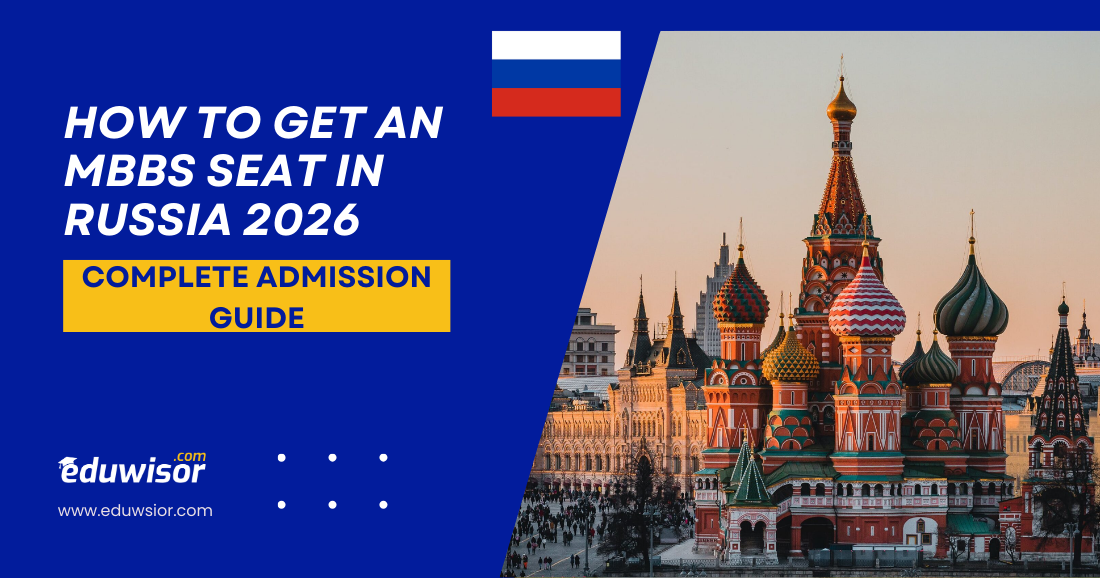
Dreaming of wearing the white coat but feeling the intense competition for an MBBS seat in India? You’re not alone. Thousands of bright, aspiring doctors look beyond borders each year to fulfill their medical ambitions. And for decades, Russia has stood as a beacon of hope, quality, and accessibility.
But how do you navigate this path? Is it just about “getting a seat,” or is it about securing your future in a reputable, globally recognized system? This definitive 5500-word guide is your roadmap. We’ll move beyond simple steps and delve deep into the how, why, and what next of securing an MBBS seat in Russia. Let’s transform your dream from a mere thought into a planned, executable reality.
Why Russia? The Compelling Reasons Indian Students Choose Russian MBBS
Before diving into the “how,” understanding the “why” is crucial. Russia isn’t just an alternative; for many, it’s a preferred destination.
- World-Class Education at Affordable Cost: This is the prime magnet. Russian government universities offer tuition fees that are a fraction of private Indian medical colleges or Western universities. The annual fee typically ranges between $3,000 to $7,000, making it a stark contrast to crores in donations or hefty tuition elsewhere.
- No Donation or Capitation Fee: The admission process is transparent. You pay the official tuition and hostel fees. There’s no hidden “management quota” price tag, making it ethical and accessible.
- Globally Recognized Degrees: Degrees from NMC/MCI, WHO, and ECFMG-approved Russian universities are recognized worldwide. This means you can appear for licensing exams like the USMLE, PLAB, or the Indian FMGE/NEXT.
- High-Quality Infrastructure & Faculty: Many Russian universities are centuries old, with a rich legacy in medicine. They boast state-of-the-art laboratories, extensive libraries, and affiliations with large multi-specialty hospitals for clinical exposure.
- English Medium of Instruction: Most top universities offer the complete MBBS program (General Medicine) in English, eliminating a massive language barrier for international students.
- Focus on Practical, Hands-on Training: The curriculum is designed with a strong emphasis on practical skills from the early years. You don’t just learn theory; you interact with patients and handle equipment under expert supervision.
- Simple Eligibility Criteria: The primary requirements are straightforward: You must have completed 10+2 with Physics, Chemistry, and Biology (PCB) and secured a minimum of 50% marks (40% for reserved categories). You must also have qualified NEET.
- Safe and Welcoming Environment: Russian universities have decades of experience hosting international students. They provide secure hostel facilities, often with Indian food options, and have dedicated international student support offices.
Step-by-Step Blueprint: How to Get an MBBS Seat in Russia
Now, let’s break down the process into a clear, chronological action plan.
Phase 1: Research & Preparation (6-8 Months Before Admission)
- Step 1: Choose the Right University. This is the most critical decision. Don’t just go by name; research.
- Check Recognition: Confirm the university is listed in the World Directory of Medical Schools (WDOMS) and approved by the National Medical Commission (NMC) of India. The Russian Ministry of Education should also accredit it.
- Compare: Look at the fee structure, hostel conditions, location (Moscow, St. Petersburg, or smaller cities), climate, and student reviews.
- Top Recommended Universities: Sechenov First Moscow State Medical University, Peoples’ Friendship University of Russia (RUDN University), Kazan Federal University, Crimean Federal University, Orenburg State Medical University, Siberian State Medical University.
- Step 2: Ensure You Meet Eligibility Criteria.
- Academic: 10+2 with PCB, 50% aggregate (40% for SC/ST/OBC).
- Age: Minimum 17 years as of December 31st of the admission year.
- Mandatory Exam: A valid NEET-UG scorecard. This is non-negotiable for Indian students from 2019 onwards.
- Step 3: Prepare Your Documents. Start gathering these early.
- 10th & 12th Marksheets and Certificates.
- NEET Scorecard and Admit Card.
- Valid Passport (with at least 2 years validity).
- Birth Certificate.
- 8-12 Passport-sized photographs (white background).
- Medical Fitness Certificate, including HIV & COVID-19 vaccination reports (as per current norms).
- School Leaving Certificate or Transfer Certificate.
- Step 4: Engage a Reputable Consultant (Optional but Recommended). While direct application is possible, a good consultant simplifies the complex process—document attestation, application drafting, university communication, invitation letter, visa processing, and pre-departure briefing. Ensure they are transparent, have a physical office, and can connect you with alumni.
Phase 2: The Application & Admission Process (4-5 Months Before Intake)
- Step 5: Fill Out the Application Form. Submit the accurately filled application along with scanned documents to the university or your consultant. Pay the application fee (if any).
- Step 6: Receive the Invitation Letter. Upon provisional acceptance, the university’s International Department will issue an official Invitation Letter from the Ministry of Internal Affairs of Russia. This is your key document for the visa.
- Step 7: Pay the Tuition Fee (First Year). You will receive an invoice. Pay the first year’s tuition fee directly to the university’s official bank account. Never pay large sums in cash to intermediaries. Get the official fee receipt.
- Step 8: Apply for the Student Visa. With the Invitation Letter, fee receipt, and other documents (passport, photographs, medical tests, visa application form), apply at the Russian Visa Application Centre. You will get a single-entry student visa.
Phase 3: Pre-Departure & Arrival (1 Month Before & After)
- Step 9: Book Your Flight. Book a ticket to the city where your university is located. Major airports are in Moscow (SVO, DME) and St. Petersburg (LED).
- Step 10: Prepare for Arrival. Inform the university/consultant of your flight details. They usually arrange pick-up. Pack warm clothes (winters are extreme), essentials, and some initial groceries/Indian spices.
- Step 11: University Registration & Medical Check-up. Upon arrival, you will be taken to the hostel. The university will guide you through:
- Signing the Admission Contract.
- Undergoing a mandatory medical check-up in Russia.
- Getting your migration card stamped.
- Step 12: Visa Extension & Registration. Within a week, the university will help extend your single-entry visa to a multi-entry visa valid for one year and complete your local immigration registration. This is crucial for your legal stay.
Congratulations! Your MBBS seat in Russia is now secured, and you are a registered student.
The Financial Landscape: Detailed Cost of MBBS in Russia
Let’s demystify the costs. The total expense is a combination of one-time and annual costs.
A. One-Time Pre-Admission Costs:
- Consultant Service Charges (if used): ₹50,000 – ₹1,50,000
- Document Attestation (MEA, Apostille): ₹10,000 – ₹20,000
- Visa Fees & Medical Tests: ₹15,000 – ₹20,000
- Airfare (Economy): ₹25,000 – ₹50,000 (varies by season)
B. Annual Recurring Costs (in USD for easier calculation, as fees are quoted in USD):
- Tuition Fee: $3,000 – $7,000 per year (varies by university prestige and city).
- Hostel Accommodation: $800 – $2,000 per year. Usually shared rooms (2-3 students) with basic furniture, internet, and shared kitchens.
- Medical Insurance: $150 – $300 per year (mandatory).
- Living Expenses (Food, Transport, Mobile): $1,500 – $2,500 per year. This is highly personal. Cooking in the hostel is the most economical.
Total Estimated Annual Cost: ₹5 Lakhs to ₹9 Lakhs per year, inclusive of tuition and living. This is significantly lower than private Indian colleges where a single year’s fee can exceed this total cost.
Life as an MBBS Student in Russia: Beyond the Classroom
Getting the seat is the beginning. What is student life like?
- Academic Rigor: The program is 6 years, including 1 year of internship (called ordinatura). The first 3 years are pre-clinical (Anatomy, Physiology, Biochemistry), and the last 3 are clinical (Medicine, Surgery, Pediatrics, etc.).
- Climate Adaptation: Winters are long and cold, with temperatures dropping to -20°C or lower. Investing in good thermal wear, boots, and a warm coat is essential. Universities and hostels are centrally heated.
- Cultural Integration: Learn basic Russian. It’s not just polite; it’s essential for communicating with patients during clinical rotations. Universities offer Russian language classes as part of the curriculum.
- Indian Community: Most cities have a strong Indian student community. You’ll find Indian grocery stores, restaurants, and celebrate festivals together, which eases homesickness.
- Travel & Exploration: On weekends and holidays, explore the rich history and architecture of Russia. Travel within the country is affordable for students.
The Road After MBBS: Career Pathways and Licensing
Your Russian MBBS degree opens multiple doors globally.
1. Practice in India (The FMGE/NEXT Exam):
- To practice in India, you must pass the Foreign Medical Graduate Examination (FMGE), which is set to be replaced by the NExT (National Exit Test) as per NMC guidelines.
- This is a challenging exam with a historically low pass rate. The key to success is self-study alongside your Russian curriculum. Use Indian author books (like Sharma for Anatomy, KDT for Pharmacology) from the first year. Many students join online coaching platforms dedicated to FMGE/NExT preparation during their final years.
2. Pursue Post-Graduation (PG) in India:
- After clearing FMGE/NExT and completing a compulsory rotating internship in India, you become eligible for NEET-PG to pursue MD/MS in India, just like Indian graduates.
3. Pursue Post-Graduation Abroad:
- USA: Clear the USMLE (Steps 1 & 2) and secure a residency match. Russian degrees are ECFMG accredited.
- UK: Clear the PLAB (or UKMLA in future) and secure a foundation program.
- Germany, France, etc.: Learn the local language, clear their respective licensing assessments.
- PG in Russia/Other Countries: You can directly apply for clinical residency (specialization) in Russia itself or explore options in countries like Poland, Georgia, or the Philippines.
4. Alternative Careers:
- Hospital Administration, Medical Research, Public Health, Medical Journalism, or working with health-focused NGOs.
Common Pitfalls and How to Avoid Them
- Choosing an Unrecognized University: Always cross-check the NMC and WDOMS lists. An unrecognized degree is worthless.
- Falling for “Guaranteed Admission” Scams: No ethical consultant can “guarantee” admission. They can only facilitate based on your eligibility.
- Skipping NEET Preparation: Thinking “I’ll go abroad, so NEET doesn’t matter” is a fatal error. You need a qualifying NEET score. Prepare for it seriously.
- Ignoring Russian Language: Even in English-medium programs, knowing Russian is vital for clinical practice and daily life. Embrace the language.
- Underestimating the FMGE Challenge: Start preparing for the Indian screening test from your 2nd or 3rd year of MBBS in Russia. Don’t wait until you graduate.
Frequently Asked Questions (FAQs)
Q1. Is MBBS in Russia safe for Indian students, especially girls?
A: Yes, Russian campuses are generally safe with 24/7 security. Hostels are separate and secure. The university authorities are supportive. However, as in any foreign country, exercising general caution and being aware of your surroundings is advised.
Q2. Can I get a scholarship for MBBS in Russia?
A: Yes, but they are highly competitive. The Russian Government Scholarship covers full tuition and provides a stipend. You can apply through official portals like StudyinRussia.ru. Some universities also offer merit-based fee waivers.
Q3. What is the duration of the MBBS course in Russia?
A: The course duration for the General Medicine program (equivalent to MBBS) is 6 years, which includes 1 year of internship/housemanship.
Q4. Is there an entrance exam for MBBS in Russia?
A: No, there is no separate entrance exam conducted by Russian universities for the English-medium program. Admission is based on your 10+2 marks and NEET qualification. Some universities may conduct an online interview.
Q5. Can I work part-time during my studies?
A: Officially, student visas allow limited work permissions, but the rigorous academic schedule makes regular part-time work very challenging. It’s not recommended as a means to fund your studies.
Conclusion: Your Medical Dream is Within Reach
Securing an MBBS seat in Russia is a systematic, transparent, and achievable goal for any dedicated student. It’s a journey that offers more than just a degree; it’s a life-changing experience of independence, cultural immersion, and world-class medical training at an affordable cost.
The path is clear: Start your research early, choose a recognized university, prepare your documents meticulously, qualify NEET, and be ready to embrace a new culture and rigorous academics. With focused effort and the right guidance, the hallowed halls of a Russian medical university await you.
Take the first step today. Reach out to official sources, connect with current students or alumni, and begin crafting your application. Your white coat is waiting.
Eduwisor always guides students toward the right path with an unbiased approach. You can follow us on Youtube, Facebook, Instagram, Twitter, and Linkedin. Stay tuned for regular updates.
Interested in applying? Contact authorized Eduwisor consultant for a smooth admission process!
Act NOW—limited seats for 2026 intake! Call/WhatsApp: 9326395883/ 9076036383