
When aspiring medical professionals ask, “Is Russia Good for MBBS?” the answer lies in the growing numbers of international students flocking to Russian medical universities each year. With over 25,000 international medical students currently enrolled, including approximately 18,000 from India alone, Russia has firmly established itself as a premier destination for medical education. This comprehensive guide examines why Russia has become such a compelling option for MBBS aspirants seeking quality education at affordable costs.
Russian medical universities combine centuries-old academic traditions with modern teaching methodologies, state-of-the-art facilities, and globally recognized degrees. The country’s commitment to medical education dates back to the 18th century, creating a rich heritage that today benefits students from around the world. But beyond tradition, what makes Russia particularly attractive is its practical approach to medical training, emphasis on clinical exposure, and degrees that open doors to medical practice in multiple countries.
This 5,500-word guide will provide you with everything you need to know about pursuing an MBBS in Russia, from admission processes and curriculum details to living conditions and career prospects. By the end, you’ll have a clear understanding of whether Russia represents the right choice for your medical career aspirations.
Chapter 1: Understanding Is Russia Good for MBBS Medical Education System
Historical Background and Global Standing
Russia’s medical education system has evolved significantly since the founding of its first medical faculty at Moscow State University in 1758. Today, the country boasts more than 70 medical universities, many of which are recognized by major global medical bodies including the World Health Organization (WHO), the Medical Council of India (now National Medical Commission), and various European and Middle Eastern medical councils.
The strength of Russian medical education lies in its structured approach that balances theoretical knowledge with extensive practical training. Unlike many countries where clinical exposure begins only in later years, Russian medical universities introduce students to patient interaction and hospital environments from the early stages of their education. This progressive approach ensures graduates are not just theoretically knowledgeable but clinically competent upon completion of their degrees.
The MBBS Structure in Russian Universities
The MBBS program in Russia, typically referred to as “General Medicine,” follows a 6-year structure including both academic instruction and practical training:
- Years 1-2: Foundation in preclinical sciences including Anatomy, Biochemistry, Physiology, Histology, and Medical Biology
- Years 3-4: Clinical sciences introduction with subjects like Pathology, Pharmacology, Microbiology, and beginning of clinical postings
- Years 5-6: Advanced clinical training in specialized departments with increased hospital responsibilities
- Internship: Many programs include clinical rotations in the final year serving as internship equivalents
The curriculum follows the European Credit Transfer and Accumulation System (ECTS), facilitating academic mobility between countries. Programs are taught primarily in English for international students, though Russian language instruction is typically included as it becomes essential during clinical rotations in local hospitals.
Accreditation and Recognition: Why It Matters
One of the most critical factors determining whether Russia is good for MBBS is the recognition of degrees. The best Russian medical universities are listed in the World Directory of Medical Schools (WDOMS), which is maintained by WHO. Additionally, many are approved by:
- National Medical Commission (NMC), India (formerly MCI)
- General Medical Council (GMC), UK
- Educational Commission for Foreign Medical Graduates (ECFMG), USA
- Various medical councils in the Middle East, Southeast Asia, and Africa
This multi-national recognition ensures that graduates can pursue further studies, residencies, or medical practice in numerous countries after completing screening tests specific to each nation (like FMGE/NExT in India, USMLE in the United States, or PLAB in the UK).
Chapter 2: Advantages of Pursuing MBBS in Russia
Cost-Effectiveness: Unbeatable Value Proposition
Perhaps the most compelling argument for why Russia is good for MBBS lies in its remarkable affordability. Compared to private medical colleges in India or Western countries, Russian medical education offers exceptional value:
- Tuition Fees: Annual tuition ranges from $3,000 to $8,000 depending on the university, compared to $15,000-$50,000+ in Western countries or ₹15-₹25 lakhs annually in Indian private colleges
- Living Expenses: Monthly costs including accommodation, food, and transportation typically range from $200 to $400 in most Russian cities outside Moscow and St. Petersburg
- Comprehensive Costs: The complete 6-year MBBS program including tuition and living expenses often totals between $25,000 and $40,000—less than a single year’s cost at many Western institutions
For many middle-class families, this affordability makes medical education accessible without incurring lifetime debt. The Russian government also subsidizes education to some extent, keeping costs reasonable while maintaining quality.
World-Class Infrastructure and Facilities
Contrary to some outdated perceptions, Russian medical universities boast modern infrastructure that often surpasses what’s available in developing countries:
- Advanced Laboratories: Equipped with the latest diagnostic and research equipment
- Digital Libraries: Access to international medical journals and databases
- Simulation Centers: High-fidelity patient simulators for risk-free clinical training
- University Hospitals: Most universities operate their own multi-specialty hospitals where students gain hands-on experience
- Research Opportunities: State-funded research projects in areas like genetics, oncology, and epidemiology
Universities like Sechenov University and Moscow State Medical University have facilities comparable to top institutions worldwide, with ongoing investments in infrastructure upgrades.
High Quality of Education and Experienced Faculty
Russian medical education maintains rigorous academic standards with:
- Experienced Professors: Many faculty members hold dual qualifications and international experience
- Student-Teacher Ratio: Typically 10:1 or better in practical sessions, ensuring personalized attention
- Practical Emphasis: Approximately 70% of the curriculum involves practical or clinical components
- Regular Assessments: Continuous evaluation through tests, viva voce, and practical demonstrations
- International Collaboration: Many universities have partnerships with European and American institutions for faculty and student exchange
The pedagogical approach emphasizes critical thinking and clinical reasoning rather than rote memorization, preparing students for real-world medical practice.
No Entrance Exams or Donation Requirements
Unlike the intensely competitive entrance exams for limited seats in India (NEET-UG with typically less than 20% admission rate for government colleges), Russian medical universities offer:
- NEET Qualification: Indian students need only qualify NEET (minimum 50th percentile), not achieve top ranks
- No Additional Entrance Tests: Most universities admit based on academic records and NEET scores
- Transparent Admission: No capitation fees or hidden donations required
- Direct Admission: Through authorized representatives without complicated procedures
This streamlined admission process removes significant barriers that prevent many qualified students from pursuing medical careers in their home countries.
Global Exposure and Multicultural Environment
Studying medicine in Russia provides:
- International Peer Group: Interaction with students from Europe, Asia, Africa, and the Middle East
- Cultural Competence: Essential skill for modern medical practice in globalized healthcare
- Language Skills: Opportunity to learn Russian, spoken by 260 million people worldwide
- International Conferences: Regular participation in global medical seminars and workshops
- Exchange Programs: Many universities offer European semester exchanges through Erasmus+ programs
This international exposure creates well-rounded physicians capable of working in diverse healthcare settings worldwide.
Chapter 3: Potential Challenges and How to Overcome Them
Climate Adaptation: The Russian Winter
Russia’s notorious winters present genuine adjustment challenges:
- Temperature Extremes: Winter temperatures can drop below -30°C in some regions
- Daylight Hours: Limited daylight during winter months, especially in northern cities
Adaptation Strategies:
- Most universities are well-prepared with heated facilities and underground walkways
- Appropriate clothing makes outdoor activities manageable
- Many students find the distinct seasons adds variety to their experience
- Southern cities like Volgograd and Astrakhan have milder winters
Language Considerations
While MBBS programs are taught in English, daily life and clinical rotations require Russian:
- Clinical Training: Interactions with patients during later years need Russian proficiency
- Daily Life: Grocery shopping, transportation, and social integration benefit from language skills
Solutions:
- Universities provide intensive Russian language courses during the first 2-3 years
- Many students achieve conversational fluency by their clinical years
- Language learning enhances cultural understanding and future career opportunities
- Universities increasingly provide translators during initial clinical rotations
Cultural Adjustment
The Russian cultural context differs significantly from Asian, African, and Middle Eastern norms:
- Social Customs: Different greeting styles, communication patterns, and social norms
- Cuisine: Different food preferences and eating schedules
- Academic Culture: More formal student-teacher relationships than in some countries
Adjustment Support:
- Most universities have active international student offices
- Growing communities of students from specific countries provide peer support
- Cultural orientation programs during initial weeks
- Increasing availability of international foods in major student cities
Post-Graduation Licensing Procedures
Returning to practice in home countries requires additional steps:
- Screening Tests: FMGE/NExT (India), USMLE (USA), PLAB (UK), etc.
- Internship Requirements: Some countries mandate additional internships
- Registration Procedures: Varying documentation and procedural requirements
Preparation Strategies:
- Many Russian universities incorporate FMGE/USMLE preparation into later years
- Coaching centers in major Russian cities offer test preparation
- Alumni networks provide guidance on licensing processes
- Early planning (from 4th year onward) ensures smooth transitions
Distance from Home
Geographical distance can be challenging for some students:
- Travel Time: Long flights to most Asian and African countries
- Time Differences: Significant time zone differences affecting communication
- Homesickness: Common among first-year students
Coping Mechanisms:
- Affordable communication options (local SIM cards with international packages)
- Growing direct flight connections between Russia and major cities worldwide
- Active social media groups connecting students with families back home
- University-organized cultural events during major festivals
Chapter 4: Top Medical Universities in Russia: A Comparative Analysis
First Moscow State Medical University (Sechenov University)
Established in 1758, Sechenov is Russia’s oldest and most prestigious medical institution:
- Global Ranking: Consistently ranked among top 250 universities worldwide for medicine
- Infrastructure: 8 academic buildings, 5 research institutes, and 7 university hospitals with over 3,000 beds
- International Students: Approximately 4,000 from 90+ countries
- Annual Tuition: $7,500-$9,000
- Special Features: WHO Collaborating Centre, multiple international partnerships, extensive research funding
- Recognition: NMC, WHO, ECFMG, GMC, and numerous other international bodies
Russian National Research Medical University (RNRMU) named after N.I. Pirogov
Another top-tier institution with strong research orientation:
- Establishment: 1906 as Moscow Higher Women’s Courses
- Focus Areas: Strong in pediatrics, surgery, and biomedical research
- Tuition Range: $6,500-$8,000 annually
- Student Body: Over 9,000 students including 1,800 international students
- Clinical Facilities: 7 own clinics and partnerships with 40+ Moscow hospitals
- Notable Alumni: Numerous medical leaders across Eastern Europe and Asia
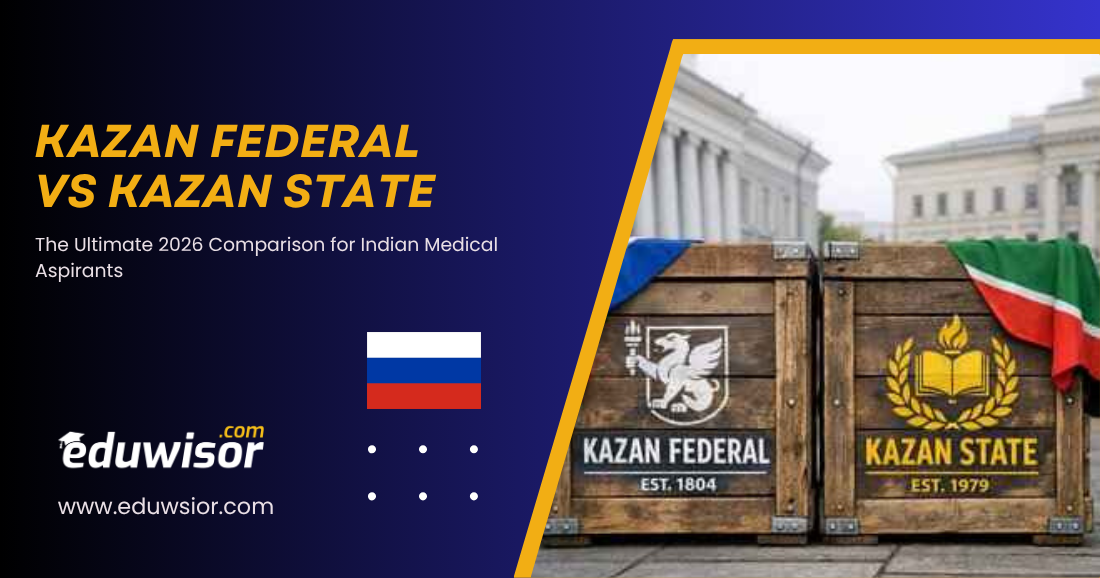
Kazan Federal University
One of Russia’s oldest universities with a distinguished medical faculty:
- Founded: 1804 (medical faculty established 1814)
- Location: Kazan, offering lower costs than Moscow
- Tuition Fees: $4,000-$5,500 annually
- Living Costs: Approximately $200-$300 monthly
- Special Programs: Strong emphasis on cardiology, neurology, and genetics
- International Collaboration: Active partnerships with European and Chinese institutions
Crimean Federal University
A popular choice for international students due to milder climate:
- Location: Simferopol, Crimea (warmer climate than mainland Russia)
- Tuition: $3,500-$4,500 annually
- Medium of Instruction: English for complete MBBS program
- Clinical Training: 8 university hospitals and multiple affiliated clinics
- Recognition: WHO-listed, NMC-approved, recognized in Middle Eastern countries
- Student Support: Dedicated international hostel and support services
People’s Friendship University of Russia (RUDN University)
Known for its exceptional support for international students:
- Established: 1960 specifically to educate students from developing countries
- International Representation: Students from 150+ countries
- Medical Faculty: Strong emphasis on tropical medicine and global health
- Tuition: $5,500-$7,000
- Support Services: Comprehensive orientation, language support, cultural integration programs
- Accommodation: On-campus housing guaranteed for international students
Comparative Analysis Table
| University | Annual Tuition (USD) | City | Living Cost/Month | NMC Recognition | Special Features |
| Sechenov University | 7,500-9,000 | Moscow | $400-500 | Yes | Oldest, top research, best hospitals |
| RNRMU Pirogov | 6,500-8,000 | Moscow | $350-450 | Yes | Strong pediatrics, women’s health focus |
| Kazan Federal | 4,000-5,500 | Kazan | $200-300 | Yes | Historic, lower cost, strong cardiology |
| Crimean Federal | 3,500-4,500 | Simferopol | $150-250 | Yes | Mild climate, English medium, affordable |
| RUDN University | 5,500-7,000 | Moscow | $350-450 | Yes | Best international support, diverse community |
| Siberian State Medical | 3,200-4,200 | Tomsk | $150-250 | Yes | Research focus, innovative teaching |
Chapter 5: Admission Process: Step-by-Step Guide
Eligibility Criteria
To pursue MBBS in Russia, Indian students must meet these requirements:
- Academic Qualifications:
- Completion of 10+2 or equivalent with Physics, Chemistry, Biology
- Minimum 50% aggregate in PCB for general category (40% for reserved categories)
- Must have studied English as a subject
- Age Requirement:
- Minimum 17 years as of December 31 of admission year
- No upper age limit
- Entrance Examination:
- Qualified NEET-UG (National Eligibility cum Entrance Test)
- No minimum percentile requirement for admission but qualification necessary
- NEET scores valid for three years for studying abroad
Required Documents
Prepare these documents well in advance:
- Academic Documents:
- 10th and 12th mark sheets and certificates
- Transfer certificate and migration certificate
- School leaving certificate
- Identification Documents:
- Valid passport (minimum 2 years validity)
- Birth certificate
- 10-15 passport-sized photographs
- Medical Documents:
- Medical fitness certificate
- HIV negative test report
- COVID vaccination certificate (as per current requirements)
- Other Documents:
- NEET scorecard and admit card
- Affidavit of financial support
- Authorization documents if applying through an agent
Application Timeline
Adhering to deadlines ensures smooth admission:
- January-March: Research universities and contact authorized representatives
- April-June: Submit applications with required documents
- June-July: Receive admission letters from universities
- July-August: Apply for student visa at Russian embassy/consulate
- August-September: Travel arrangements and pre-departure orientation
- September-October: Academic year begins (varies slightly by university)
Visa Process
Russian student visa (Type “Учебная” or Student Visa) requires:
- Official Invitation: From the university through the Russian Ministry of Internal Affairs
- Visa Application: Completed online form with photograph
- Supporting Documents: Passport, admission letter, medical certificates, financial proof
- Visa Fee: Approximately $40-80 depending on processing time
- Processing Time: 10-20 working days typically
- Registration: Within 7 days of arrival in Russia at local immigration office
Pre-Departure Preparation
Essential steps before traveling:
- Financial Planning:
- Arrange tuition fee payment as per university instructions
- Prepare funds for initial expenses (recommended $1,000-$1,500)
- Set up international banking arrangements
- Health Preparation:
- Complete required vaccinations
- Carry essential medications with prescriptions
- Obtain comprehensive health insurance (often available through university)
- Academic Preparation:
- Basic review of science subjects
- Preliminary Russian language learning through apps/courses
- Connect with seniors through university social media groups
Chapter 6: Curriculum and Academic Life
Detailed Year-Wise Breakdown
Year 1: Foundation Sciences
- Human Anatomy (including cadaver dissection)
- Medical Biology and Genetics
- Histology, Embryology, Cytology
- Latin Medical Terminology
- Russian Language (intensive)
- Basics of Medical Ethics
Year 2: Pre-Clinical Sciences
- Biochemistry and Molecular Biology
- Human Physiology
- Microbiology and Immunology
- Patient Care Basics (bedside manners, basic procedures)
- Introduction to Clinical Diagnostics
- Advanced Russian for Medical Context
Year 3: Transition to Clinical Sciences
- General Pathology and Pathophysiology
- Pharmacology and Therapeutics
- Propaedeutics of Internal Medicine
- Basics of Surgery and Anesthesiology
- Radiology and Diagnostic Imaging
- Initial Clinical Postings (observational)
Year 4: Core Clinical Rotations
- Internal Medicine (including subspecialties)
- General Surgery and Specialized Surgeries
- Pediatrics and Child Health
- Obstetrics and Gynecology
- Neurology and Psychiatry
- Clinical postings with increasing responsibility
Year 5: Advanced Clinical Training
- Infectious Diseases and Epidemiology
- Emergency Medicine and Critical Care
- Forensic Medicine and Toxicology
- Social Medicine and Public Health
- Clinical electives in chosen specialties
- Management of hospital departments under supervision
Year 6: Internship and Final Preparation
- Comprehensive clinical rotations
- Final examinations in all major subjects
- Preparation for licensing exams (FMGE/USMLE/etc.)
- Research project or dissertation
- Transition to postgraduate planning
Teaching Methodology
Russian medical education employs diverse pedagogical approaches:
- Lecture-Based Learning: Traditional but comprehensive coverage of theoretical knowledge
- Small Group Tutorials: 10-15 students with faculty for detailed discussion
- Laboratory Sessions: Extensive hands-on work in well-equipped labs
- Clinical Bedside Teaching: Direct patient interaction under supervision
- Problem-Based Learning: Case studies simulating real clinical scenarios
- Simulation Training: Using high-fidelity mannequins for procedural practice
- E-Learning Platforms: Digital resources, virtual dissections, online assessments
Assessment System
Continuous evaluation ensures comprehensive learning:
- Regular Tests: Weekly/Monthly assessments in each subject
- Practical Examinations: Objective Structured Clinical Examinations (OSCE)
- Oral Exams (Viva Voce): Traditional Russian emphasis on verbal articulation of knowledge
- Written Examinations: Both short answer and essay-type questions
- Research Projects: Especially in later years
- Clinical Performance: Evaluated during rotations by supervising physicians
The grading system typically uses a 5-point scale:
- 5: Excellent (A equivalent)
- 4: Good (B equivalent)
- 3: Satisfactory (C equivalent)
- 2: Unsatisfactory (Fail)
Research Opportunities
Russian medical universities increasingly emphasize research:
- Student Scientific Societies: Most universities have active research groups
- International Conferences: Opportunities to present research
- Publications: Faculty often mentor students for co-authorship in journals
- Summer Research Programs: Intensive research experiences
- Interdisciplinary Projects: Collaboration with engineering, biology, and chemistry departments
Chapter 7: Living in Russia: Practical Aspects
Accommodation Options
Most universities provide affordable housing:
- University Hostels:
- Cost: $30-$150 monthly depending on city and room type
- Facilities: Typically shared rooms (2-3 students), common kitchens, bathrooms
- Advantages: Proximity to campus, security, peer support
- Limitations: Basic amenities, limited privacy
- Private Apartments:
- Cost: $150-$400 monthly depending on location and size
- Facilities: Varying from basic studios to furnished apartments
- Advantages: Privacy, independence, better amenities
- Considerations: Longer commutes, higher costs, contractual obligations
- Homestays:
- Less common but available in some cities
- Cultural immersion opportunity
- Typically includes meals
Cost of Living Breakdown
Monthly expenses vary significantly by city:
Moscow/St. Petersburg (Higher End):
- Accommodation: $150-$300 (hostel) / $300-$600 (apartment)
- Food: $200-$300
- Transportation: $30-$50 (student monthly pass)
- Utilities: $30-$60 (if in apartment)
- Miscellaneous: $100-$150
- Total: $500-$1,200
Regional Cities (More Affordable):
- Accommodation: $30-$100 (hostel) / $150-$300 (apartment)
- Food: $150-$250
- Transportation: $15-$30
- Utilities: $20-$40
- Miscellaneous: $80-$120
- Total: $300-$700
Food and Cuisine
Russian cuisine offers hearty, affordable options:
- University Cafeterias: Subsidized meals costing $1-$3 per meal
- Cooking: Groceries cost approximately $150-$250 monthly for self-cooking
- Local Restaurants: Meals from $5-$15 in affordable restaurants
- International Food: Increasing availability in major cities
- Indian Food: Specialty stores and restaurants in areas with significant Indian student populations
Transportation
Efficient and student-friendly systems:
- Student Metro/Bus Passes: 50-70% discounts on public transport
- Moscow Metro: World-renowned system covering the entire city
- Inter-City Travel: Trains and domestic flights connect major cities affordably
- Student Travel Discounts: Available for long-distance travel during holidays
Climate and Clothing
Preparing for Russian weather:
- Winter (November-March): Heavy coat, thermal wear, boots, hats, gloves essential
- Spring (April-May): Layered clothing as temperatures vary
- Summer (June-August): Light clothing, though some regions remain cool
- Autumn (September-October): Gradual addition of layers
- University Buildings: Well-heated during winter months
Safety and Security
Russia maintains reasonable safety standards:
- University Security: Most campuses have 24/7 security
- Police Support: Dedicated foreign student desks in major cities
- Health Services: University medical facilities for students
- Emergency Numbers: 112 (unified emergency service)
- Cultural Considerations: Understanding local norms reduces misunderstandings
Chapter 8: Career Prospects After Russian MBBS
Returning to Home Country: Licensing Process
For Indian Students:
- FMGE/NExT Screening Test: Mandatory for registration to practice in India
- Passing Rate: Historically 15-25% but improving with better preparation
- Preparation: Many Russian universities now incorporate FMGE preparation
- Compulsory Rotating Internship: 1-year in India after passing screening test
- State Medical Council Registration: After completing internship
Strategies for Success:
- Begin FMGE preparation from 4th year onward
- Join test series and coaching (available in Russia and online)
- Form study groups with peers
- Focus on pattern and frequently tested topics
- Take advantage of alumni guidance
Postgraduate Options in Russia
Russia offers attractive PG opportunities:
- Clinical Residency (Ordinatura): 2-3 year clinical specialization
- Direct entry after Russian MBBS without entrance exams
- Affordable tuition ($2,000-$4,000 annually)
- Recognized in many countries
- Pathway to Russian medical licensure
- PhD Programs (Aspirantura): Research-focused doctoral programs
- For those interested in academic/research careers
- Typically 3-4 years duration
- Stipends often available for qualified candidates
International Career Pathways
Russian MBBS opens doors globally:
- United States:
- USMLE Steps 1, 2 CK, 2 CS required
- Clinical experience valued
- Many Russian graduates match into US residencies annually
- United Kingdom:
- PLAB 1 and 2 examinations
- Foundation program or direct specialty training
- GMC registration after passing assessments
- European Union:
- Varies by country but generally requires language proficiency and equivalency exams
- Germany, France, and Eastern European countries have streamlined processes for Russian graduates
- Middle East:
- Direct recognition in many Gulf countries
- Licensing exams typically required
- High demand for physicians with competitive compensation
- Australia:
- AMC examinations required
- Pathway through competent authority or standard pathway
- Recent improvements in recognition of Russian degrees
Alternative Career Paths
Medicine opens diverse opportunities:
- Healthcare Administration: Hospital management, health policy
- Medical Research: Pharmaceutical companies, research institutions
- Public Health: International organizations (WHO, UNICEF), NGOs
- Medical Writing/Journalism: Scientific publications, health communications
- Entrepreneurship: Healthcare startups, medical tourism, diagnostic centers
- Academia: Teaching in medical colleges worldwide
Alumni Success Stories
Russian medical universities have produced:
- Dr. Devi Shetty: Famous Indian cardiac surgeon (alumnus of Kasturba Medical College but illustrates global Russian medical collaboration)
- Thousands of Practicing Physicians: Across India, Middle East, Africa, and Southeast Asia
- Researchers and Academics: In prestigious institutions worldwide
- Healthcare Leaders: Administrators in hospitals and health systems globally
Chapter 9: Comparative Analysis: Russia vs Other Popular MBBS Destinations
Russia vs Ukraine
Both former Soviet states offer similar systems but with differences:
| Parameter | Russia | Ukraine |
| Tuition Fees | $3,000-$8,000 | $4,000-$6,000 |
| Duration | 6 years | 6 years |
| Medium | English available | English available |
| Recognition | WHO, NMC, many others | WHO, NMC, many others |
| Political Stability | Relatively stable | Currently unstable |
| Living Cost | $200-$500 monthly | $150-$400 monthly |
| Climate | Colder overall | Milder in western regions |
Verdict: Russia offers more stability currently, though Ukraine traditionally had slightly lower costs.
Russia vs China
Asian alternative with different approach:
| Parameter | Russia | China |
| Tuition | $3,000-$8,000 | $4,000-$10,000 |
| Duration | 6 years | 6 years (including internship) |
| Language | English + Russian | English + Chinese |
| Recognition | Good global recognition | Improving but variable by country |
| Culture | European | Asian |
| FMGE Passing | 15-25% | 10-20% |
| Living Cost | $200-$500 | $300-$600 |
Verdict: Russia offers better European recognition and cultural proximity for many international students.
Russia vs Philippines
American-style medical education in Asia:
| Parameter | Russia | Philippines |
| System | European | American |
| Duration | 6 years | 5-6 years (after pre-med) |
| Language | English medium | English medium |
| USMLE Focus | Additional preparation needed | Integrated into curriculum |
| Cost | Lower overall | Comparable |
| Climate | Cold winters | Tropical |
| FMGE Passing | 15-25% | 25-35% |
Verdict: Philippines better for US aspirations, Russia better for Europe and affordability.
Russia vs Bangladesh
South Asian option with similar cultural context:
| Parameter | Russia | Bangladesh |
| Tuition | $3,000-$8,000 | $30,000-$50,000 (total) |
| Duration | 6 years | 5 years |
| Medium | English | English/Bengali |
| Recognition | Global | Mainly South Asia |
| FMGE Passing | 15-25% | 30-40% |
| Cost Comparison | More affordable | More expensive |
| Cultural Adjustment | Significant | Minimal for South Asians |
Verdict: Russia offers better global mobility at lower cost despite cultural adjustment.
Chapter 10: Common Concerns Addressed
Quality of Education: Myths vs Reality
Myth: Russian medical education is inferior to Western standards.
Reality: Russian medical universities follow European standards, with many exceeding WHO recommendations for medical education. Their graduates successfully practice worldwide.
Myth: Language barrier prevents effective learning.
Reality: English-medium programs are comprehensive, and Russian language training prepares students for clinical interactions, adding valuable multilingual skills.
Myth: Degrees aren’t recognized globally.
Reality: Top Russian universities are listed in WDOMS and recognized by major medical councils worldwide. Graduates practice in over 50 countries.
Racism and Discrimination Concerns
International students sometimes worry about discrimination:
Actual Situation:
- Major universities have strict anti-discrimination policies
- International student offices actively address any concerns
- Metropolitan cities like Moscow are multicultural with diverse populations
- Incidents are relatively rare and handled seriously by authorities
- Growing international student communities provide support networks
Precautionary Measures:
- Understand local cultural norms and laws
- Stay in groups when exploring unfamiliar areas
- Report any concerns immediately to university authorities
- Connect with senior students from your country for guidance
Post-Pandemic Changes
COVID-19 prompted significant adaptations:
- Hybrid Learning: Increased online components for theoretical subjects
- Enhanced Safety Protocols: Strict measures in clinical settings
- Vaccination Requirements: Most universities require COVID vaccination
- Travel Flexibility: Options for delayed arrival with online initiation
- Mental Health Support: Increased counseling services for international students
Financial Sustainability
Managing costs over 6 years:
Budgeting Tips:
- Choose cities with lower living costs if budget constrained
- Cook meals rather than eating out regularly
- Use student discounts for transportation and entertainment
- Share accommodations to reduce costs
- Consider summer jobs (subject to visa regulations)
Financial Planning:
- Calculate total 6-year cost including tuition increases (typically 5-10% annually)
- Account for currency fluctuation risks
- Explore education loans from Indian banks specializing in overseas education
- Research scholarship opportunities (limited but available)
Long-Term Value Assessment
Evaluating return on investment:
Cost-Benefit Analysis:
- Total investment: $25,000-$50,000 over 6 years
- Compare with Indian private colleges: ₹1-2 crores ($120,000-$240,000)
- Earnings potential: Similar globally with Russian degree
- Additional value: International exposure, language skills, global network
- Break-even period: Typically 3-5 years of practice
Conclusion: Is Russia Good for MBBS?
After examining all aspects comprehensively, the answer to “Is Russia good for MBBS?” is a resounding yes for the right student. Russia offers an exceptional combination of affordable quality education, global recognition, and valuable international experience.
Ideal Candidate for Russian MBBS:
- Academically Capable but unable to secure seats in home country government colleges
- Financially Middle-Class seeking quality education without lifetime debt
- Adventurous and Adaptable to new cultures and climates
- Globally Ambitious aiming for international medical career
- Self-Motivated to navigate licensing processes post-graduation
Key Success Factors:
- University Selection: Choose recognized universities with good support systems
- Early Preparation: Begin licensing exam preparation during studies
- Language Commitment: Seriously pursue Russian language acquisition
- Cultural Integration: Actively engage with both international and local communities
- Career Planning: Develop clear post-graduation pathway from early years
Final Verdict of Is Russia Good for MBBS:
Russia represents one of the last bastions of affordable, high-quality medical education in the world. While it requires adaptation to a different culture and climate, the rewards—a globally recognized medical degree at a fraction of Western costs—are substantial. For students who approach it with realistic expectations, proper preparation, and commitment to the full experience, Russia offers a pathway to medical practice that combines excellent training, international exposure, and financial sensibility.
The thousands of successful practicing physicians who graduated from Russian universities worldwide stand as testament to the value of this educational pathway. As global medical education becomes increasingly expensive and competitive, Russia’s offer of accessible excellence makes it not just good, but arguably one of the best current choices for MBBS aspirants worldwide.
Eduwisor always guides students toward the right path with an unbiased approach. You can follow us on Youtube, Facebook, Instagram, Twitter, and Linkedin. Stay tuned for regular updates.
Interested in applying? Contact authorized Eduwisor consultant for a smooth admission process!
Act NOW—limited seats for 2026 intake! Call/WhatsApp: 9326395883/ 9076036383