

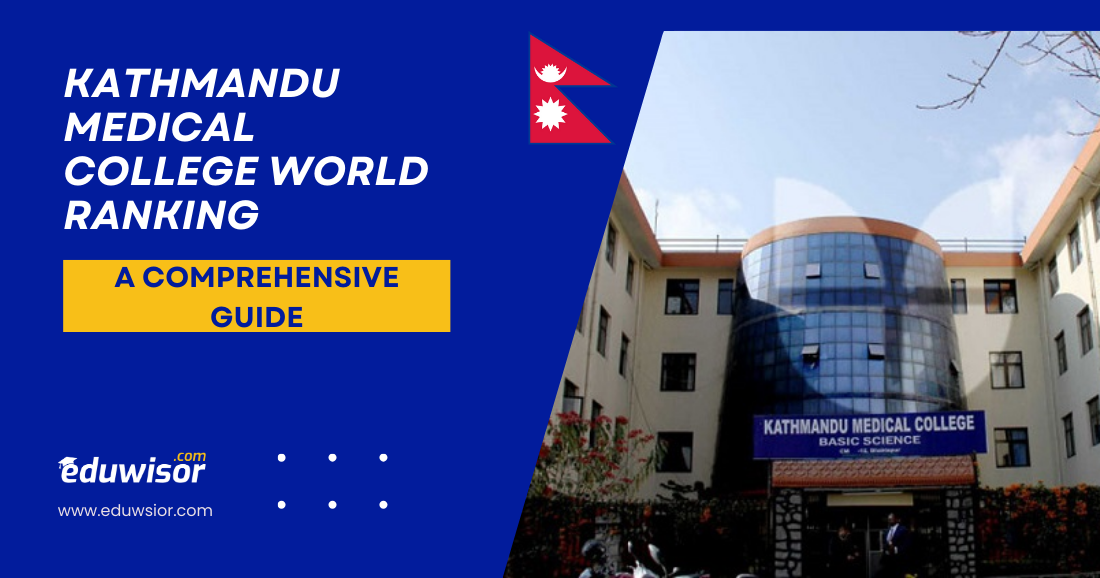
The pursuit of a medical degree is a journey that demands not only immense dedication but also a crucial initial decision: choosing the right institution. For aspiring doctors looking towards South Asia, Nepal has emerged as a significant hub for quality medical education. At the forefront stands Kathmandu Medical College (KMC), an institution that consistently garners attention. A primary query that shapes the research of countless international and domestic students is “Kathmandu Medical College world ranking.” This question, however, opens the door to a much broader discussion about quality, accreditation, and value. This definitive 5500-word guide delves deep beyond a single number, exploring KMC’s global standing, its academic pillars, infrastructure, student life, and its rightful place in the landscape of international medical education. We will dissect what “ranking” truly means for a medical college, how KMC measures up, and why it remains a top choice for aspiring medical professionals.
Understanding the Metrics: What Does “World Ranking” Mean for Medical Colleges?
Before fixating on a specific rank, it’s imperative to understand the frameworks behind institutional rankings. Globally recognized systems like Times Higher Education (THE) World University Rankings, QS World University Rankings, and ShanghaiRanking’s Academic Ranking of World Universities (ARWU) employ complex methodologies. These often emphasize research output (volume, income, reputation), citations, international faculty/student ratio, and teaching reputation.
For specialized institutions like standalone medical colleges, especially in developing nations, these global tables pose a challenge. They are often dominated by large, research-intensive, comprehensive universities with massive endowments. Therefore, the absence of Kathmandu Medical College from the very top echelons of these global university ranking lists is not an indicator of poor quality but a reflection of the scale and focus of assessment.
A more relevant gauge comes from national and regional rankings. In Nepal, KMC consistently ranks among the top private medical colleges and features in the top 5 in national surveys and educational portals. The college builds its standing on a different, more practical set of metrics crucial for a medical student.
- Affiliation & Accreditation: KMC is permanently affiliated with Kathmandu University (KU), one of Nepal’s premier and most rigorous universities. This affiliation is a cornerstone of its credibility. The Bachelor of Medicine, Bachelor of Surgery (MBBS) program is approved by the Nepal Medical Council (NMC) and is listed in the World Directory of Medical Schools (WDOMS). This listing is critical as it opens doors for graduates to sit for international screening tests like the USMLE (United States Medical Licensing Examination), PLAB (UK), AMC (Australia), and importantly, the NEXT (National Exit Test) in India.
- Teaching Hospital & Clinical Exposure: The quality and volume of clinical training are paramount. KMC’s association with the 575-bed Kathmandu Medical College Teaching Hospital (KMCTH) provides immense, hands-on clinical exposure from early years.
- Faculty & Student Outcomes: The expertise of full-time and visiting faculty, along with the success rates of students in licensing exams and post-graduate placements, are key indicators.
- Infrastructure & Resources: Modern labs, simulation centers, library resources, and digital access define the learning environment.
Thus, when evaluating “Kathmandu Medical College world ranking,” one must look at its global recognition through WDOMS and international accreditations, its premier standing in Nepal, and the tangible outcomes it delivers for students. This holistic view presents a far more accurate picture than a singular numeric rank.
Kathmandu Medical College: An Institutional Pillar of Medical Education in Nepal
Established in 1997, Kathmandu Medical College has grown from a visionary project into a cornerstone of Nepal’s healthcare education sector. Founded by a dedicated group of medical professionals, its mission was clear: to create a center of excellence that produces competent, compassionate, and community-oriented doctors. Located in Sinamangal, Kathmandu, the college and its teaching hospital form an integrated health sciences academy.
The institution’s philosophy rests on a tripod of Education, Service, and Research. This balanced approach ensures that students receive a robust academic grounding while also learning the ethos of community service through the hospital’s work. The institution encourages research, which, though still developing, adds to the scholarly environment.
The permanent affiliation with Kathmandu University cannot be overstated. KU is known for its stringent quality control, updated curricula, and systematic examination processes. This affiliation ensures that the MBBS degree from KMC carries the weight and reputation of Kathmandu University, a name respected across South Asia and beyond.
Academic Rigor and the MBBS Program: The Core of KMC’s Reputation
The Kathmandu Medical College MBBS program is a 5.5-year course, inclusive of one year of compulsory rotating internship. The curriculum is structured according to the integrated model prescribed by KU and NMC, blending basic sciences with clinical sciences progressively.
Phase-wise Breakdown:
- Pre-Clinical Sciences (First 2 Years): Students delve into foundational subjects like Human Anatomy (with extensive cadaveric dissection in well-equipped labs), Physiology, Biochemistry, Community Medicine, and Introduction to Clinical Medicine. The early introduction to community medicine is a distinctive feature, emphasizing public health perspectives from the start.
- Para-Clinical & Clinical Sciences (Next 2.5 Years): This phase integrates subjects like Pathology, Pharmacology, Microbiology, Forensic Medicine, and Clinical postings in major departments begin. Students rotate through Medicine, Surgery, Obstetrics & Gynecology, Pediatrics, Orthopedics, Psychiatry, and more at the KMCTH.
- Compulsory Rotating Internship (Final Year): This is the capstone year of hands-on training. Interns work under supervision in various hospital departments, managing patients, performing procedures, and consolidating their knowledge into clinical competence.
Pedagogy and Assessment: Teaching methodologies include lectures, small-group tutorials, practical laboratory sessions, Problem-Based Learning (PBL) sessions, bed-side clinical teachings, and seminars. The assessment system is rigorous, with internal assessments, practical exams, and final university examinations ensuring consistent performance standards. This rigorous academic structure is a primary reason for KMC’s high standing in Nepal medical college rankings.
The Engine of Clinical Training: Kathmandu Medical College Teaching Hospital (KMCTH)
If the college is the brain, the teaching hospital is the beating heart of KMC’s educational ecosystem. The 575-bed multi-specialty KMCTH is a tertiary care center that serves a vast patient population. This high patient inflow is perhaps the most significant advantage for a KMC student.
- Unparalleled Clinical Exposure: From common ailments to complex cases, students witness and participate in a wide spectrum of healthcare delivery. The volume ensures that by the time of internship, students have assisted in numerous deliveries, surgeries, and patient management scenarios.
- Departmental Excellence: The hospital boasts fully-fledged departments in all major and super-specialties—Cardiology, Neurology, Nephrology, Neurosurgery, Urology, ICU, NICU, and a busy Emergency and Trauma center. Each department is staffed by consultants who are also dedicated faculty.
- Skill Development: The hospital setting allows for the gradual, supervised development of clinical skills—from history-taking and examination to performing basic procedures under guidance.
This direct, immersive, and high-volume clinical training is a metric where KMC competes favorably with institutions globally and is a core component of its international recognition for medical training.
Faculty: The Pillars of Knowledge and Mentorship
The strength of any educational institution lies in its faculty. KMC prides itself on a blend of experienced, full-time academic staff and renowned visiting consultants from the KMCTH. Many faculty members hold postgraduate degrees from institutions in Nepal, India, the UK, and other countries. Their dual role as clinicians and teachers ensures that the education is not merely theoretical but grounded in current, practical medical practice. This faculty caliber is a critical, though often understated, element in Kathmandu Medical College’s reputation and educational outcomes.
Infrastructure and Learning Resources
KMC provides a conducive environment for learning and research:
- Modern Lecture Halls: Equipped with audio-visual aids for effective teaching.
- Advanced Laboratories: Spacious, well-ventilated labs for Anatomy (with a sufficient cadaver bank), Pathology, Microbiology, Biochemistry, and Physiology.
- Simulation and Skill Lab: An emerging focus area, allowing students to practice on models and simulators before performing on real patients.
- Central Library: A multi-storied library with a vast collection of medical textbooks, national and international journals, and digital access to online databases and journals—a vital resource for evidence-based learning.
- Hostels and Campus: Separate, secure hostel facilities for male and female students with amenities. The campus, though in a busy area, provides the necessary academic atmosphere.
Student Life, Diversity, and Outcomes
KMC hosts a diverse student body, including a significant number of international students from India, Sri Lanka, Bangladesh, and other countries. This diversity enriches the campus culture. Various student clubs, cultural societies, and sports activities ensure holistic development.
The ultimate test of an institution’s quality is the success of its alumni. KMC graduates have a strong track record of:
- Securing positions in competitive post-graduate (MD/MS) programs in Nepal, India, and other countries.
- Passing international licensing exams like USMLE, PLAB, and AMC.
- Establishing successful clinical practices globally.
- Contributing to public health and research.
This outcome-based success is the most authentic testament to KMC’s educational quality and a key reason for its high regard in SAARC medical college circles.
The Financial Consideration: Kathmandu Medical College Tuition Fees
Understanding the cost is vital. Kathmandu Medical College tuition fees for the MBBS program are competitive within the region, especially when compared to private medical colleges in neighboring countries. The fee structure is transparent, typically covering tuition, laboratory, library, and hospital charges. While it represents a significant investment, the return in terms of quality education, clinical exposure, and a globally recognized degree offers substantial value. Prospective students should contact the college administration for the exact, up-to-date fee structure for Nepali and international students.
Admission Process: The Gateway to KMC
Admission to the Kathmandu Medical College MBBS program is competitive. The primary pathways are:
- For Nepali Students: Based on the merit list of the Medical Education Commission (MEC) entrance examination.
- For International Students (including Indian): Through direct application to the college, often based on qualifying examination scores (e.g., CBSE/ISC 10+2 scores with Physics, Chemistry, Biology, and English) and/or performance in an entrance test conducted by the college/university. A clear admission guideline is published annually on the official KMC website.
Conclusion: Redefining “Ranking” for Kathmandu Medical College
So, what is the Kathmandu Medical College world ranking? In the holistic sense, it ranks exceptionally high on parameters that matter most to a medical student:
- Accreditation & Global Recognition: WDOMS-listed, NMC & KU affiliated, enabling global career paths.
- Clinical Training Quality: Superior, high-volume exposure at KMCTH.
- Academic Pedigree: Rigorous KU curriculum delivered by experienced clinician-teachers.
- National Standing: Consistently among the top private medical colleges in Nepal.
- Graduate Outcomes: Proven success in PG admissions and international exams.
While it may not feature in the top 500 of THE or QS world rankings—a realm for massive research universities—KMC’s “ranking” is evident in the confidence of thousands of applicants, the respect it commands among medical professionals in South Asia, and the competence of its graduates serving communities worldwide.
For the aspiring doctor seeking a rigorous, clinically rich, and globally mobile medical education at a reasonable cost, Kathmandu Medical College presents a compelling choice. Its ranking is not just a number but a reputation built over decades—a reputation for producing capable doctors through a robust blend of knowledge, skill, and compassion. In the final analysis, that is the only ranking that truly endures.
Eduwisor always guides students toward the right path with an unbiased approach. You can follow us on Youtube, Facebook, Instagram, Twitter, and Linkedin. Stay tuned for regular updates.
Interested in applying? Contact authorized Eduwisor consultant for a smooth admission process!
Act NOW—limited seats for 2026 intake! Call/WhatsApp: 9326395883/ 9076036383