
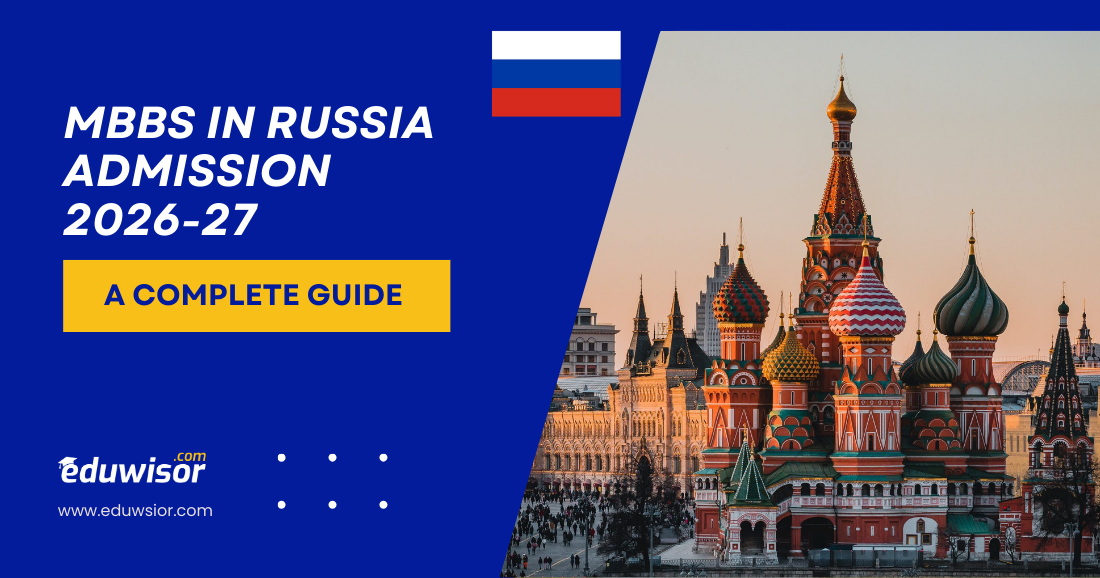
The dream of becoming a doctor is cherished by thousands of Indian students every year. However, with limited seats in Indian medical colleges and exorbitant donation fees in private institutions, many aspiring medical professionals look abroad for quality education at affordable costs. Among all foreign destinations, MBBS in Russia has emerged as a premier hub for medical education, especially for Indian students seeking MBBS admission.
With a legacy of excellence in medical science dating back centuries, Russian medical universities combine world-class infrastructure, experienced faculty, and globally recognized degrees at a fraction of the cost of Western countries. Over 15,000 Indian students are currently pursuing MBBS in Russia, making it one of the most popular destinations for medical studies abroad.
This comprehensive guide covers everything you need to know about MBBS admission in Russia – from selecting the right university and understanding the fee structure to navigating the admission process and planning your career after graduation. Whether you’re a student or a concerned parent, this article provides authentic, detailed information to help you make an informed decision about pursuing your medical education in Russia.
Chapter 1: Advantages of Studying MBBS in Russia
1.1 Globally Recognized Medical Degrees
Russian medical universities are listed in the World Directory of Medical Schools (WDOMS) and recognized by major global bodies including:
- World Health Organization (WHO)
- Medical Council of India (MCI/NMC)
- Educational Commission for Foreign Medical Graduates (ECFMG), USA
- General Medical Council (GMC), UK
- Australian Medical Council
This international recognition means your MBBS degree from Russia allows you to practice medicine in India (after clearing the FMGE/NEXT exam) and many other countries worldwide.
1.2 Affordable Tuition Fees and Living Costs
Compared to private medical colleges in India charging ₹50-80 lakhs for the entire course, MBBS in Russia fees range from ₹15-35 lakhs for the complete 6-year program including hostel accommodation. The cost of living in Russia is surprisingly affordable – approximately ₹15,000-20,000 per month including food, transportation, and miscellaneous expenses.
1.3 No Entrance Exam or Donation
Russian universities don’t require students to pass any entrance examination like NEET-UG (though NEET qualification is mandatory for Indian students to practice later). There’s no capitation fee or donation – you pay only the official tuition fee published by the university. Admission is based on your Class 12 marks (especially in Physics, Chemistry, and Biology) and NEET score.
1.4 English Medium Instruction
Most Russian medical universities offer MBBS in English medium, eliminating language barriers. However, Russian language classes are included in the curriculum to help students interact with patients during clinical rotations – a valuable skill that enhances your medical practice.
1.5 High-Quality Education and Advanced Infrastructure
Russian medical education follows a practical-oriented approach with emphasis on clinical exposure from early years. Universities are equipped with modern laboratories, simulation centers, digital libraries, and affiliated multi-specialty hospitals where students gain hands-on experience.
1.6 Safe and Welcoming Environment for Indian Students
MBBS in Russia has a large Indian student community with active Indian student associations in every major city. Universities provide separate hostel facilities for boys and girls with Indian food available in mess/canteens. The local population is generally friendly toward international students, and campuses have 24/7 security.
1.7 Straightforward Admission Process
The MBBS in Russia admission process is transparent and systematic when done through authorized representatives like Fortune Education. From document preparation to visa processing and departure, the entire journey is streamlined for hassle-free admission.
1.8 Opportunity for Global Exposure
Studying in Russia exposes you to diverse medical cases, international teaching methodologies, and multicultural interactions – all of which broaden your perspective and make you a more competent global healthcare professional.
Chapter 2: Eligibility Criteria for MBBS Admission in Russia
Before applying for MBBS in Russia admission, ensure you meet these eligibility requirements:
2.1 Academic Qualifications
- Completion of 10+2 or equivalent education with Physics, Chemistry, and Biology as main subjects
- Minimum 50% aggregate marks in PCB for general category (40-45% for reserved categories as per MCI guidelines)
- Must have qualified NEET-UG (National Eligibility cum Entrance Test) – mandatory for Indian students since 2018
2.2 Age Requirement
- Minimum 17 years of age as of December 31st of the admission year
- No upper age limit, though most students apply between 17-25 years
2.3 Required Documents
- 10th and 12th mark sheets and certificates
- NEET-UG scorecard and admit card
- Valid passport (minimum 2 years validity)
- Birth certificate
- 8-12 passport-sized photographs with white background
- Medical fitness certificate including HIV test report
- Authorization documents from parents/guardians (for minors)
- Student visa invitation letter from the Russian university
2.4 Language Proficiency
While most MBBS programs in Russia are taught in English, basic knowledge of Russian is beneficial for daily life. No IELTS/TOEFL is required for admission.
Chapter 3: Top MCI/NMC Approved Medical Universities in Russia
Russia boasts over 50 medical universities, but here are the top 10 preferred by Indian students for MBBS admission:
3.1 Moscow State Medical University (Sechenov University)
- Established: 1758 (Oldest medical school in Russia)
- World Ranking: Top 250 (QS World University Rankings)
- Annual Fees: ₹6-7 lakhs
- Key Features: Europe’s largest medical university with 19,000+ students, 120+ departments, and 25+ research institutes
3.2 Russian National Research Medical University (RNRMU)
- Established: 1906
- World Ranking: Top 500
- Annual Fees: ₹5-6 lakhs
- Key Features: Named after N.I. Pirogov, focuses on research with strong international collaborations
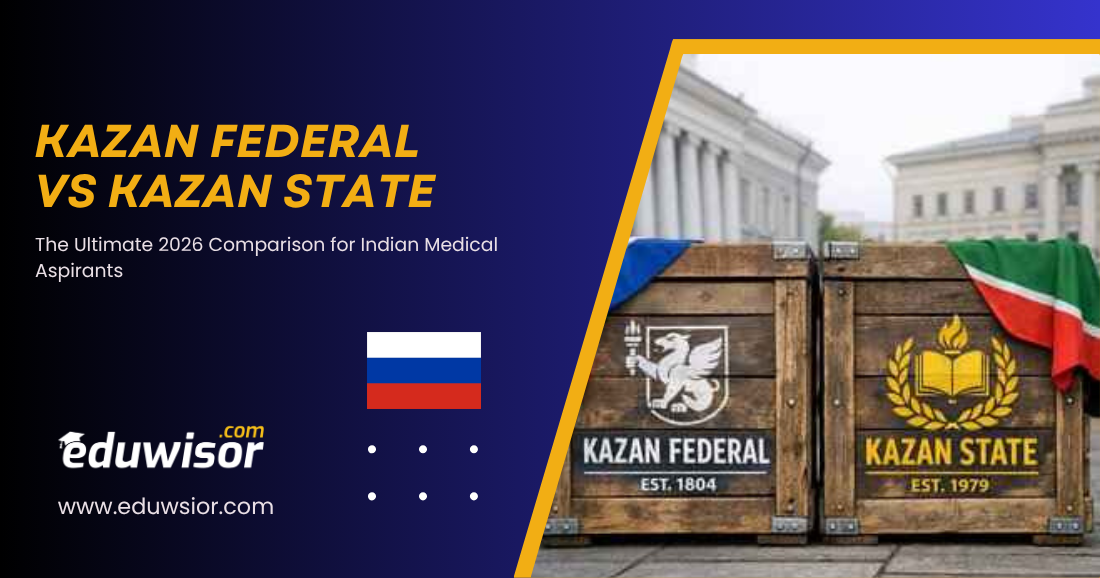
3.3 Kazan Federal University
- Established: 1804
- World Ranking: Top 400
- Annual Fees: ₹4-5 lakhs
- Key Features: Third oldest university in Russia, separate campus for international students, excellent hostel facilities
3.4 Volgograd State Medical University
- Established: 1935
- Annual Fees: ₹3.5-4.5 lakhs
- Key Features: Highly popular among Indian students, excellent FMGE passing rate, good hostel facilities with Indian food
3.5 Orenburg State Medical University
- Established: 1944
- Annual Fees: ₹3-4 lakhs
- Key Features: Affordable fees, strong emphasis on practical training, dedicated international student support
3.6 Crimea Federal University
- Established: 1918
- Annual Fees: ₹3.5-4 lakhs
- Key Features: Located in Simferopol, beautiful campus, modern infrastructure, moderate climate
3.7 Altai State Medical University
- Established: 1954
- Annual Fees: ₹3-3.5 lakhs
- Key Features: One of the most economical options, good clinical exposure, high graduate employment rate
3.8 Siberian State Medical University
- Established: 1878
- Annual Fees: ₹4-5 lakhs
- Key Features: Located in Tomsk (the “Oxford of Siberia”), strong research orientation, excellent postgraduate opportunities
3.9 Bashkir State Medical University
- Established: 1932
- Annual Fees: ₹3.5-4.5 lakhs
- Key Features: Large international student community, separate hostel for international students, good FMGE coaching support
3.10 People’s Friendship University of Russia (RUDN University)
- Established: 1960
- World Ranking: Top 400
- Annual Fees: ₹6-7 lakhs
- Key Features: Highly multicultural environment (students from 150+ countries), excellent campus facilities, strong global alumni network
Chapter 4: Detailed MBBS in Russia Fee Structure 2026-27
One of the primary reasons Indian students choose MBBS in Russia is its affordability. Here’s a detailed breakdown of MBBS in Russia fees:
4.1 Tuition Fees Across Different Universities
- Premium Universities (Moscow/St. Petersburg): ₹5-8 lakhs per year
- Mid-range Universities (Federal/State): ₹3.5-5 lakhs per year
- Economical Universities (Regional): ₹2.5-3.5 lakhs per year
Note: Fees are generally fixed for the entire course duration when paid annually.
4.2 Hostel and Accommodation Costs
- University hostel: ₹30,000-60,000 per year
- Private apartment (sharing): ₹60,000-1,20,000 per year
- Hostel deposit (refundable): ₹15,000-30,000 (one-time)
4.3 Living Expenses Per Month
- Food: ₹8,000-15,000
- Local transportation: ₹1,500-3,000
- Mobile/internet: ₹500-1,000
- Miscellaneous: ₹3,000-6,000
- Total monthly living cost: ₹15,000-25,000
4.4 Other One-time Expenses
- Medical insurance: ₹10,000-15,000 per year
- Visa extension: ₹3,000-5,000 per year
- Registration charges: ₹5,000-10,000 (on arrival)
- Flight tickets (India-Russia): ₹30,000-50,000 (round trip)
4.5 Total Estimated Cost for Complete MBBS
- Tuition fees (6 years): ₹18-42 lakhs
- Hostel (6 years): ₹1.8-3.6 lakhs
- Living expenses (6 years): ₹10.8-18 lakhs
- Other expenses: ₹3-5 lakhs
- Grand total: ₹33-69 lakhs for entire 6-year program
This is significantly lower than private medical colleges in India where fees alone can exceed ₹1 crore.
Chapter 5: Step-by-Step MBBS Admission Process in Russia
The MBBS in Russia admission process typically follows these steps:
Step 1: Research and University Selection (January-March)
- Research various Russian medical universities
- Compare fee structures, facilities, and location
- Consult with authorized agencies like Fortune Education
- Shortlist 2-3 preferred universities
Step 2: Application Submission (March-May)
- Fill the university application form
- Submit scanned copies of academic documents
- Pay initial application fee (₹10,000-20,000)
- Receive provisional admission letter
Step 3: Document Authentication (April-June)
- Get documents attested by concerned authorities
- Notarization from local notary
- Authentication from HRD/Ministry of External Affairs
- Apostille attestation (if required)
Step 4: Invitation Letter and Visa Processing (May-July)
- University issues official invitation letter
- Apply for student visa at Russian Embassy/Consulate
- Submit passport, invitation letter, medical tests, etc.
- Receive visa (typically takes 15-30 days)
Step 5: Pre-departure Formalities (July-August)
- Book flight tickets
- Arrange foreign exchange
- Purchase international medical insurance
- Attend pre-departure orientation
Step 6: Arrival in Russia (August-September)
- University representative receives at airport
- Complete university registration
- Undergo medical check-up in Russia
- Begin Russian language classes (if applicable)
Step 7: Commencement of Classes (September-October)
- Orientation program for international students
- Payment of first-year tuition fees
- Settlement in hostel
- Start of academic session
Note: The admission timeline may vary slightly between universities.
Chapter 6: MBBS Curriculum and Academic Structure in Russia
The MBBS in Russia syllabus follows international standards with a balanced approach to theoretical knowledge and practical skills:
6.1 Duration of Course
- Total: 6 years (including 1 year of internship)
- Academic sessions: September to June (with winter break in January)
6.2 Academic Structure
Year 1-2: Pre-clinical Studies
- Basic medical sciences: Anatomy, Physiology, Biochemistry
- Foundation courses: Histology, Microbiology, Pathology
- Introduction to Clinical Medicine
- Russian language (for non-Russian speakers)
Year 3-4: Para-clinical Studies
- Pharmacology, Pathology, Microbiology
- Introduction to clinical subjects
- Bedside training and hospital visits
- Diagnostic methods and procedures
Year 5-6: Clinical Studies and Internship
- Major clinical subjects: Medicine, Surgery, Pediatrics, Gynecology
- Rotations in various hospital departments
- Final year internship (compulsory)
- Preparation for licensing exams
6.3 Teaching Methodology
- Lectures: 25-30% of curriculum
- Practical labs: 30-35% of curriculum
- Clinical rotations: 35-40% of curriculum
- Seminar presentations and case studies
6.4 Examination Pattern
- Semester system with regular assessments
- Practical exams alongside theory papers
- Clinical viva voce and skill assessments
- Minimum 50% marks required to pass (varies by university)
6.5 Medium of Instruction
- Most universities offer English medium MBBS programs
- Russian language taught as a separate subject for clinical communication
- Option to learn Russian intensively in first year
Chapter 7: Hostel Facilities and Student Life in Russia
7.1 Accommodation Options
University Hostels:
- Separate hostels for international students
- Rooms typically shared between 2-3 students
- Common kitchens, bathrooms, and laundry facilities
- 24/7 security and warden supervision
- Cost: ₹30,000-60,000 per year
Private Apartments:
- More privacy but higher cost
- Usually shared by 2-4 students to reduce expenses
- Requires local registration formalities
- Cost: ₹60,000-1,20,000 per year
7.2 Food and Cuisine
- University mess/canteens offer Indian food options
- Many Indian restaurants near university areas
- Grocery stores stock Indian spices and ingredients
- Students often cook together to save costs
- Monthly food expense: ₹8,000-15,000
7.3 Climate and Clothing
- Russia experiences extreme winters (November-March)
- Temperature can drop to -20°C to -30°C in some regions
- Universities provide centrally heated classrooms and hostels
- Essential winter clothing: thermal wear, heavy jackets, boots, gloves
- Summer (June-August) is pleasant with 15-25°C temperature
7.4 Indian Student Community
- Strong Indian student associations in every major city
- Celebration of Indian festivals (Diwali, Holi, Eid, Christmas)
- Indian grocery stores and restaurants in student areas
- Regular cultural events and get-togethers
- Support system for new students
7.5 Safety and Security
- University campuses have 24/7 security
- Separate hostel facilities for female students with enhanced security
- Low crime rates in university towns
- Emergency support from Indian Embassy and student associations
- Health insurance covers medical emergencies
7.6 Extracurricular Activities
- Sports facilities: gyms, swimming pools, sports grounds
- Cultural clubs and student organizations
- Annual cultural festivals and international days
- Opportunities for part-time work (with restrictions)
- Travel opportunities during breaks
Chapter 8: Career Prospects After MBBS from Russia
8.1 Practicing in India
Step 1: Clear FMGE/NEXT Exam
- Foreign Medical Graduates Examination (FMGE) or proposed NEXT exam
- Minimum 50% marks required
- Conducted twice yearly by NBE
- Many Russian universities provide FMGE coaching support
Step 2: Compulsory Rotating Internship
- 1-year internship in MCI/NMC approved hospital
- Exposure to various medical departments
- Required for permanent registration with medical council
Step 3: State Medical Council Registration
- Register with respective State Medical Council
- Receive license to practice medicine in India
8.2 Postgraduate Options in India
- Appear for NEET-PG for MD/MS admission
- Some states have separate quotas for foreign graduates
- Many Russian MBBS graduates successfully pursue PG in India
8.3 International Career Opportunities
USA:
- Clear USMLE Steps 1, 2, and 3
- Complete residency program
- Practice medicine in the United States
United Kingdom:
- Pass PLAB 1 and PLAB 2 exams
- Complete foundation program
- Register with GMC for practice
Other Countries:
- Australia (AMC exam)
- Canada (MCC exams)
- Germany (approbation process)
- Gulf countries (license exams)
8.4 Higher Education in Russia/Other Countries
- Direct admission to PG (Clinical Residency) in Russia (3 years)
- PhD programs in medical sciences
- Specialized diploma courses
8.5 Alternative Career Paths
- Hospital administration and management
- Medical research and pharmaceuticals
- Public health and epidemiology
- Medical writing and journalism
- Healthcare consulting
- Medical tourism coordination
8.6 Success Rate of Russian Medical Graduates
- FMGE passing percentage: Varies from 20-40% (comparable to other foreign medical graduates)
- Many students clear FMGE in 2-3 attempts with proper preparation
- Success rate higher among students who take coaching during MBBS
Chapter 9: Scholarship Opportunities for MBBS in Russia
9.1 Russian Government Scholarships
- Government of Russia Scholarships: Cover 100% tuition fee for exceptional students
- Quota Scholarships: Available through Russian embassies in home countries
- University-specific Merit Scholarships: Based on academic excellence
9.2 Indian Government Scholarships
- National Overseas Scholarship: For SC/ST/OBC categories
- Education Loans: Up to ₹1.5 crore with collateral from nationalized banks
- State Government Scholarships: Some states offer financial aid for studying abroad
9.3 University-specific Financial Aid
- Early bird discounts for early fee payment
- Sibling discounts for families sending multiple children
- Merit-based fee waivers for toppers
- Need-based financial assistance
9.4 How to Apply for Scholarships
- Check university website for available scholarships
- Prepare strong academic records and recommendation letters
- Write compelling scholarship essays
- Apply early (scholarship deadlines are usually before admission deadlines)
- Consult with authorized representatives for guidance
Chapter 10: Common Concerns and Solutions for Indian Students
10.1 Language Barrier
Concern: “How will I communicate with patients during clinical rotations?”
Solution:
- Russian language is taught as part of the curriculum
- Basic medical Russian focuses on patient communication
- Translators are available during initial clinical years
- Most young doctors and medical staff speak English
10.2 Recognition in India
Concern: “Will my Russian MBBS degree be valid in India?”
Solution:
- All recommended universities are MCI/NMC approved
- Degree must be verified by Indian Embassy in Russia
- Clearance of FMGE/NEXT exam grants practice rights in India
- Thousands of Russian medical graduates practice successfully in India
10.3 Climate Adaptation
Concern: “Can Indian students adjust to extreme Russian winters?”
Solution:
- Universities have excellent heating systems
- Winter clothing is affordable in Russia
- Indoor facilities are warm and comfortable
- Most students adapt within first winter season
- Summer and spring are beautiful in Russia
10.4 Food and Cultural Adjustment
Concern: “Will I get Indian food in Russia?”
Solution:
- Indian food available in university canteens
- Many Indian restaurants in student areas
- Grocery stores stock Indian ingredients
- Students often cook together
- Cultural festivals celebrated with Indian community
10.5 Safety for Female Students
Concern: “Is Russia safe for female Indian students?”
Solution:
- Separate hostel facilities with strict security
- Campus security 24/7
- Strong Indian student community support
- University staff specially assigned for international students
- Generally safe environment with respect for women
Chapter 11: MBBS in Russia vs Other Popular Destinations
11.1 Russia vs Ukraine
- Similarities: Post-Soviet education system, affordable fees, MCI recognition
- Advantages of Russia: More stable political situation, better infrastructure, wider global recognition
- Cost comparison: Russia slightly more expensive but offers better facilities
11.2 Russia vs Philippines
- Similarities: English medium instruction, American-style curriculum
- Advantages of Russia: Lower total cost, European exposure, better clinical facilities
- Examination: Philippines graduates can directly take USMLE, Russian graduates need additional steps
11.3 Russia vs China
- Similarities: Large number of Indian students, affordable education
- Advantages of Russia: European standard of living, better student accommodation, easier adaptation for Indians
- Recognition: Both recognized by MCI/NMC, WHO
11.4 Russia vs Kyrgyzstan/Kazakhstan
- Similarities: Former Soviet countries, similar education system
- Advantages of Russia: More developed infrastructure, higher global ranking of universities, better research opportunities
11.5 Russia vs India (Private Colleges)
- Cost: Russia significantly cheaper than Indian private colleges
- Admission: No donation in Russia vs huge capitation fees in India
- Quality: Comparable education quality with better infrastructure in some Russian universities
- Recognition: Both recognized by MCI/NMC
Chapter 12: Essential Documents Checklist for MBBS Admission
12.1 Academic Documents
- 10th mark sheet and certificate (original + 5 attested copies)
- 12th mark sheet and certificate (original + 5 attested copies)
- NEET-UG admit card and scorecard (original + 5 copies)
- Transfer certificate/leaving certificate from last institution
- Migration certificate (if applicable)
12.2 Identity and Personal Documents
- Valid passport (minimum 2 years validity)
- Birth certificate in English or with certified translation
- 15-20 passport-sized photographs (white background, matte finish)
- Medical fitness certificate including HIV negative report
- Vaccination certificates as per requirement
12.3 Financial Documents
- Bank statement of parent/guardian (minimum 6 months)
- Affidavit of financial support
- Scholarship award letter (if applicable)
- Education loan sanction letter (if applicable)
12.4 Authorization Documents
- Authorization letter from parents/guardians (for minors)
- Power of attorney (if processed through consultant)
- Consent letter for international travel (for students under 18)
12.5 University Application Documents
- Duly filled university application form
- Statement of purpose (for some universities)
- Recommendation letters (for some universities)
- Application fee payment receipt
Chapter 13: Timeline for MBBS Admission in Russia 2026-27
13.1 Early Planning Phase (October-December 2026)
- Research about MBBS in Russia
- Shortlist preferred universities
- Start NEET-UG preparation (if not already qualified)
- Check passport validity and renew if necessary
13.2 Application Phase (January-March 2026)
- Collect and prepare academic documents
- Apply to selected universities
- Receive provisional admission letters
- Decide on final university choice
13.3 Document Processing Phase (April-June 2026)
- Get documents attested/authenticated
- Apply for student visa invitation
- Complete medical tests and vaccinations
- Arrange education loan if needed
13.4 Visa and Travel Phase (July-August 2026)
- Submit visa application
- Book flight tickets
- Attend pre-departure orientation
- Pack essentials for Russia
13.5 Departure and Enrollment (August-September 2026)
- Travel to Russia
- Complete university registration
- Pay first-year fees
- Settle in hostel
- Begin classes
Chapter 14: Role of Educational Consultants like Fortune Education
14.1 Why Use an Authorized Consultant?
- Expert guidance: Professional advice on university selection
- Streamlined process: Handles complex documentation
- Time-saving: Manages entire admission process
- Cost-effective: Helps avoid costly mistakes
- Post-admission support: Assistance after reaching Russia
14.2 Services Offered by Fortune Education
- Free counseling session: Understanding student profile and preferences
- University shortlisting: Based on budget, academic record, and preferences
- Application processing: Complete documentation support
- Admission coordination: Liaison with Russian universities
- Visa assistance: Guidance for student visa application
- Pre-departure briefing: Orientation about life in Russia
- Post-arrival support: Airport pickup, registration, settling in
- Parent communication: Regular updates throughout the process
14.3 Red Flags to Avoid in Consultants
- Agents demanding huge upfront payments
- Promises of 100% FMGE passing guarantee
- Pressure to choose specific universities
- Lack of proper office and credentials
- No post-admission support system
- Unrealistic promises about scholarships
14.4 How to Verify Legitimate Consultants
- Check MCI/NMC authorization
- Verify years of experience and track record
- Ask for references from past students
- Visit office if possible
- Check online reviews and testimonials
- Confirm direct partnership with Russian universities
Chapter 15: Preparing for Your Medical Career During MBBS in Russia
15.1 FMGE/NEXT Preparation Strategy
Start Early:
- Begin preparation from 3rd year onwards
- Integrate Indian medical syllabus with Russian curriculum
- Join online test series and coaching programs
Resources:
- Standard Indian medical textbooks alongside Russian materials
- Online question banks and mock tests
- FMGE preparation apps and websites
- Study groups with Indian classmates
Time Management:
- Dedicate 2-3 hours daily for FMGE preparation during academic years
- Intensive preparation during summer/winter breaks
- Join crash courses during final year
15.2 Building a Strong CV During MBBS
Academic Excellence:
- Maintain good academic record
- Participate in research projects
- Present papers at conferences
- Publish articles in medical journals
Clinical Skills:
- Maximize hands-on training opportunities
- Learn procedural skills beyond curriculum
- Document clinical cases and experiences
Extracurricular Activities:
- Join student organizations
- Participate in medical camps and community service
- Develop leadership skills through student council
15.3 Networking and Mentorship
- Connect with senior Indian students for guidance
- Build relationships with professors for recommendations
- Join online forums of Indian doctors abroad
- Attend medical conferences and workshops
- Connect with alumni of your university
15.4 Planning Post-MBBS Pathway
By 4th Year:
- Decide on country of practice (India/US/UK/etc.)
- Research licensing requirements
- Start preparing for respective licensing exams
By 5th Year:
- Begin application process for PG/residency
- Prepare required documents and recommendations
- Take necessary entrance exams
Final Year:
- Complete internship requirements
- Appear for licensing exams
- Apply for jobs/PG programs
- Plan relocation if changing countries
Conclusion: Is MBBS in Russia the Right Choice for You?
Pursuing MBBS in Russia offers a unique combination of quality medical education, international exposure, and affordable costs. For Indian students facing intense competition and exorbitant fees in domestic medical colleges, Russia presents a viable alternative with globally recognized degrees.
The key to success lies in:
- Choosing the right university that fits your academic and financial profile
- Starting FMGE preparation early during your MBBS course
- Maximizing clinical exposure during your studies
- Building a strong professional network for future opportunities
- Maintaining focus on your ultimate goal of becoming a competent medical professional
Thousands of Indian doctors who graduated from Russian universities are now successfully practicing across India and the world. With proper planning, dedication, and guidance from authorized consultants like Fortune Education, you too can join this esteemed community of medical professionals.
The journey to becoming a doctor is challenging regardless of where you study, but MBBS in Russia provides a structured, supportive, and cost-effective pathway to achieving your medical dreams. As global healthcare becomes increasingly interconnected, the international perspective gained from studying in Russia may well become one of your greatest professional assets.
Eduwisor always guides students toward the right path with an unbiased approach. You can follow us on Youtube, Facebook, Instagram, Twitter, and Linkedin. Stay tuned for regular updates.
Interested in applying? Contact authorized Eduwisor consultant for a smooth admission process!
Act NOW—limited seats for 2026 intake! Call/WhatsApp: 9326395883/ 9076036383