

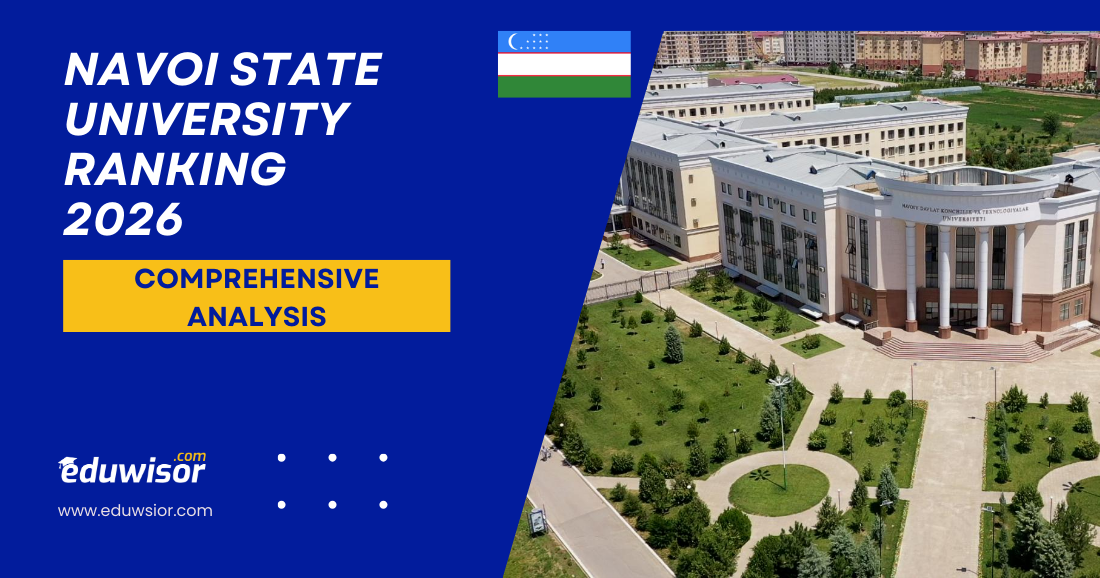
The pursuit of higher education is a journey defined by critical choices, where the stature and quality of an institution play a pivotal role. In the heart of Uzbekistan, a nation rich in cultural history and burgeoning economic potential, Navoi State University stands as a beacon of academic and scientific advancement. For prospective students, researchers, and academic collaborators worldwide, understanding the Navoi State University ranking is more than a glance at numbers; it’s a window into its educational philosophy, research vigor, and place in the global academic tapestry. This deep dive explores every facet of the university’s standing, dissecting what these rankings mean, why they matter, and how Navoi State University is carving its unique niche in the competitive world of higher education.
Introduction: The Significance of University Rankings in the Modern Era
University rankings have evolved from mere lists to powerful indicators that influence student decisions, institutional policies, and international partnerships. They attempt to quantify the unquantifiable—quality of education, research impact, and graduate success—using a complex set of metrics. For an institution like Navoi State University, these rankings serve as a benchmark for progress, a tool for international visibility, and a reflection of its commitment to meeting global standards. They answer pressing questions: How does the university compare regionally and globally? What are its academic strengths? Is a degree from here recognized internationally?
This analysis goes beyond a single ranking snapshot. We will explore the university’s position in major global systems like QS and THE, its dominance in national contexts, the underlying strengths that fuel its reputation, and practical insights for those considering it as their academic home. By the end, you will have a holistic, 5500-word panorama of Navoi State University’s ranking, stature, and value proposition.
Chapter 1: Navoi State University – An Institutional Pillar of Uzbekistan
Before delving into rankings, one must understand the institution itself. Founded in 1994 and named after the great Uzbek poet and thinker Alisher Navoi, Navoi State University (Navoi Davlat Universiteti) fuels the intellectual and industrial development of the Navoi region, a key industrial and mining hub of Uzbekistan.
From its inception, the university’s mission has been intrinsically linked to the region’s economic pillars: mining, chemistry, metallurgy, and engineering. However, its vision has expansively grown to encompass a wide array of disciplines including humanities, economics, pedagogy, and information technologies. This blend of specialized technical focus with comprehensive academic offerings creates a unique identity.
The university operates multiple faculties and institutes, such as the Faculty of Mining, the Faculty of Chemical Technology, the Institute of Economics and Pedagogy, and the Faculty of Information Technologies. It boasts modern laboratories, research centers, and a focus on innovation. This strong foundational profile is the bedrock upon which its academic reputation is built and is a critical factor assessed by ranking bodies.
Chapter 2: Decoding the Global Ranking Systems
To comprehend Navoi State University ranking, we must first decode the languages spoken by the global academic community: the methodologies of major ranking organizations.
1. QS World University Rankings: Perhaps the most recognized global system, QS (Quacquarelli Symonds) evaluates universities based on six key metrics:
- Academic Reputation (40%): A global survey of academics.
- Employer Reputation (10%): A survey of employers on graduate quality.
- Faculty/Student Ratio (20%): A proxy for teaching quality.
- Citations per Faculty (20%): Research impact measured by citations.
- International Faculty Ratio (5%): Proportion of international staff.
- International Student Ratio (5%): Proportion of international students.
2. THE World University Rankings (THE): Times Higher Education uses 13 performance indicators grouped into five areas:
- Teaching (30%): Learning environment.
- Research (30%): Volume, income, and reputation.
- Citations (30%): Research influence.
- International Outlook (7.5%): Staff, students, research.
- Industry Income (2.5%): Knowledge transfer.
3. THE Impact Rankings: A unique subset focused on a university’s success in delivering the United Nations Sustainable Development Goals (SDGs). This is increasingly important for institutions with strong regional and societal missions.
4. Webometrics Ranking of World Universities: This ranking, from the Cybermetrics Lab in Spain, focuses on web presence and activity. It measures:
- Presence (5%): Volume of web content.
- Impact (50%): External links (a proxy for visibility/influence).
- Openness (10%): Rich files (PDFs, docs) for knowledge sharing.
- Excellence (35%): High-quality publications (Scopus database).
Each system offers a different lens. QS heavily weights reputation; THE emphasizes research influence; Webometrics values online academic footprint.
Chapter 3: Navoi State University in Global Ranking Arenas
As of 2026, Navoi State University is on a dynamic trajectory within these global frameworks. The very top tiers of the overall QS or THE World Rankings—dominated by centuries-old, massively endowed institutions—do not yet include the university, as is common for strong regional institutions. However, its presence and performance in specialized and regional contexts are notable and telling.
QS World University Rankings: Navoi State University actively participates in the QS ecosystem. While it may currently be ranked in the 1000+ band or among regional contenders in the broader QS World list, its true momentum is seen in its engagement with the QS Stars rating system or regional QS Asia rankings. The university’s focused strategy likely involves boosting metrics like international student ratio and citations per faculty to climb these tables. Its strengths in engineering and technology are key areas where it can gain recognition.
THE World University Rankings & THE Impact Rankings: This is where Navoi State University begins to shine with greater distinctiveness. The university’s deep commitment to its regional community, industry-focused research, and educational mission aligns powerfully with the UN SDGs. It is highly competitive in the THE Impact Rankings. For SDGs such as:
- SDG 9: Industry, Innovation, and Infrastructure (Leveraging its mining and engineering prowess).
- SDG 4: Quality Education (Providing accessible, high-level education in the region).
- SDG 8: Decent Work and Economic Growth (Directly feeding skilled graduates into Navoi’s industrial complex).
- SDG 17: Partnerships for the Goals (Its network of international collaborations).
A strong showing in the THE Impact Rankings is a robust indicator of an institution making tangible, measurable contributions to society—a ranking of profound substance beyond pure academic prestige.
Webometrics Ranking: In the January 2026 edition of the Webometrics ranking, Navoi State University holds a strong position within Uzbekistan, consistently placing within the national top 20-30 and making significant strides in the Central Asian region. Its global position improves annually. This ranking reflects the university’s success in enhancing its digital academic footprint. The increase in its “Excellence” score indicates a growing output of scientific publications in high-impact, Scopus-indexed journals. The “Impact” score, based on backlinks, signifies its rising visibility and influence in the global academic web. For a tech-savvy prospective student or researcher, a strong Webometrics rank signals an institution that is digitally proactive, open-access friendly, and committed to disseminating knowledge globally.
Chapter 4: National and Regional Dominance: The Home Turf Advantage
Within Uzbekistan, Navoi State University ranking is formidable and respected. It is consistently positioned among the top 10-15 universities in the nation, vying closely with other major state universities in Tashkent, Samarkand, and Nukus.
In national rankings conducted by Uzbekistan’s Ministry of Higher Education, Science, and Innovation, the university is invariably a leader in its core specializations:
- #1 or Top 3 for Mining Engineering and Geology.
- #1 or Top 3 for Chemical Technology and Metallurgy.
- A leading institution for Information Technology and Teacher Education in the central region.
This national dominance is critical. It translates to:
- Maximum Employer Recognition: Graduates from these top-ranked programs are the first choice for major national industrial conglomerates like Navoi Mining and Metallurgy Combinat (NMMC) and Uzbekneftegaz.
- Priority for Government Funding: Leading programs attract state grants for laboratory modernization and research initiatives.
- Strong Student Recruitment: Top Uzbek students aiming for these high-demand fields actively seek admission here.
Regionally in Central Asia, Navoi State University is recognized as a specialist powerhouse. Its reputation in mining and chemical technology gives it a competitive edge over more generalized universities in neighboring countries, fostering student exchanges and research partnerships across Kazakhstan, Kyrgyzstan, and Tajikistan.
Chapter 5: The Pillars of Strength Behind the Rankings
Rankings are an outcome, not a cause. The rising trajectory of Navoi University ranking 2026 is fueled by concrete, institutional strengths.
1. Specialized & Industry-Aligned Academics: The university’s crown jewels are its engineering and technical faculties. Programs in Mining, Chemical Technology, and Mechanical Engineering are developed in direct consultation with industry leaders, ensuring curricula are relevant, practical, and produce job-ready specialists. This close tie directly boosts employer reputation, a key QS metric.
2. Research and Innovation Output: The university hosts several dedicated research institutes and centers focusing on applied sciences. There is a marked, quantitative increase in research output—peer-reviewed papers, patents, and conference proceedings—particularly in fields like mineral processing, environmental safety in mining, and new material development. This drives up citation metrics in THE and QS and the “Excellence” score in Webometrics.
3. Strategic Internationalization: Navoi State University is not an isolated entity. It has actively built a network of international collaborations with universities in South Korea, Germany, Russia, China, and Poland. These partnerships facilitate faculty exchange, dual-degree programs, and joint research projects. This strategic move directly improves “International Outlook” scores in THE and QS and enriches the academic environment.
4. Modern Infrastructure Investment: Significant investments have been made in campus infrastructure: modern lecture halls, specialized laboratories simulating industrial conditions (e.g., mine models, chemical pilot plants), and upgraded IT resources. This enhances the teaching and learning environment, a core component of ranking assessments.
5. Focus on Graduate Employability: With its industry-centric model, the university boasts an exceptionally high graduate employment rate, especially from its flagship programs. This success story feeds back into surveys, strengthening its reputation among both academics and employers globally.
Chapter 6: A Guide for the Prospective Student: Beyond the Rank Number
For a student considering Navoi State University, the ranking is a starting point, not the destination. Here’s how to interpret it for your decision:
For the International Student:
- Recognition: A degree from a nationally top-ranked institution in its specialization is highly respected within Uzbekistan and the region.
- THE Impact Ranking: If you are motivated by studying at an institution that makes a real societal impact, its performance here is a major positive.
- Specialization Over General Rank: If your goal is to become a world-class mining engineer in Central Asia, choosing the #1 national program here is wiser than choosing a higher overall-ranked university with a weaker mining department.
- Admission Process: The admission process Navoi State University is competitive for its top programs. International students typically need to provide secondary education certificates, pass subject-specific entrance exams (or provide relevant SAT/ACT scores), and prove Russian or Uzbek language proficiency (preparatory language courses are available).
For the Research Aspirant (Master’s/PhD):
- Webometrics & Publications: Investigate the university’s publication record in your specific field (Scopus, Google Scholar). A strong Webometrics “Excellence” rank suggests a supportive environment for publishing.
- Faculty Expertise: Look for specific professors or research groups in your area of interest. The university’s applied research focus offers unique opportunities for fieldwork and industry-linked projects.
- Funding: Explore university and government-sponsored scholarships for postgraduate research, which are often ample for high-potential candidates in strategic fields.
Campus and Student Life:
Student life at Navoi University is a blend of serious academia and vibrant community. The campus in Navoi city provides a focused environment. Students have access to sporting facilities, cultural clubs, and student organizations. The cost of living in Navoi is significantly lower than in Tashkent, making it financially attractive. The university often organizes technical visits to local industries, providing unparalleled practical exposure.
Chapter 7: The Road Ahead: Future Trajectory of Navoi State University Ranking
The future Navoi State University global standing looks promising, guided by Uzbekistan’s national strategy to elevate its higher education system. Key areas of focus will likely be:
- Enhanced Research Funding: To further increase the volume and quality of scientific publications.
- Aggressive International Student Recruitment: To boost the “International Student Ratio” metric and cultural diversity on campus.
- Deepening Industry-Academia Links: For more patent filings and commercialized innovations, improving “Industry Income” metrics.
- Digital Transformation: Continued enhancement of open-access repositories and digital learning tools to solidify its Webometrics position.
The goal is not just to climb generic ranking tables but to achieve global recognition as the leading specialist university in mining and chemical technology in Central Asia.
Conclusion: Ranking as a Reflection of Purposeful Growth
In conclusion, the Navoi State University ranking narrative is one of purposeful growth and strategic specialization. It may not be a “world top 100” university by conventional measures, but it is a world-class institution within its chosen domains. Its rankings tell a story of deep national integration, societal impact, and a clear vision for the future.
For the right student—one seeking a rigorous, industry-relevant education in engineering and technology within a dynamic region—Navoi State University offers an opportunity that transcends its numerical rank. It offers a pathway to becoming a specialist who is immediately valuable to a growing economy. Its rising positions in the THE Impact and Webometrics rankings are testaments to an institution that is not only educating minds but also thoughtfully engaging with the world’s pressing challenges and the digital academic frontier.
Therefore, when you see Navoi State University, see beyond the rank. See a specialist institution on the rise, a key player in Uzbekistan’s development, and a potentially perfect launchpad for a specific, impactful career. Its ranking is a snapshot of this ongoing journey, a journey definitely worth joining.
Eduwisor always guides students toward the right path with an unbiased approach. You can follow us on Youtube, Facebook, Instagram, Twitter, and Linkedin. Stay tuned for regular updates.
Interested in applying? Contact authorized Eduwisor consultant for a smooth admission process!
Act NOW—limited seats for 2026 intake! Call/WhatsApp: 9326395883/ 9076036383