

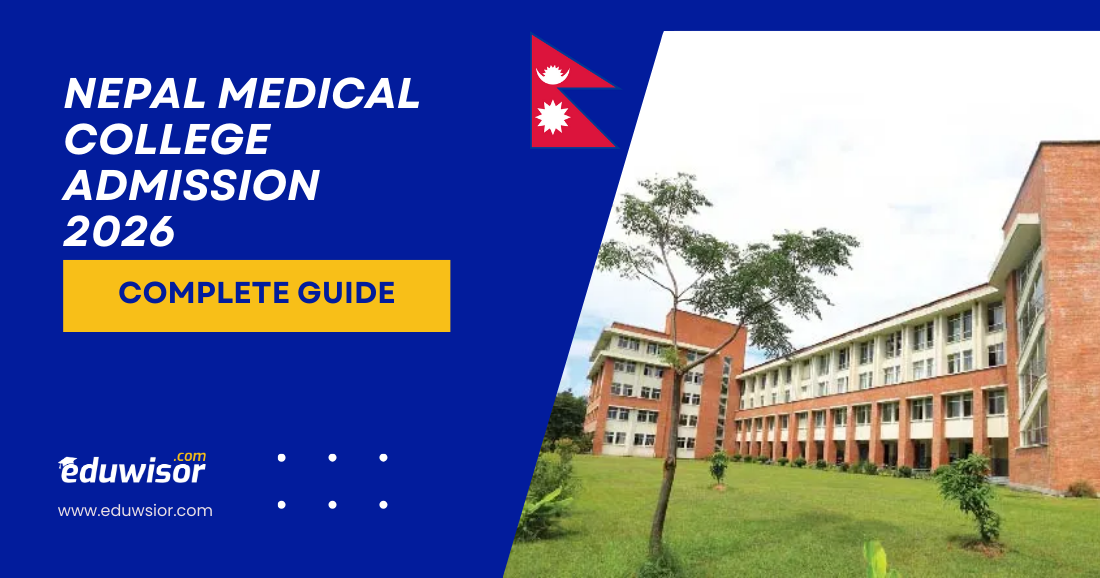
Embarking on the journey to become a medical professional is one of the most challenging and rewarding decisions a student can make. In the heart of the Himalayas, Nepal Medical College (NMC) stands as a beacon of medical education, attracting aspiring doctors from across Nepal and beyond. This comprehensive guide will navigate you through every facet of the Nepal Medical College admission process, providing you with the knowledge and insights needed to successfully secure your seat in one of Nepal’s premier medical institutions.
Understanding Nepal Medical College: An Institutional Overview
Founded with the vision of creating competent, compassionate, and ethical medical professionals, Nepal Medical College has established itself as a cornerstone of medical education in South Asia. Affiliated with Kathmandu University and recognized by the Nepal Medical Council, NMC offers a curriculum that balances rigorous academic training with extensive clinical exposure.
The college is situated in the vibrant city of Kathmandu, with its main teaching hospital—Nepal Medical College Teaching Hospital (NMCTH)—providing students with hands-on experience in a 700-bed facility. This integration of theoretical learning and practical application ensures that NMC graduates are well-prepared to meet the healthcare challenges of the 21st century.
NMC Academic Programs: Beyond the MBBS
While the Bachelor of Medicine, Bachelor of Surgery (MBBS) program remains the flagship offering, Nepal Medical College provides a comprehensive ecosystem of medical education:
- MBBS Program: A five-and-a-half-year course (including one year of compulsory internship) that forms the core of medical education at NMC.
- Postgraduate Programs: NMC offers various MD (Doctor of Medicine) and MS (Master of Surgery) programs in specialties including General Medicine, Pediatrics, Surgery, Obstetrics & Gynecology, and more.
- Nursing Programs: Bachelor of Science in Nursing (BSc Nursing) and related paramedical courses.
- Allied Health Sciences: Programs in Medical Laboratory Technology, Radiology, and other allied fields.
This guide will primarily focus on the MBBS admission process, which represents the primary pathway for most aspiring medical students at NMC.
Nepal Medical College Admission Eligibility Criteria
Before diving into the application process, understanding the eligibility requirements is paramount. The NMC admission criteria have been designed to ensure that only qualified and dedicated candidates enter the medical profession.
Academic Requirements for MBBS Admission
- Educational Qualification:
- Completion of 10+2 or equivalent with Physics, Chemistry, and Biology as core subjects
- Minimum aggregate percentage requirements (typically 50% for general category, with variations for reserved categories)
- For A-Level students: Minimum of three subjects (Physics, Chemistry, Biology) with a minimum grade as specified by the college
- Entrance Examination:
- Mandatory qualification in the Medical Entrance Examination conducted by Kathmandu University or other recognized bodies
- Some seats may be allocated through the Institute of Medicine (IOM) entrance exam
- International students may qualify through separate channels or equivalent examinations
- Age Criteria:
- Applicants must be at least 17 years of age at the time of admission
- Upper age limits may apply as per current regulations
- Citizenship and Residency Requirements:
- Specific quotas for Nepali citizens, non-resident Nepalis (NRN), and international students
- Documentation requirements vary by category
Special Consideration Categories
NMC follows government guidelines for reserved seats, including:
- Quota for disadvantaged groups including Janajati, Madhesi, Dalit, and other specified categories
- Regional quotas to ensure geographical representation
- Special consideration for children of martyrs, disabled persons, and other designated groups
The Nepal Medical College Entrance Examination: Your Gateway to Admission
The entrance examination represents the most critical hurdle in the NMC admission process. Understanding its structure, content, and preparation strategies can significantly enhance your chances of success.
Examination Structure and Syllabus
The medical entrance examination typically covers:
- Physics (100 marks): Mechanics, Heat and Thermodynamics, Waves and Optics, Electricity and Magnetism, Modern Physics
- Chemistry (100 marks): Physical Chemistry, Inorganic Chemistry, Organic Chemistry
- Biology (200 marks): Botany (Diversity, Anatomy, Genetics, Ecology) and Zoology (Diversity, Human Biology, Developmental Biology, Health and Diseases)
- Mental Ability Test (varied marks): Logical reasoning and problem-solving skills
Preparation Strategies for Success
- Early Start: Begin preparation at least 12-18 months before the examination
- Comprehensive Coverage: Ensure thorough understanding of the entire syllabus rather than selective studying
- Practice and Revision: Regular mock tests and revision of previous years’ question papers
- Time Management: Develop speed and accuracy through timed practice sessions
- Conceptual Clarity: Focus on understanding concepts rather than rote memorization
Application Process for the Entrance Exam
- Notification Watch: Regularly check the official NMC website and Kathmandu University portal for exam announcements
- Application Form: Complete the online or physical application form with accurate details
- Document Submission: Attach required documents including academic transcripts, citizenship proof, and photographs
- Fee Payment: Pay the examination fee through designated channels
- Admit Card: Download and verify admit card details upon release
Step-by-Step Nepal Medical College Admission Process
Once you’ve cleared the entrance examination, the formal NMC admission procedure begins. This multi-stage process requires careful attention to detail and timely action.
Stage 1: Result Declaration and Merit List
- Result Announcement: Entrance exam results are typically published within 4-6 weeks of examination
- Merit List Publication: NMC prepares separate merit lists based on:
- Overall entrance examination score
- Category-wise rankings
- Special quota allocations
- Cut-off Scores: Minimum qualifying scores are determined based on seat availability and applicant performance
Stage 2: Counseling and Seat Allocation
- Counseling Notification: Selected candidates receive counseling dates and venue information
- Document Verification: Original documents are verified during counseling
- Choice Filling: Candidates indicate preferences for available seats
- Seat Allotment: Based on rank, preferences, and category
- Provisional Admission: Selected candidates receive provisional admission letters
Stage 3: Formal Admission and Enrollment
- Fee Payment: Payment of admission fees within stipulated time
- Medical Examination: Mandatory health check-up at designated centers
- Document Submission: Final submission of all required documents
- Registration: Formal enrollment in the MBBS program
- Orientation Program: Mandatory orientation before commencement of classes
Nepal Medical College Fees Structure: A Detailed Breakdown
Understanding the NMC fee structure is crucial for financial planning. The fees for MBBS programs can be categorized as follows:
Tuition Fees (Approximate Figures)
- Nepali Students: NPR 40-50 lakhs for the complete MBBS program
- NRN Students: USD 70,000-90,000 for the complete program
- International Students: USD 80,000-100,000 for the complete program
Additional Costs
- Admission Fee: One-time payment at the time of admission
- Security Deposit: Refundable amount payable at admission
- Examination Fees: Per semester/annual examination charges
- Laboratory and Practical Fees: For various departments
- Library and Development Charges: Annual contributions
- Hostel and Mess Charges: For residential students
- Uniform and Equipment Costs: Lab coats, dissection kits, etc.
- Medical Insurance: Mandatory health coverage
Payment Schedule and Options
- Typically structured as semester-wise or annual payments
- Installment options may be available with prior approval
- Bank loan facilities with tie-up institutions
- Scholarship provisions for eligible candidates
Scholarships and Financial Assistance at NMC
Nepal Medical College offers various scholarship programs to support deserving students:
- Merit-Based Scholarships: For top performers in entrance examinations and academic programs
- Need-Based Financial Aid: For economically disadvantaged students
- Government Scholarships: Through various state programs and quotas
- Special Category Scholarships: For marginalized and underrepresented groups
- International Scholarships: For exceptional foreign students
- Educational Loans: With favorable terms through partner banks
Prospective students should inquire about scholarship opportunities during the admission process and submit required documentation promptly.
Document Checklist for NMC Admission
Proper documentation is essential for a smooth NMC admission process. Here’s a comprehensive checklist:
Mandatory Documents
- Academic Certificates:
- Secondary Education Examination (SEE) or equivalent mark sheet and certificate
- 10+2 or equivalent mark sheet and provisional certificate
- Character certificates from institutions last attended
- Entrance Examination Documents:
- Admit card
- Score card/rank letter
- Personal Identification:
- Citizenship certificate (for Nepali students)
- Passport (for NRN and international students)
- Birth certificate
- Recent passport-sized photographs (8-10 copies)
- Category Certificates (if applicable):
- Reservation category proof
- Disability certificate
- Other relevant certificates
- Medical Fitness Certificate: From a registered medical practitioner
Additional Documents for Specific Categories
- NRN Students: NRN certificate, equivalence certificate from relevant authority
- International Students: Student visa, eligibility certificate from Nepal Medical Council
- Transfer Students: Migration certificate, transcript from previous institution
Life at Nepal Medical College: Academic and Beyond
Securing admission is just the beginning. Understanding campus life can help you prepare for the journey ahead.
Academic Structure and Curriculum
The MBBS program at NMC follows an integrated curriculum:
- Pre-Clinical Phase (First 2 years): Basic sciences including Anatomy, Physiology, Biochemistry
- Para-Clinical Phase (Next 1.5 years): Pathology, Pharmacology, Microbiology, Forensic Medicine
- Clinical Phase (Final 2 years): Medicine, Surgery, Obstetrics & Gynecology, Pediatrics, Community Medicine
- Internship (Final year): Rotational posting in various departments
Teaching Methodology
- Lecture-Based Learning: Traditional classroom teaching
- Problem-Based Learning: Case studies and clinical scenarios
- Skill Labs: State-of-the-art simulation facilities
- Bedside Teaching: Direct patient interaction under supervision
- Community Postings: Rural health camps and outreach programs
Campus Facilities
- Library and Digital Resources: Extensive collection of medical texts, journals, and online databases
- Laboratories: Well-equipped departments for practical learning
- Hospital Exposure: Direct access to NMCTH from early years
- Hostel Accommodation: Separate facilities for male and female students
- Sports and Recreation: Facilities for various indoor and outdoor activities
- Cafeteria and Food Services: Hygienic and affordable dining options
Clinical Training at Nepal Medical College Teaching Hospital
The NMC Teaching Hospital represents the practical heart of medical education at the college. With 700 beds and specialized departments, it offers unparalleled clinical exposure:
- Departmental Rotations: Structured posting in all major clinical departments
- Outpatient Department (OPD) Training: Hands-on experience in diagnosis and management
- Emergency Services: Exposure to emergency medicine and critical care
- Operation Theater Experience: Observation and assisted participation in surgical procedures
- Diagnostic Services: Training in interpretation of laboratory and imaging results
International Students: Special Considerations
For international medical students, NMC offers specific support systems:
- Admission Quota: Separate seats for foreign nationals
- Eligibility Equivalence: Recognition of various international qualifications
- Language Support: English as medium of instruction with additional Nepali language classes
- Cultural Integration: Orientation programs and cultural exchange activities
- Visa and Documentation Assistance: Support with immigration processes
- Accommodation Guarantee: Priority in hostel allocation
Post-Admission Formalities and Compliance
After securing admission, students must complete several mandatory requirements:
- University Registration: Formal enrollment with Kathmandu University
- Medical Council Registration: Provisional registration with Nepal Medical Council
- Hostel Allotment: For students opting for residential facilities
- Identity Card Generation: Official NMC student ID
- Academic Calendar Review: Understanding important dates and deadlines
Career Prospects After MBBS from NMC
An MBBS degree from Nepal Medical College opens multiple pathways:
- Postgraduate Specialization: Pursuing MD/MS in Nepal or abroad
- Licensing Examinations: Preparing for international licensing exams like USMLE, PLAB, AMC
- Government Service: Opportunities in public health institutions
- Private Practice: Establishing clinics or joining private hospitals
- Academic Careers: Teaching and research positions
- Public Health and Administration: Roles in health policy and management
Common Challenges and Solutions for NMC Aspirants
Based on experiences of previous students, here are common challenges and how to overcome them:
- Intense Competition: Start preparation early and maintain consistency
- Financial Constraints: Explore scholarships, loans, and installment options
- Academic Pressure: Develop effective study habits and time management skills
- Adaptation to Medical Studies: Utilize peer support and faculty guidance
- Balancing Theory and Practical: Actively participate in all learning opportunities
- Stress Management: Maintain hobbies, exercise, and social connections
Success Stories: NMC Alumni Achievements
Nepal Medical College takes pride in its alumni who have excelled in various fields:
- Dr. Anjali Sharma: Renowned cardiologist practicing in the United States
- Dr. Rajesh Thapa: Leading public health expert with WHO
- Dr. Priya Basnet: Award-winning researcher in tropical medicine
- Dr. Suresh Mahato: Established a chain of hospitals in rural Nepal
These success stories highlight the strong foundation NMC provides for diverse medical careers.
Future Developments at Nepal Medical College
NMC continues to evolve with several ongoing and planned initiatives:
- Infrastructure Expansion: New academic blocks and hospital wings
- Technology Integration: Digital classrooms and telemedicine facilities
- International Collaborations: Partnerships with universities worldwide
- Research Enhancement: Funding for student and faculty research projects
- Community Outreach: Expanded rural health programs
Frequently Asked Questions About NMC Admission
Q1: What is the minimum percentage required for NMC MBBS admission?
A: Typically, 50% aggregate in Physics, Chemistry, and Biology for general category, with relaxation for reserved categories.
Q2: Is there an age limit for MBBS admission at NMC?
A: Yes, applicants must be at least 17 years old at the time of admission, with upper limits as per current regulations.
Q3: Can I apply for NMC admission after completing A-Levels?
A: Yes, A-Level students can apply after obtaining an equivalence certificate from the relevant authority.
Q4: What is the medium of instruction at NMC?
A: All programs are taught in English, though Nepali language classes are offered for international students.
Q5: Are there any reservation policies for NMC admission?
A: Yes, NMC follows government-mandated reservation policies for various categories.
Q6: What is the student-to-teacher ratio at NMC?
A: NMC maintains an approximate ratio of 8:1, ensuring personalized attention.
Q7: Does NMC provide hostel facilities for all students?
A: Hostel facilities are available on a first-come, first-served basis, with priority for international and outstation students.
Q8: What licensing examinations can NMC graduates appear for?
A: NMC graduates are eligible for Nepal Medical Council licensing and can prepare for international exams like USMLE, PLAB, etc.
Final Checklist for NMC Admission Success
- Pre-Application Phase:
- Verify eligibility criteria
- Gather required documents
- Begin entrance exam preparation
- Application Phase:
- Complete application accurately
- Submit before deadline
- Keep copies of all submissions
- Post-Application Phase:
- Prepare for counseling
- Arrange finances
- Complete medical formalities
- Admission Phase:
- Pay fees timely
- Complete registration
- Attend orientation
Conclusion: Your Medical Journey Begins Here
Securing Nepal Medical College admission represents the first significant step toward a rewarding career in medicine. While the process may seem daunting, systematic preparation, attention to detail, and perseverance can help you navigate it successfully. Remember that beyond the admission process lies an incredible journey of learning, growth, and service.
NMC offers not just a degree, but a transformation into a healthcare professional equipped to make a meaningful difference. As you embark on this path, carry with you not only academic aspirations but also the compassion and dedication that defines the medical profession.
The road to becoming a doctor is challenging, but with the right preparation and mindset, your dream of studying at Nepal Medical College can become a reality. Begin your journey today, stay focused on your goals, and remember that every great physician once stood where you stand now—at the threshold of an extraordinary journey.
Eduwisor always guides students toward the right path with an unbiased approach. You can follow us on Youtube, Facebook, Instagram, Twitter, and Linkedin. Stay tuned for regular updates.
Interested in applying? Contact authorized Eduwisor consultant for a smooth admission process!
Act NOW—limited seats for 2026 intake! Call/WhatsApp: 9326395883/ 9076036383