

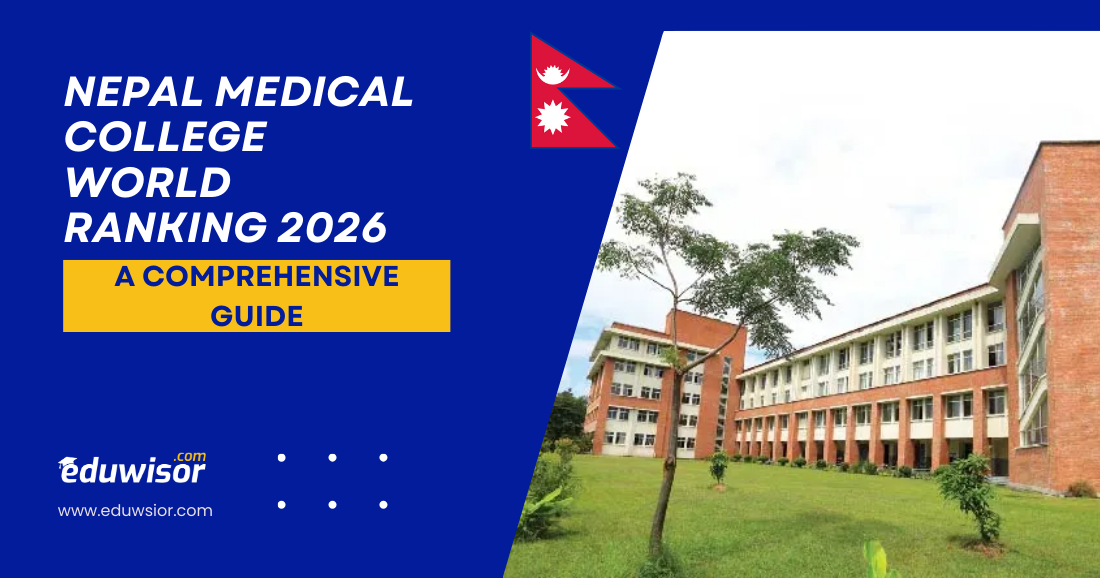
In an increasingly globalized world, the ranking of a medical college serves as a critical benchmark for aspiring doctors, educators, and healthcare policymakers. For students dreaming of a medical career, choosing the right institution is a decision that shapes their future. Among the prominent names in South Asia’s medical education landscape, Nepal Medical College (NMC) has garnered significant attention. But where does it stand on the global stage? This exhaustive guide delves deep into the Nepal Medical College world ranking, analyzing the metrics, credibility, and factors that define its position. We’ll explore not just the numbers but the holistic ecosystem of NMC—from accreditation and academic rigor to research contributions and student experiences—to provide a 360-degree view. Whether you’re a prospective student, a parent, or an academic researcher, this article aims to be your definitive resource.
Chapter 1: The Landscape of Global Medical College Rankings
Before zeroing in on Nepal Medical College, it’s essential to understand the frameworks that govern world rankings. Unlike local or national rankings, global rankings evaluate institutions on an international scale, often using complex, multi-faceted criteria.
Key Global Ranking Systems:
- QS World University Rankings (by Subject – Medicine): Focuses on academic reputation, employer reputation, research citations per paper, and the H-index (impact and productivity of research).
- Times Higher Education (THE) World University Rankings: Emphasizes teaching environment, research (volume, income, reputation), citations, international outlook, and industry income.
- Academic Ranking of World Universities (ARWU) – Shanghai Ranking: Heavily weighted towards research output, including Nobel prizes, Fields Medals, and papers published in top journals like Nature and Science.
- SCImago Institutions Rankings (SIR): Based on research performance, innovation output, and societal impact measured through web visibility.
Why Are These Rankings Important?
- For Students: Indicates education quality, global recognition of degree, and future opportunities for residency and employment.
- For Institutions: Drives competition, improves standards, and attracts international collaborations and funding.
- For Governments & Policymakers: Helps in benchmarking national education systems against global standards.
Challenges in Ranking Medical Colleges from Developing Nations:
Colleges like NMC often face visibility challenges in these global systems due to:
- Language Bias: Predominance of research published in English.
- Database Limitations: Under-representation in citation indexes like Scopus.
- Economic Factors: Lower research funding compared to Western counterparts.
Despite these hurdles, institutions in Nepal have been making consistent strides.
Chapter 2: Nepal Medical College – An Institutional Overview
Founded in 1997, Nepal Medical College is one of the pioneering private medical institutions in Nepal. Established under the umbrella of the NMC Group, it was born from a vision to address the growing demand for quality healthcare professionals in Nepal and the region. The college is affiliated with Kathmandu University (one of Nepal’s premier universities) and its teaching hospital is a 700-bed multi-specialty facility, serving as a crucial healthcare hub in the Kathmandu Valley.
Core Pillars of NMC:
- Vision: To be a center of excellence in medical education, research, and healthcare delivery.
- Mission: To produce competent, compassionate, and ethical medical professionals committed to serving society.
- Core Values: Integrity, excellence, compassion, and social responsibility.
Key Accreditations and Recognitions:
- National Medical Commission (NMC), India: Listed, enabling Indian students to practice in India after clearing the FMGE/NExT.
- World Health Organization (WHO): Listed in the World Directory of Medical Schools.
- Nepal Medical Council: Full accreditation.
- Educational Commission for Foreign Medical Graduates (ECFMG), USA: Recognized, allowing graduates to pursue USMLE and residency in the USA.
- General Medical Council (GMC), UK: Recognized for pathways to practice in the United Kingdom.
These accreditations form the bedrock of its global recognition and are often more immediately practical for graduate mobility than a broad world ranking number.
Chapter 3: Analyzing Nepal Medical College World Ranking – The Data and Interpretation
As of 2026, Nepal Medical College does not feature in the top-tier lists of QS World University Rankings or THE World University Rankings for overall or subject-specific (Medicine) tables. This is a reality shared by most medical colleges in South Asia, except for a handful of elite institutions. However, absence from these specific lists does not equate to a lack of quality or recognition.
Nepal Medical College’s Positioning:
- Regional Standing: Within Nepal, NMC consistently ranks among the top 5-10 private medical colleges. Its affiliation with Kathmandu University adds significant academic credibility.
- Asian Context: In the broader Asian landscape, it is recognized as a growing institution, particularly for its clinical training facilities.
- Global Visibility: Its recognition by WHO, ECFMG, and GMC grants it a de facto global standing, ensuring its graduates can compete internationally.
Metrics Where NMC Excels (Contributing to its Esteem):
- Teaching Hospital & Clinical Exposure: The attached 700-bed hospital provides unparalleled hands-on training. Patient inflow is high, offering students exposure to a wide variety of cases—a critical factor often undervalued in traditional rankings.
- Faculty Credentials: Many faculty members hold advanced degrees and training from institutions in India, Europe, and the USA, bringing diverse expertise.
- Graduate Outcomes: A significant number of NMC alumni have successfully cleared licensing exams like USMLE, PLAB, and FMGE and are practicing in the USA, UK, Australia, India, and the Middle East.
- Affordability: Compared to Western or even many Asian private colleges, NMC offers an affordable MBBS program without a drastic compromise on quality, providing high value for investment.
Areas for Improvement (Impact on Ranking Metrics):
- Research Output & Citations: This is the most significant area affecting its world ranking. While faculty and students engage in research, the volume and citation impact in high-impact international journals need scaling up.
- International Faculty & Student Ratio: A lower proportion of international faculty and students can affect scores in rankings like QS and THE that value “international outlook.”
- Academic Reputation Surveys: Building a stronger perception among international academics and employers is a long-term process.
Chapter 4: Beyond the Number – The NMC Experience
Rankings are a snapshot; the real value lies in the lived experience. Here’s what defines the NMC student life and academic performance.
Academic Curriculum & Pedagogy:
NMC follows an integrated, student-centered curriculum prescribed by Kathmandu University. It combines traditional discipline-based learning with problem-based learning (PBL) sessions, early clinical exposure, and community postings. The focus is on creating “competent physicians” rather than just textbook scholars.
Infrastructure and Facilities:
- Campus: Located in Attarkhel, Gokarneshwar Municipality, the college boasts modern lecture halls, well-equipped laboratories (Anatomy, Biochemistry, Physiology, Pathology, Microbiology), and a central library with digital access.
- Nepal Medical College Teaching Hospital (NMCTH): The crown jewel. With departments covering all major and super-specialties, including a robust ICU, emergency, and trauma center, it is a mini-city of healthcare.
- Hostels & Accommodation: Separate hostel facilities for boys and girls with necessary amenities. The campus environment is described as secure and conducive to learning.
Student Life, Culture, and Support:
A vibrant student community with various clubs (cultural, sports, academic) ensures holistic development. The college organizes national and international conferences, CMEs, and guest lectures. Support systems for international students, including assistance with accommodation and local integration, are in place.
Chapter 5: The Practicalities – Admission, Fees, and Career Pathways
Nepal Medical College Admission Process:
- Eligibility: Completion of 10+2 or equivalent with Physics, Chemistry, Biology, and English, with a minimum aggregate (usually 50% for general category). NEET qualification is mandatory for Indian students.
- Entrance Examination: Admission is based on the Kathmandu University Medical Entrance Test (KUMET) or as per the guidelines set for international students.
- Application: Direct application to the college with required documents (academic transcripts, passport copy, NEET scorecard for Indians, etc.).
Nepal Medical College Fees Structure (Approximate for 2026):
The total package for the 5.5-year MBBS program (including tuition, hostel, and other charges) for international students ranges between $50,000 – $65,000 USD. This is considerably lower than private institutions in India, Bangladesh, or the Philippines, making it a prime choice for affordable MBBS in Nepal.
Career Pathways After MBBS from NMC:
- Post-Graduation in Nepal: Pursue MD/MS programs within Nepal or through the NMC-led residency programs.
- USA: Clear USMLE Steps 1 & 2 CK/CS and apply for residency match (ECFMG recognition is key).
- UK: Clear PLAB 1 & 2 and secure a foundation program placement (GMC recognition).
- India: Clear the Foreign Medical Graduate Examination (FMGE) to obtain a license to practice.
- Other Countries: Australia (AMC exams), GCC countries (promising job markets), and many others.
Chapter 6: Comparative Analysis: NMC vs. Other Regional Medical Colleges
- NMC vs. Manipal College of Medical Sciences (MCOMS), Nepal: MCOMS, with its longer history and Manipal brand, often has a slightly higher perceived value and research activity. NMC, however, competes strongly on clinical exposure and affordability.
- NMC vs. BP Koirala Institute of Health Sciences (BPKIHS): BPKIHS is a government-funded autonomous institute and is often ranked as the top medical school in Nepal. It has a stronger research mandate and lower fees for Nepali students, but competition is fierce.
- NMC vs. Private Colleges in Bangladesh (e.g., DMC, SMCH): Bangladeshi colleges are also affordable and WHO-recognized. The choice often boils down to curriculum preference, cultural affinity, and language (English proficiency in Nepal is generally high).
NMC’s global recognition through key accrediting bodies levels the playing field significantly when considering post-graduate mobility.
Chapter 7: The Road Ahead – Future of Nepal Medical College World Ranking
The trajectory for NMC’s ranking is promising, contingent on strategic focus:
- Boosting Research Culture: Investing in research grants, fostering international collaborations, and incentivizing publications in indexed journals will directly improve citation scores and academic reputation.
- Strategic Internationalization: Actively recruiting international faculty and students through scholarships and partnerships.
- Digital Visibility & Brand Building: Enhancing its online academic presence, showcasing graduate success stories, and participating in global education fairs.
- Curriculum Innovation: Incorporating AI in medicine, telemedicine, and global health modules to stay ahead of the curve.
With sustained effort in these areas, NMC has the potential to break into regional subject rankings and enhance its world ranking visibility in the coming decade.
Conclusion: Making an Informed Decision
The quest to understand Nepal Medical College world ranking reveals a nuanced picture. While it may not have a numerical position on the QS or THE list, it possesses substantial, tangible strengths where it matters most: robust accreditation, a strong teaching hospital, a competent faculty, and a proven track record of producing globally mobile graduates. For a student, the decision should not be based on a ranking digit alone. It should be a calculated choice weighing accreditation (can I practice where I want?), clinical exposure (will I be a skilled doctor?), affordability (can I afford it?), and graduate outcomes (where are the alumni?).
Nepal Medical College scores highly on these practical parameters. It stands as a credible, value-driven institution that offers a solid springboard for a global medical career. As it continues to strengthen its research and international profile, its formal standing in world ranking systems is likely to see a positive evolution.
Eduwisor always guides students toward the right path with an unbiased approach. You can follow us on Youtube, Facebook, Instagram, Twitter, and Linkedin. Stay tuned for regular updates.
Interested in applying? Contact authorized Eduwisor consultant for a smooth admission process!
Act NOW—limited seats for 2026 intake! Call/WhatsApp: 9326395883/ 9076036383
