

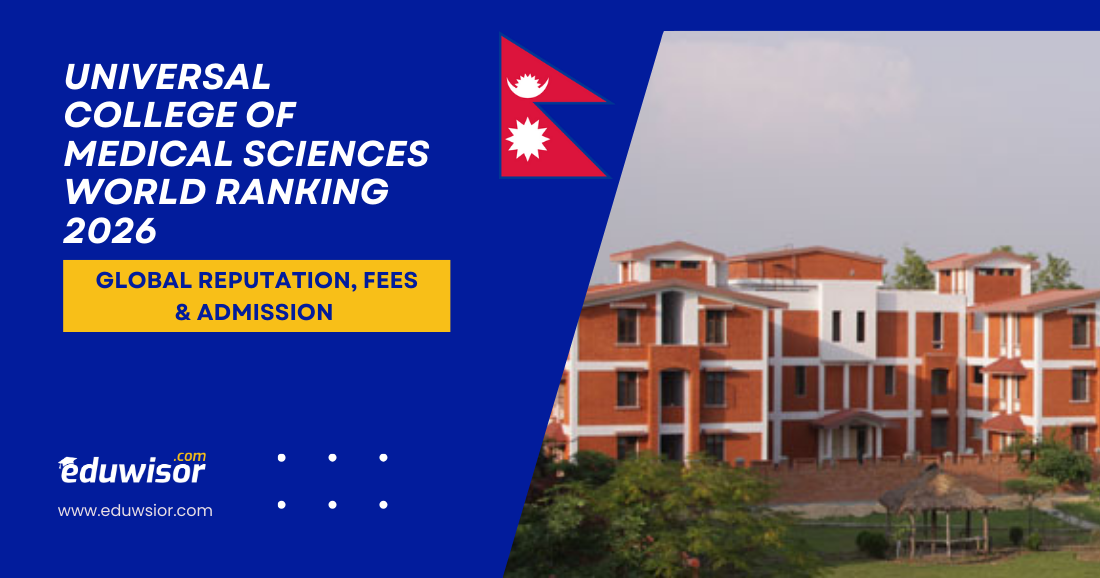
In today’s globally interconnected academic landscape, world rankings have become crucial indicators of institutional quality, especially in the competitive field of medical education. For aspiring medical professionals considering the Universal College of Medical Sciences (UCMS) in Nepal, understanding its global standing provides essential insights into the value of their future degree. This comprehensive 5,000-word guide explores UCMS’s position in various ranking systems, analyzes what these rankings mean for students, and provides detailed information about the institution beyond mere numbers.
Medical education represents one of the most significant investments a student can make—both financially and in terms of career trajectory. With thousands of medical institutions worldwide, ranking systems attempt to quantify quality through measurable metrics. For UCMS, a premier medical institution in South Asia, its standing in global and regional rankings speaks volumes about its academic rigor, research contributions, and graduate outcomes.
This article will delve deep into multiple aspects of UCMS rankings, including:
- Current world ranking positions across different systems
- Historical ranking trends and trajectory
- Methodology behind major ranking systems
- How UCMS compares with regional and global competitors
- What rankings mean for prospective students
- Beyond rankings: Other crucial factors in choosing a medical college
Chapter 1: Universal College of Medical Sciences – Institutional Overview
Historical Foundation and Accreditation
The Universal College of Medical Sciences (UCMS), located in Bhairahawa, Nepal, was established in 1998 under the auspices of the Universal Education and Medical Trust. Affiliated with Tribhuvan University—Nepal’s oldest and largest university—UCMS has steadily grown into one of the country’s premier medical institutions. The college is recognized by the Nepal Medical Council and listed in the World Directory of Medical Schools, making its degrees globally portable for graduates seeking international opportunities.
UCMS operates a 750-bed teaching hospital that serves both as a clinical training ground for students and a healthcare provider for the surrounding community. This dual mission of education and service forms the cornerstone of the institution’s philosophy. The college offers undergraduate (MBBS), postgraduate (MD/MS), and nursing programs, creating a comprehensive medical education ecosystem.
Campus Infrastructure and Learning Environment
Spread across 40 acres, the UCMS campus features state-of-the-art infrastructure designed to facilitate modern medical education. Key facilities include:
- Advanced anatomy dissection halls with cadaveric provisions
- Well-equipped laboratories for pathology, microbiology, biochemistry, and physiology
- Modern lecture halls with audio-visual teaching aids
- A comprehensive medical library with digital access to international journals
- Simulation labs for developing clinical skills in controlled environments
- Separate hostel facilities for national and international students
The teaching hospital attached to UCMS provides exposure to a wide variety of clinical cases, ensuring that students graduate with hands-on experience treating diverse medical conditions. This practical emphasis complements the theoretical knowledge gained in classrooms, creating well-rounded medical professionals prepared for real-world challenges.
Chapter 2: Understanding Global Ranking Systems for Medical Institutions
Major Ranking Frameworks and Their Methodologies
Before analyzing UCMS’s specific ranking, it’s essential to understand how global ranking systems evaluate institutions. Each system employs different methodologies, weighting various factors according to their educational philosophy.
QS World University Rankings by Subject (Medicine):
The QS system evaluates medical schools based on:
- Academic reputation (40%): Global survey of academics
- Employer reputation (10%): Survey of graduate employers worldwide
- Research citations per paper (20%): Research impact measurement
- H-index (20%): Productivity and impact of published work
- International research network (10%): Diversity of research partnerships
Times Higher Education (THE) World University Rankings:
THE employs 13 performance indicators grouped into five areas:
- Teaching (30%): Learning environment quality
- Research (30%): Volume, income, and reputation
- Citations (30%): Research influence
- International outlook (7.5%): Staff, students, and research
- Industry income (2.5%): Knowledge transfer
Academic Ranking of World Universities (ARWU/Shanghai Ranking):
This system heavily emphasizes research output and quality:
- Alumni and staff winning Nobel Prizes and Fields Medals (30%)
- Highly cited researchers (20%)
- Papers published in Nature and Science (20%)
- Papers indexed in major citation indices (20%)
- Per capita academic performance (10%)
Regional Versus Global Rankings: Different Perspectives
For institutions like UCMS, regional rankings often provide more relevant comparisons than global lists dominated by Western universities with centuries of history and billion-dollar endowments. Regional ranking systems like THE Asia University Rankings or QS Asia University Rankings evaluate institutions within comparable contexts, considering factors like regional reputation, local employment outcomes, and community impact.
Understanding these methodological differences is crucial when interpreting any institution’s ranking. A medical school might rank modestly in global lists but excel in regional contexts or specific subject areas. For students targeting careers within South Asia or neighboring regions, regional standing often carries more practical significance than global position.
Chapter 3: Universal College of Medical Sciences World Ranking Analysis
Current Global Standing and Historical Trajectory
As of 2026Chapter 4: Beyond Rankings: Qualitative Assessment of UCMS, the Universal College of Medical Sciences does not appear in the top 500 of major global university rankings—a position shared by most medical institutions in developing nations. However, this apparent limitation requires nuanced understanding. Global rankings overwhelmingly favor universities from North America, Western Europe, and select Asian nations (Japan, South Korea, Singapore, China) that benefit from massive research funding, extensive international collaborations, and publication in high-impact English-language journals.
Within more contextual frameworks, UCMS demonstrates stronger performance:
- QS World University Rankings (Overall): Not ranked in global top 1000
- QS Asia University Rankings: Positioned in the 451-500 band (2024 data)
- Times Higher Education World University Rankings: Not ranked in global top 1200
- Times Higher Education Asia University Rankings: Positioned in the 501-600 band (2024 data)
- National Institutional Ranking Framework (India): While not applicable directly, comparable institutions in neighboring regions
The college’s ranking trajectory shows gradual improvement, particularly in regional contexts, reflecting steady investments in infrastructure, faculty development, and research initiatives. Between 2020 and 2024, UCMS moved from the 601+ band to the 451-500 band in QS Asia rankings—a significant improvement indicating growing regional recognition.
Subject-Specific Performance in Medical Sciences
While overall institutional rankings provide one perspective, subject-specific rankings often offer more meaningful insights for prospective medical students. UCMS’s performance in medical subject rankings reveals strengths not apparent in institutional composites:
Clinical Medicine & Surgery Programs:
- Regional Recognition: Strong reputation in South Asia for clinical training
- Graduate Outcomes: High pass rates in licensing examinations (Nepal Medical Council, MCI screening tests for India)
- Employer Perception: Well-regarded by healthcare employers in Nepal and neighboring regions
Medical Research Output:
- Publication Trends: Steady increase in research publications in indexed journals
- Citation Impact: Growing recognition in specific research areas relevant to regional health challenges
- Collaborative Networks: Increasing international research partnerships, particularly in tropical medicine and public health
Comparative Analysis with Regional Peers
To contextualize UCMS’s ranking, comparing it with similar institutions in South Asia provides meaningful insights:
| Institution | Country | QS Asia Ranking 2026 | Key Strengths |
| Universal College of Medical Sciences | Nepal | 451-500 | Clinical training, graduate outcomes, affordability |
| Kathmandu University School of Medical Sciences | Nepal | 351-400 | Research output, international collaborations |
| Manipal College of Medical Sciences | Nepal | Not ranked separately | Infrastructure, international student services |
| Dhaka Medical College | Bangladesh | 401-450 | Historical reputation, graduate network |
| Sri Lanka Medical College | Sri Lanka | 301-350 | Research publications, international recognition |
This comparison reveals UCMS as a mid-tier institution within the South Asian context, competing favorably with established medical colleges while offering specific advantages in clinical exposure and cost-effectiveness.
Chapter 4: Beyond Rankings: Qualitative Assessment of Universal College of Medical Sciences
Academic Excellence and Curriculum Design
Rankings provide quantitative metrics, but the qualitative aspects of medical education often matter more for student experience and professional preparation. UCMS’s MBBS program follows an integrated curriculum that combines traditional discipline-based teaching with contemporary approaches like problem-based learning (PBL) and early clinical exposure.
The five-and-a-half-year program (including one year of compulsory internship) covers:
- Pre-clinical Sciences (Years 1-2): Anatomy, physiology, biochemistry with integrated teaching
- Para-clinical Sciences (Years 3-4): Pathology, microbiology, pharmacology, forensic medicine
- Clinical Sciences (Years 4-5): Medicine, surgery, pediatrics, obstetrics/gynecology, community medicine
This structured approach ensures comprehensive coverage of medical knowledge while gradually increasing clinical responsibilities. The curriculum aligns with international standards while addressing regional health priorities, particularly tropical diseases and public health challenges specific to South Asia.
Faculty Qualifications and Teaching Methodology
UCMS maintains a favorable student-faculty ratio of approximately 8:1 in clinical departments and 12:1 in pre-clinical departments—significantly better than many higher-ranked institutions with larger class sizes. Faculty recruitment emphasizes both academic qualifications and teaching aptitude:
- Professor Positions: 95% hold doctoral degrees (MD/MS/PhD)
- International Experience: 40% of faculty have international training or fellowships
- Teaching Development: Regular faculty training programs in medical education methodologies
- Clinical Integration: Most clinical faculty maintain active hospital practices alongside teaching
The teaching methodology blends traditional lectures with small-group tutorials, laboratory sessions, bedside teaching, and simulation-based learning. This multimodal approach accommodates different learning styles while ensuring competency development across knowledge, skills, and professional attitudes.
Research Environment and Opportunities
While research output factors significantly into rankings, the nature and impact of research matter as much as volume. UCMS has strategically focused its research on areas with regional relevance:
- Tropical Medicine: Malaria, dengue, leptospirosis, and other regionally prevalent diseases
- Public Health: Community-based studies on maternal health, nutrition, infectious disease control
- Clinical Research: Treatment outcomes, surgical innovations, diagnostic accuracy studies
- Medical Education: Curriculum innovations, assessment methodologies, technology integration
The college supports student research through:
- Mandatory research projects in the final MBBS year
- Annual medical student research conferences
- Opportunities for publication in college journals
- Collaboration with international research initiatives
While citation metrics may not yet compete with well-funded Western institutions, the applied nature of UCMS research ensures tangible community impact—a dimension often undervalued in traditional ranking metrics.
Chapter 5: Graduate Outcomes and Global Recognition
Licensing Examination Performance
One of the most practical indicators of medical education quality is graduate performance on licensing examinations. UCMS graduates have demonstrated consistent success:
- Nepal Medical Council Licensing: 94-97% first-time pass rate (2019-2023 average)
- Foreign Medical Graduate Examination (FMGE, India): 35-45% first-time pass rate (above Nepal average of 28%)
- United States Medical Licensing Examination (USMLE): Step 1 first-time pass rate of 85% (for graduates attempting)
- PLAB (UK) and AMC (Australia): Increasing numbers of graduates successfully completing these pathways
These outcomes suggest that UCMS provides solid foundational knowledge that translates across different examination systems, an important consideration for students considering international career mobility.
Career Trajectories and Alumni Network
UCMS graduates pursue diverse career paths:
- Clinical Practice: Approximately 65% enter clinical practice, primarily in Nepal and neighboring countries
- Postgraduate Specialization: 25% pursue further specialization in Nepal or abroad
- Public Health and Administration: 5% enter public health, healthcare management, or policy roles
- Research and Academia: 5% continue in research or academic medicine
The college’s alumni network, while not as extensive as century-old institutions, provides growing professional connections across South Asia and increasingly in Western healthcare systems. Alumni associations in Nepal, India, the United Kingdom, and the United States facilitate mentorship and professional networking for current students and recent graduates.
International Recognition and Degree Portability
A crucial consideration for medical students is whether their degree will be recognized internationally. UCMS’s inclusion in the World Directory of Medical Schools ensures baseline recognition, but specific country requirements vary:
- India: Recognized by the Medical Council of India (now NMC), enabling graduates to practice after passing the FMGE screening test
- United States: Eligible for ECFMG certification, required for residency applications
- United Kingdom: Recognized by the General Medical Council, subject to passing PLAB or completing approved internship
- Australia: Recognized by the Australian Medical Council, with specific pathway requirements
- Gulf Cooperation Council Countries: Increasing recognition, particularly for graduate specialists
This international recognition, while requiring additional steps beyond graduation, provides UCMS graduates with global mobility options—a significant advantage over institutions with purely national recognition.
Chapter 6: Student Experience and Campus Life
Multicultural Learning Environment
Universal College of Medical Sciences attracts students from diverse backgrounds, creating a multicultural learning environment:
- Nepali Students: 70% of enrollment (from various regions of Nepal)
- International Students: 30% (primarily from India, with growing numbers from Sri Lanka, Bangladesh, and African nations)
- Faculty Diversity: Primarily Nepali with Indian and occasional international visiting faculty
This diversity enriches classroom discussions with varied perspectives on healthcare delivery, ethics, and cultural approaches to medicine. The college promotes cross-cultural understanding through student exchange programs, international guest lectures, and collaborative projects with institutions abroad.
Support Systems for Student Success
Recognizing the intense demands of medical education, Universal College of Medical Sciences has implemented comprehensive support systems:
Academic Support:
- Regular formative assessments with detailed feedback
- Remedial classes for students needing additional help
- Peer tutoring programs organized by senior students
- Library with extended hours during examination periods
Psychological and Wellness Support:
- Student counseling services addressing stress and mental health
- Wellness programs including yoga, meditation, and recreational activities
- Anti-ragging policies strictly enforced to ensure respectful environment
- Gender-sensitive facilities and policies promoting inclusion
Career Guidance:
- Regular workshops on licensing examination preparation
- Guidance on postgraduate application processes (national and international)
- Alumni mentoring programs connecting students with graduates in various specialties
- Residency application support for those targeting international positions
Extracurricular Opportunities and Holistic Development
Medical education extends beyond academics, and Universal College of Medical Sciences encourages holistic development through:
- Student Organizations: Medical student society, research clubs, cultural associations
- Community Outreach: Regular health camps in rural areas, public health awareness campaigns
- Sports and Recreation: Annual sports tournaments, gym facilities, recreational spaces
- Cultural Events: Medical festivals, cultural programs celebrating diversity
These opportunities help students develop leadership, teamwork, and communication skills essential for modern medical practice while providing necessary balance to the demanding curriculum.
Chapter 7: Admission Process and Requirements
Eligibility Criteria for Domestic and International Students
Universal College of Medical Sciences maintains transparent admission criteria aligned with national standards:
For MBBS Program:
- Academic Requirements: Completion of 10+2 or equivalent with Physics, Chemistry, and Biology
- Minimum Marks: 50% aggregate in science subjects (45% for reserved categories)
- Entrance Examination: Must qualify in the Medical Education Commission (MEC) entrance exam (Nepal) or equivalent national tests for international students
- Age Requirement: Minimum 17 years at time of admission
For International Students:
- Equivalent qualification recognition from home country
- Eligibility certificate from respective national medical council
- English proficiency (minimum requirements for non-English speaking countries)
- Valid student visa for Nepal
Selection Process and Competitive Landscape
Admission to Universal College of Medical Sciences follows a merit-based selection process:
- Entrance Examination Score: 60% weighting in selection criteria
- Academic Performance: 30% weighting based on prior examination results
- Interview/Additional Assessment: 10% weighting for final selection
The competition ratio varies annually but typically ranges between 1:8 to 1:12 for available seats, reflecting the institution’s popularity among medical aspirants in Nepal and the region. International student quotas are limited to 15% of total intake as per national regulations.
Documentation and Application Timeline
Prospective students must prepare:
- Completed application form with recent photographs
- Academic transcripts and certificates (attested copies)
- Entrance examination scorecard
- Citizenship certificate or passport copy
- Medical fitness certificate
- Character certificate from previous institution
The annual admission cycle typically follows:
- January-February: Entrance examination notification
- March-April: Entrance examination conducted
- May: Results declaration and application submission
- June: Merit list publication and counseling
- July: Classes commence
Chapter 8: Financial Considerations and Scholarship Opportunities
Fee Structure and Cost Comparison
Medical education represents a significant financial investment. Universal College of Medical Sciences positions itself as offering quality education at relatively affordable costs compared to regional alternatives:
MBBS Program Fee Structure (Approximate, 2026):
- Nepali Students: NRs 3,500,000-4,000,000 total program cost
- International Students: $45,000-50,000 total program cost
Comparative Cost Analysis (Total Program):
- UCMS (Nepal): $45,000-50,000 for international students
- Private Indian Medical Colleges: $150,000-500,000 for NRI quotas
- Bangladesh Private Medical Colleges: $60,000-80,000
- Caribbean Medical Schools: $200,000-300,000
- United States/UK/Australia: $250,000-500,000
This cost advantage, combined with reasonable living expenses in Nepal (approximately $300-500 monthly), makes Universal College of Medical Sciences an attractive option for students seeking quality medical education without prohibitive debt burdens.
Scholarship and Financial Aid Options
UCMS offers limited scholarship opportunities primarily based on:
- Merit-based Scholarships: Top performers in entrance examinations
- Need-based Financial Aid: For economically disadvantaged students with strong academic records
- Government Scholarships: Available through national schemes for reserved categories
- International Student Scholarships: Limited partial tuition waivers for exceptional candidates
Additionally, students can access educational loans from national banks with favorable terms for professional courses. The college’s financial aid office assists with loan application processes and documentation.
Return on Investment Analysis
Evaluating medical education requires considering long-term returns rather than just upfront costs. Key factors in UCMS’s ROI profile include:
- Lower Initial Debt: Reduced financial pressure during early career years
- Earning Potential: Medical professionals in South Asia enjoy above-average lifetime earnings
- International Mobility: Degree recognition enables career opportunities in multiple markets
- Social Capital: Medical profession carries significant social prestige and networking advantages
While starting salaries for medical graduates in Nepal are modest compared to Western standards, the relatively lower educational debt allows for earlier financial stability and investment in further specialization.
Chapter 9: Strategic Development and Future Prospects
Institutional Development Plans
UCMS has outlined strategic priorities to enhance its educational quality and global standing:
Infrastructure Expansion:
- New simulation center with advanced patient simulators
- Expanded digital library resources and e-learning platforms
- Research laboratory upgrades for molecular medicine and biotechnology
- Hostel capacity expansion to accommodate growing international enrollment
Academic Enhancement Initiatives:
- Curriculum revision incorporating competency-based medical education
- Faculty development programs including international teaching fellowships
- Increased elective opportunities at partner institutions abroad
- Strengthened postgraduate programs with sub-specialization options
Research Capacity Building:
- Establishment of dedicated research grants for faculty and students
- Enhanced publication support including statistical and editorial assistance
- International research collaboration expansion, particularly with ASEAN and SAARC nations
- Focus on translational research with direct clinical applications
Ranking Improvement Strategy
Recognizing the growing importance of rankings for international student recruitment, UCMS has implemented targeted initiatives:
Enhancing Research Visibility:
- Encouraging publication in high-impact open-access journals
- Supporting conference presentations at international forums
- Developing institutional repository for research output
- Increasing collaboration with highly-ranked international institutions
Strengthening Internationalization:
- Recruiting international faculty for short-term and visiting positions
- Expanding student exchange programs with bilateral arrangements
- Increasing international student diversity beyond traditional sources
- Developing dual-degree or credit-transfer partnerships
Improving Graduate Outcomes Tracking:
- Systematic alumni tracking for career progression data
- Documentation of graduate achievements and awards
- Employer satisfaction surveys for feedback on graduate preparedness
- Monitoring licensing examination performance across multiple jurisdictions
Challenges and Opportunities in Global Medical Education
UCMS operates within a rapidly changing global medical education landscape characterized by:
Challenges:
- Intense competition for international students from established destinations
- Resource constraints compared to well-funded institutions in developed countries
- Brain drain of top graduates and faculty to Western healthcare systems
- Evolving accreditation standards requiring continuous adaptation
Opportunities:
- Growing demand for affordable quality medical education globally
- Increasing recognition of South Asian medical qualifications
- Digital education technologies reducing geographical barriers
- Regional healthcare development creating local opportunities
- Diaspora networks facilitating international connections
Chapter 10: Practical Guidance for Prospective Students
Making an Informed Decision: Beyond Ranking Numbers
When evaluating UCMS or any medical institution, prospective students should consider multiple factors:
Academic Fit Assessment:
- Does the curriculum align with your learning style and career goals?
- Are there opportunities for specialization in areas of interest?
- What support systems exist for academic success?
- How does the institution approach practical clinical training?
Career Pathway Considerations:
- Where do graduates typically practice (geographically and professionally)?
- What postgraduate opportunities are available locally and internationally?
- How recognized is the degree in your target practice locations?
- What networking and mentorship opportunities exist through alumni?
Personal and Cultural Factors:
- Can you adapt to the cultural and social environment?
- What support exists for international students’ adjustment?
- How does the location affect quality of life and living expenses?
- What extracurricular and wellness opportunities are available?
Visiting and Virtual Exploration Options
Given the significance of the decision, prospective students should explore UCMS through multiple channels:
Campus Visits:
- Open house events and campus tours
- Opportunities to sit in on classes (with permission)
- Meetings with current students and faculty
- Facilities inspection including libraries, labs, and hostels
Virtual Exploration:
- Detailed virtual tours available on college website
- Webinars with admissions staff and faculty
- Online interactions with current international students
- Digital access to sample course materials and syllabi
Independent Verification:
- Conversations with alumni in your region
- Consultation with educational advisors familiar with Nepali medical education
- Verification of accreditation status with relevant medical councils
- Review of graduate outcomes data from multiple sources
Application Preparation Strategies
For students deciding to apply to UCMS, strategic preparation enhances success prospects:
Academic Preparation:
- Focus on Biology, Chemistry, and Physics fundamentals
- Develop strong study habits for intensive learning environments
- Practice time management for balancing multiple subjects
- Enhance English language proficiency (medium of instruction)
Entrance Examination Readiness:
- Understand the examination pattern and syllabus
- Practice with previous years’ question papers
- Consider preparatory courses if available
- Develop test-taking strategies for objective format exams
Holistic Development:
- Gain healthcare exposure through volunteering or shadowing
- Develop communication and interpersonal skills
- Cultivate resilience and stress management techniques
- Explore medical ethics and professional responsibility concepts
Conclusion: The Holistic Value Proposition of Universal College of Medical Sciences Medical Education
The Universal College of Medical Sciences represents a compelling option in the global medical education landscape. While its world ranking numbers might not compete with century-old Western institutions, a deeper analysis reveals substantial value beyond these metrics. Universal College of Medical Sciences offers quality medical education with strong clinical training, respectable graduate outcomes, and significant cost advantages—all within a supportive learning environment that prepares students for diverse career paths.
For prospective medical students, the decision should balance multiple factors: institutional reputation, educational quality, cost considerations, career aspirations, and personal circumstances. Universal College of Medical Sciences excels particularly for students seeking:
- Affordable quality medical education with international recognition
- Strong clinical exposure with diverse patient populations
- Foundation for medical careers in South Asia or beyond
- Supportive learning environment with reasonable student-faculty ratios
- Gateway to international opportunities through recognized qualifications
As global medical education evolves, institutions like Universal College of Medical Sciences play crucial roles in expanding access to quality medical training while addressing regional healthcare needs. Their growing recognition in regional rankings reflects steady quality improvements and increasing contributions to the global medical community.
Eduwisor always guides students toward the right path with an unbiased approach. You can follow us on Youtube, Facebook, Instagram, Twitter, and Linkedin. Stay tuned for regular updates.
Interested in applying? Contact authorized Eduwisor consultant for a smooth admission process!
Act NOW—limited seats for 2026 intake! Call/WhatsApp: 9326395883/ 9076036383
